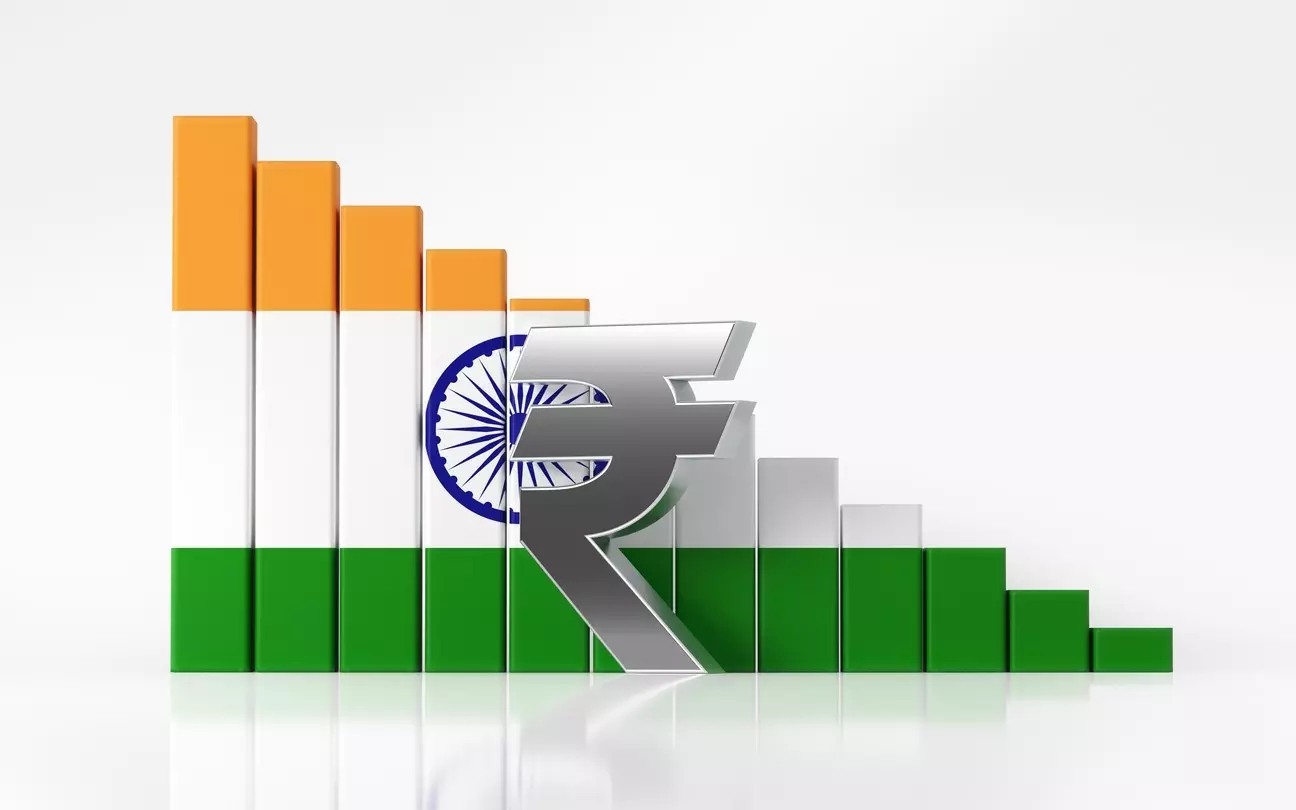
The Indian rupee closed nearly flat at 95.7450 per US dollar on August 24, 2026, easing slightly from 95.6950. Domestic equity benchmarks trimmed intraday losses, with the BSE Sensex finishing 0.22% lower and the Nifty 50 down 0.14%, cushioned by central bank market support and late-session buying.
MUMBAI — The Indian rupee closed largely unchanged against the United States dollar on Monday, August 24, 2026, settling at 95.7450 per US dollar compared to its previous close of 95.6950. Concurrently, Indian equity benchmark indices posted mild declines, with the BSE Sensex and the NSE Nifty 50 both trimming intraday losses before the final bell. The cautious trading session reflected persistent foreign portfolio tracking, fluctuating international energy benchmarks, and steady market intervention by domestic authorities.
The day's market movements underscore resilience across Indian financial assets amid shifting macroeconomic crosscurrents across emerging market currency desks.
Currency Market Performance and Foreign Exchange Dynamics
The Indian rupee opened the trading week on a steady footing, navigating range-bound swings across the interbank foreign exchange market.
Closing Level: The local unit ended the session at 95.7450 per dollar, registering a marginal depreciation of 5 paise from the prior closing mark of 95.6950.
Intraday Volatility: The unit oscillated between a narrow range as continuous importer dollar demand for oil shipments was met with consistent exporter conversion flows.
Liquidity Measures: Forex dealers noted that central bank intervention in the non-deliverable forward (NDF) and spot markets helped prevent speculative pressure from breaching key support thresholds.
Cross-currency pairs showed consistent patterns, with the rupee tracking broader US Dollar Index (DXY) consolidations across Asian morning and European afternoon sessions.
Benchmark Equities Rebound from Intraday Lows
On the equity front, key stock indices witnessed mild profit-booking across select heavyweight sectors before late-session buying helped recover earlier declines.
| Market Benchmark Index | Closing Level | Day's Change (%) | Intraday Maximum Loss (%) |
| BSE Sensex (.BSESN) | 77,328.00 | -0.22% | -0.27% |
| NSE Nifty 50 (.NSEI) | 24,218.00 | -0.14% | -0.29% |
The 30-share BSE Sensex ended the session down 0.22%, successfully recovering from an intraday decline of 0.27%. Similarly, the broader 50-share NSE Nifty 50 closed 0.14% lower, paring an intraday drop of 0.29% as banking, automotive, and metal counters saw selective institutional accumulation toward the closing hour.
Official Sources Section
Currency valuation data, interbank reference rates, and statutory exchange metrics are maintained and published daily by the Reserve Bank of India Foreign Exchange Desk.
Domestic equity market trading statistics, index levels, and institutional turnover data are corroborated through the official trade archives of the BSE Limited and the National Stock Exchange of India. Global financial indicators and cross-market movements are monitored via the Ministry of Finance Department of Economic Affairs.
Market Commentary and Currency Desk Views
Institutional treasury desks noted that the currency's stability reflects strong macroeconomic fundamentals despite external headwinds:
"According to officials and currency strategists at primary dealer desks, the Indian rupee continues to demonstrate relative stability compared to emerging market peers, supported by strong institutional capital buffers and measured central bank interventions that have dampened sharp exchange rate swings."
Equity market analysts highlighted that the late recovery in headline indices demonstrates that domestic institutional liquidity remains a reliable anchor against external volatility.
Why It Matters
For Importers and Exporters: Range-bound currency movements provide predictable operational cost horizons for energy importers and export-oriented IT and manufacturing firms.
For Domestic Retail Investors: Index recovery from intraday lows preserves market sentiment across diversified mutual fund portfolios and systematic investment plans (SIPs).
For International Institutional Funds: Demonstrates structural depth and controlled volatility in Indian capital markets amid broader global emerging-market adjustments.
Key Facts at a Glance
USD/INR Closing: 95.7450 (previous close: 95.6950).
BSE Sensex: Closed down 0.22% (trimmed intraday loss of 0.27%).
NSE Nifty 50: Closed down 0.14% (trimmed intraday loss of 0.29%).
Primary Drivers: Oil importer dollar demand, central bank liquidity support, and selective late-session equity buying.
Frequently Asked Questions
Where did the Indian rupee close against the US dollar today?
The Indian rupee ended nearly flat at 95.7450 per US dollar, compared to the previous close of 95.6950.
How did the BSE Sensex perform during the trading session?
The BSE Sensex closed 0.22% lower, recovering from an intraday loss of 0.27% following late-session buying support.
How did the NSE Nifty 50 close?
The Nifty 50 index settled 0.14% lower, trimming intraday losses that had reached 0.29% earlier in the day.
What factors influenced the currency and equity market moves?
Market trends were shaped by international crude oil price fluctuations, steady dollar demand from importers, and active liquidity support from the Reserve Bank of India.
Source: Reserve Bank of India Foreign Exchange Data, National Stock Exchange of India Announcements, BSE India Market Updates, Ministry of Finance Department of Economic Affairs