Russia offered India the MiG-31 "Foxhound" one of the world's fastest interceptors capable of launching anti-satellite missiles and hypersonic Kinzhal weapons. India walked away. Here's the full story behind one of defence diplomacy's most strategic rejections.
The Sky Was Never The Limit For This Deal
Russia's MiG-31 "Foxhound" is no ordinary fighter jet. Capable of reaching Mach 2.8 and flying at over 20 km altitude, the supersonic interceptor has been Russia's ace card in intercepting enemy aircraft and satellites alike. Armed with the R-37M "Axehead" ultra-long-range missile and capable of launching the nuclear-capable Kh-47M2 Kinzhal hypersonic missile, it is widely regarded as one of the most dangerous air platforms ever built. Russia made multiple attempts over the years to sell this formidable machine to the Indian Air Force — and India repeatedly, quietly, said no.
What Russia Was Selling
The MiG-31's unique selling proposition, as pitched by Russian defence exporters, centred on two headline capabilities: its ability to fire long-range carrier-killer missiles and to serve as a launch platform for anti-satellite (ASAT) missiles targeting low Earth orbit satellites. The upgraded MiG-31BM variant featured the Zaslon-M radar with a 400 km detection range, the capacity to track 24 targets simultaneously and engage eight at once, and advanced data-link interoperability with Su-30s and MiG-29s. On paper, it was a tempting offer for a nation facing aerospace threats from both China and Pakistan.
Why India Looked The Other Way
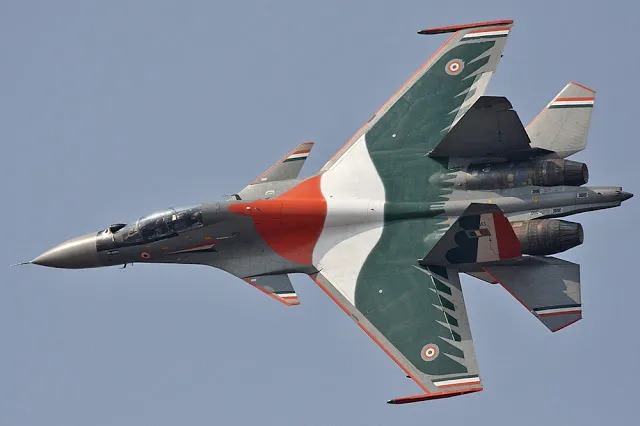
Despite its impressive spec sheet, the MiG-31 was fundamentally a Cold War-era high-altitude interceptor not the versatile multirole platform the IAF needed. India already had a strong relationship with the Su-30MKI, which offered superior maneuverability, better lifecycle economics, and an expanding domestic production chain through HAL. Maintaining a separate, niche fleet of 10–12 MiG-31s would have introduced enormous logistical complexity to an already diverse IAF inventory. The Russian offer simply didn't fit India's doctrinal or budgetary calculus.
India's Own Satellite Killer Changed The Equation
Perhaps the most decisive factor in India's rejection was its own indigenous ASAT capability. In March 2019, India's DRDO successfully conducted Mission Shakti shooting down a live satellite at 300 km altitude using an indigenously developed Ballistic Missile Defence interceptor. This made India only the fourth nation in the world, after the US, Russia, and China, to demonstrate this capability. With a homegrown ASAT system already operational and space debris concerns managed, there was simply no strategic need to buy a Russian aircraft just to mount someone else's anti-satellite missile.
Defence Highlights
- MiG-31BM radar can detect large airborne targets at up to 400 km and engage eight simultaneously
- The jet's Kh-47M2 Kinzhal hypersonic missile has a claimed range of over 2,000 km at Mach 10
- India never conducted a formal IAF evaluation of the MiG-31 at any point
- Mission Shakti (2019) gave India an indigenous ground-based ASAT system eliminating the key Russian pitch
- IAF chose to invest further in Su-30MKI via HAL licence production instead of a niche interceptor fleet
- Russia recently cleared export of ~300 R-37M missiles to India in a $1.2 billion deal, decoupling the missile from the platform
- MiG-31 found no major export buyers globally even China opted for Su-30 variants over the Foxhound
The Road Ahead For India's Air Power
India's air power calculus is increasingly self-reliant and platform-diversified. With the Tejas production scaling up, the Advanced Medium Combat Aircraft (AMCA) programme accelerating, and a 114-aircraft MRCA tender in the pipeline, the IAF is building for the next 40 years not retrofitting Cold War-era hardware. Russia's offer of the MiG-31 was not rejected out of ignorance, but out of strategic clarity. India didn't need to buy a satellite killer when it was already building one.
Sources: EurAsian Times (May 8, 2026), DefenceUpdate.in, CSIS Missile Threat, Ministry of External Affairs India (Mission Shakti FAQ), India Today Defence, Reddit/IndianDefense