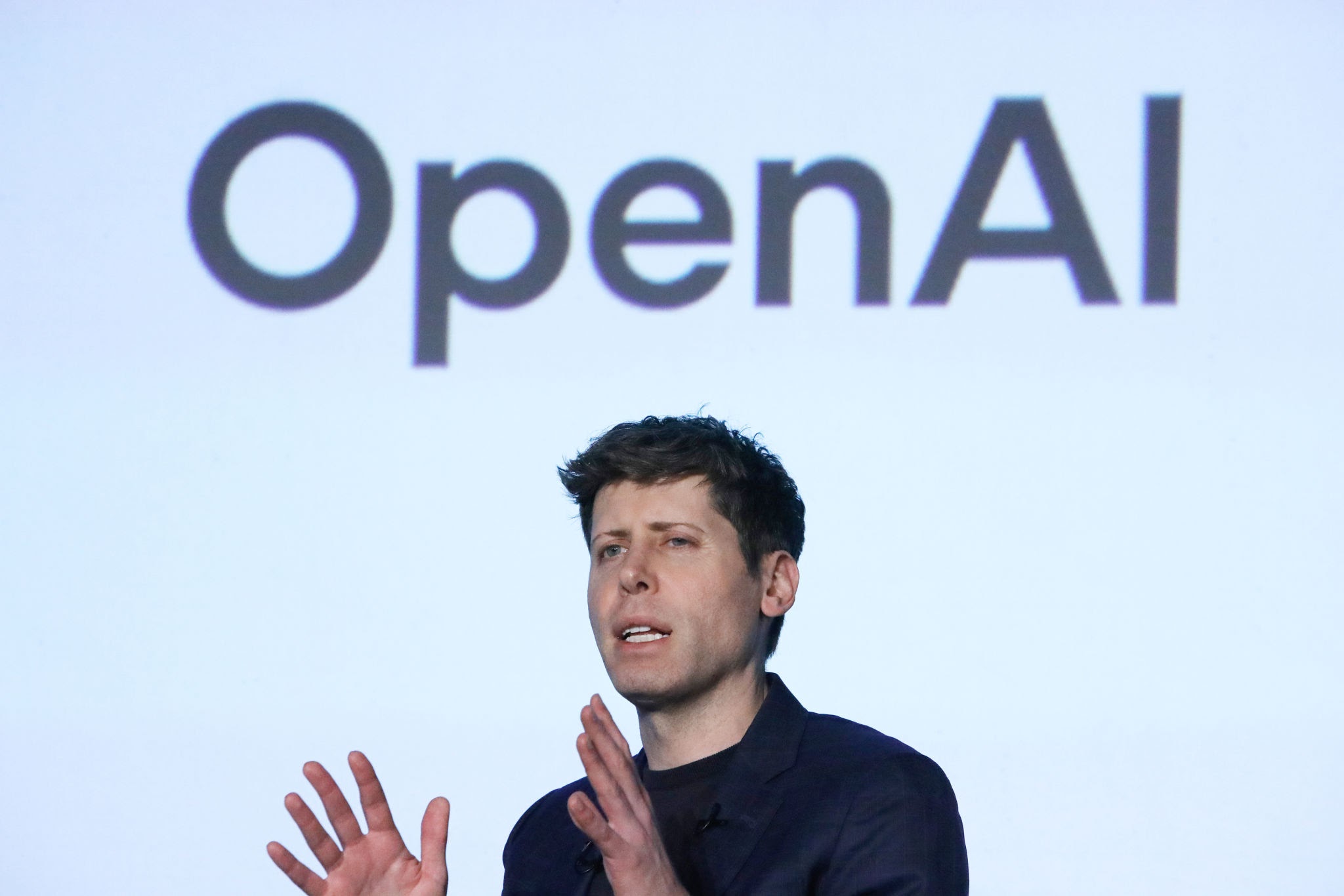
OpenAI Chief Executive Sam Altman stated that humanity has entered the technological singularity, characterized by self-accelerating artificial intelligence capabilities. Speaking at an international industry forum, Altman warned of severe risks surrounding AI authoritarianism, urging democratic nations and regulatory bodies to establish robust global governance frameworks before technological centralization undermines civil liberties.
SAN FRANCISCO — OpenAI Chief Executive Sam Altman stated on July 27, 2026, that humanity has already crossed the threshold into the technological singularity, arguing that artificial intelligence systems are advancing at a pace that fundamental societal paradigms have begun to shift permanently. Addressing industry leaders and policymakers, Altman cautioned that the primary threat facing global governance is no longer just rapid economic displacement, but the risk of AI authoritarianism where powerful, centralized artificial intelligence models are weaponized by state actors or corporate monopolies to enforce societal control.
The executive's remarks come as international lawmakers in Washington, Brussels, and Tokyo debate stringent regulatory rules regarding frontier model deployments. According to OpenAI leadership, the traditional concept of the "singularity" historically defined as a future point where technological growth becomes uncontrollable and irreversible is no longer a distant theoretical milestone, but an active, ongoing reality shaping modern institutions today.
The Shift into Continuous Technological Singularity
For decades, computer scientists and futurists defined the technological singularity as a discrete, dramatic event marked by the emergence of self-improving artificial general intelligence (AGI). However, Altman emphasized that the transition has occurred continuously rather than through a single sudden shock. The compounding rate of AI capability improvements across scientific research, automated software development, and infrastructure management indicates that society is already operating within the initial phases of this exponential curve.
Altman noted that while past technological revolutions moved at a pace allowing generations to adapt, current progress cycles are compounding every few months. This rapid acceleration has outpaced traditional legislative and judicial mechanisms, leaving democratic governments struggling to formulate timely policy frameworks.
Growing Risks of AI Authoritarianism
A central theme of Altman's address was the threat posed by AI authoritarianism. As advanced AI models require unprecedented computational power, energy infrastructure, and proprietary dataset access, the technology naturally tends toward extreme consolidation. Altman warned that if a small number of autocratic governments or unaccountable corporations monopolize these frontier models, they could deploy automated surveillance, algorithmic censorship, and autonomous decision-making systems to consolidate political power.
The warning highlights growing fears among security analysts that totalitarian regimes could use frontier AI capabilities to monitor populations with unprecedented granularity, manipulate public discourse at scale, and restrict opposition movements. To counter this, Altman advocated for democratic coalitions to ensure broad, decentralized access to computing resources and open, safety-aligned foundational research.
Implications for Businesses, Workers, and Global Governance
The technological singularity and the threat of central consolidation present profound challenges across multiple sectors:
Governments and Regulators: International bodies face mounting pressure to establish multilateral oversight standards similar to atomic energy treaties, balancing national security risks against economic competitiveness.
Businesses and Enterprises: Organizations must navigate rapid automation while addressing ethical compliance, data privacy laws, and potential supply chain vulnerabilities tied to hardware monopolies.
Citizens and Consumers: Individuals face unprecedented exposure to algorithmic influence, deepfake content, and shifting labor market demands, reinforcing the necessity of digital rights protections.
Official Sources and Regulatory Statements
Statements regarding frontier AI alignment, societal safeguards, and international oversight were delivered during official industry addresses and company policy papers released by OpenAI.
According to officials: "Humanity has effectively crossed into the early stages of the technological singularity, where intelligence capabilities compound exponentially. The most urgent risk facing open societies today is AI authoritarianism, making it imperative that democratic nations collaborate on decentralized access and rigorous safety standards before critical infrastructure becomes irrevocably centralized."
Why It Matters
Recognizing that society is already operating within the technological singularity fundamentally changes how leaders approach governance, labor policy, and security. If AI infrastructure becomes restricted to authoritarian regimes or monolithic entities, democratic institutions risk losing the capacity to protect individual freedoms. Establishing open, transparent, and international safety protocols is essential to ensuring that artificial intelligence remains a tool for human empowerment rather than state control.
Key Facts at a Glance
Singularity Milestone: Sam Altman stated humanity has already entered the technological singularity phase.
Core Warning: Highlighted AI authoritarianism as a severe geopolitical and civil liberty threat.
Infrastructure Risk: Warned that concentration of compute and data creates natural monopolies susceptible to abuse.
Policy Demand: Called for democratic alliances to secure decentralized compute and global safety standards.
Regulatory Context: Comes amid expanding global legislative debates over frontier model oversight.
Frequently Asked Questions (FAQ)
What does Sam Altman mean by saying humanity is already in the singularity?
Altman argues that the compounding rate of AI advancement has already reached a point where technological progress is self-accelerating, making the singularity an active reality rather than a future event.
What is AI authoritarianism?
AI authoritarianism refers to the misuse of powerful, centralized artificial intelligence systems by autocratic governments or dominant entities to conduct mass surveillance, censor information, and restrict democratic freedoms.
How does OpenAI propose countering the risk of AI consolidation?
Altman advocates for democratic international alliances, decentralized access to compute infrastructure, and transparent safety frameworks to prevent any single entity from monopolizing frontier AI.
What impact does this development have on AI regulation?
Altman's statements bolster calls for multilateral regulatory frameworks, urging lawmakers to treat frontier AI infrastructure with the same strategic priority as critical global energy and security assets.
Source: Official public addresses, executive disclosures, and policy publications released by OpenAI, along with reporting by the United States Federal Trade Commission (FTC) and the European Commission.