Sarvam AI has accelerated India's sovereign artificial intelligence push after securing funding from Nvidia and outlining plans for a 1-trillion-parameter foundation model. Backed by MeitY's IndiaAI Mission, the startup is scaling compute infrastructure to 10,000 GPUs to deliver multilingual, secure AI platforms across Indian enterprises and public institutions.
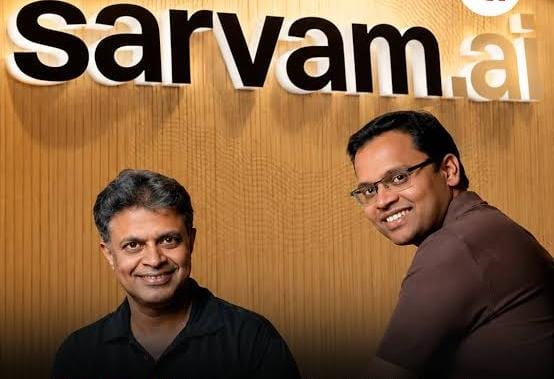
BENGALURU — Indian artificial intelligence startup Sarvam AI has initiated its next expansion phase, securing backing from global chipmaker Nvidia and outlining plans to train a trillion-parameter foundation model. Co-founded by researchers Pratyush Kumar and Vivek Raghavan, the Bengaluru-headquartered startup was selected by the Ministry of Electronics and Information Technology (MeitY) under the ₹10,372 crore ($1.25 billion) IndiaAI Mission to build indigenous sovereign foundation models. The expansion comes as India seeks full data residency, multilingual digital access, and technological autonomy in frontier computing capabilities.
Sovereign Computing Infrastructure and Model Roadmap
At its recent Epoch developer event in Bengaluru, Sarvam AI announced plans to build a 1-trillion-parameter foundation model from scratch within six months. The effort aims to address complex enterprise tasks including coding, cybersecurity, and scientific applications.
To power the model, Sarvam AI is expanding its infrastructure compute stack to 10,000 Nvidia Blackwell GPUs, supported by domestic cloud initiatives and sovereign data center partnerships, including a collaboration with HCLTech in Odisha.
Sovereign Infrastructure: Deploying India-hosted inference servers to preserve domestic data residency for enterprise and public-sector operations.
Multilingual Speech Stack: Upgrading its Saaras V4 speech recognition engine across all 22 scheduled Indian languages, alongside the Bulbul V4 voice model for expressive audio synthesis.
Document Processing: Scaling its Vision 2.0 platform, which has already digitized over 35 million pages of complex Indian documents.
Open-Source Commitments: Building upon its previously released open-weights models, Sarvam-30B and Sarvam-105B, published under permissive open-source licenses to foster domestic developer innovation.
Funding Milestones and Strategic Partnerships
The startup recently closed a $234 million Series B round at a $1.51 billion valuation, led by strategic partner HCLTech alongside Bessemer Venture Partners, Lightspeed Venture Partners, Peak XV Partners, and Khosla Ventures. Follow-on funding of approximately ₹700 crore ($74 million) led by Nvidia, Glade Brook Capital, and Gaja Capital brings total capital raised to nearly $349 million.
These capital injections support compute acquisition and specialized talent hiring, including the appointment of former Mistral AI researcher Devendra Chaplot as an advisor.
Impact on Citizens, Businesses, and Developers
The rollout of custom, sovereign AI models directly affects multiple sectors of the domestic economy:
Citizens and Public Delivery: Voice-first interfaces in regional languages allow non-English speaking citizens to access public services, agricultural advisory tools, and banking operations. Sarvam's platform has already deployed voice agents for 17 million farmers with the Ministry of Agriculture and managed automated renewals for 45 million insurance policyholders.
Enterprises and Financial Institutions: On-premise deployment options and domestic inference nodes assist banks, insurance providers, and healthcare entities in meeting strict Reserve Bank of India (RBI) and data localization mandates.
Startups and Developers: Access to local GPU credits, curated Indian-language training corpora, and low-latency domestic APIs reduces operational overhead for local tech founders.
Official Sources Section
Regulatory filings, corporate releases, and central government announcements establish the project roadmap under public oversight. Official statements regarding national compute allocations and model development guidelines stem from the Ministry of Electronics and Information Technology and the national IndiaAI Mission. Technical metrics, model weights, and compute specifications are published directly by Sarvam AI.
Quote Section
According to official project statements released during the developer briefing:
"The next phase of artificial intelligence adoption in India requires a complete sovereign stack rather than isolated wrapper applications. Building infrastructure and foundation models domestically ensures data privacy, linguistic coverage across 22 languages, and cost-effective compute access for Indian developers."
Why It Matters
Global dependence on foreign AI infrastructure creates data privacy risks and supply vulnerabilities during geopolitical shifts. By establishing indigenous foundation models, sovereign GPU clusters, and localized speech models, India protects its digital autonomy while creating specialized tools designed for its unique linguistic diversity and economic conditions.
Key Facts at a Glance
Government Backing: Selected by MeitY under the ₹10,372 crore IndiaAI Mission to build India's sovereign LLM.
Compute Scaling: Building a 1-trillion parameter model trained on up to 10,000 Nvidia Blackwell GPUs.
Unicorn Status: Valued at $1.51 billion following Series B funding rounds backed by HCLTech, Nvidia, and top venture firms.
Multilingual Focus: Native support across all 22 official Indian languages for speech recognition, synthesis, and text reasoning.
FAQ Section
What is Sarvam AI's primary objective under the IndiaAI Mission?
Sarvam AI was selected by MeitY to develop indigenous, sovereign foundation models tuned specifically for Indian languages, enterprise security requirements, and local economic use cases.
How do open-source models like Sarvam-30B and Sarvam-105B benefit Indian developers?
By releasing model weights under permissive licenses, local startups, researchers, and enterprises can build, fine-tune, and host AI applications on domestic servers without relying on expensive foreign API subscriptions.
Why is voice technology critical for AI adoption in India?
Voice-first AI models in regional languages bridge the literacy and digital divide, enabling over a billion citizens to interact with government services, healthcare systems, and digital finance using spoken natural language.