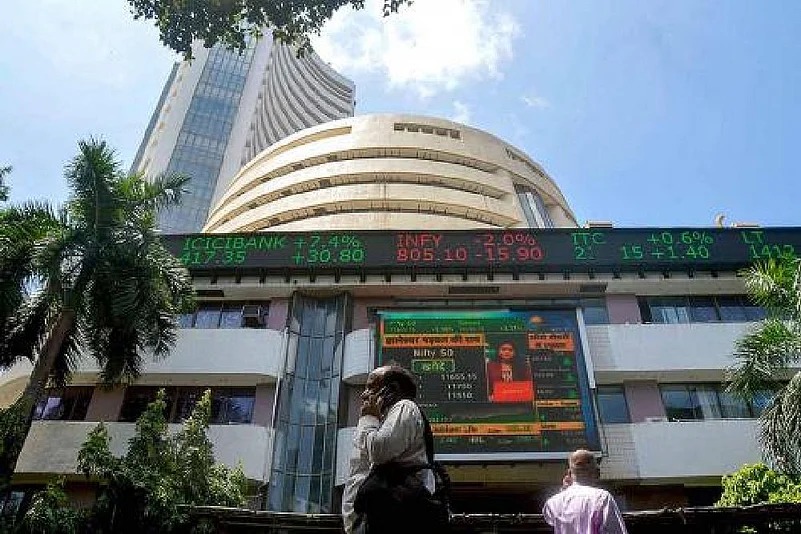
As India celebrates Independence Day 2026, market participants are looking back at the BSE Sensex, which was launched in 1986. While most original members have been replaced over decades of economic shifts, a select few foundational companies like Reliance, ITC, and HUL remain symbols of enduring corporate strength.
MUMBAI — As India celebrates its 80th Independence Day on August 15, 2026, market analysts are reflecting on the structural evolution of the nation's financial landscape by examining the Bombay Stock Exchange (BSE) benchmark. Among the original 30 constituents that formed the S&P BSE Sensex at its launch in January 1986, only a select few corporate giants have successfully retained their coveted positions through decades of economic reforms.
While market churn, regulatory shifts, and economic transitions have replaced most of the original index members with new corporate leaders, four iconic entities—Reliance Industries, Hindustan Unilever, ITC, and ACC (historically and through constituent tracking)—have stood the test of time. Evaluating these enduring equities offers retail investors and market historians a unique window into India's corporate resilience.
The Survivors of India's Benchmark Index
Launched officially on January 1, 1986, with a base value of 100 points tied to the 1978–79 base year, the Sensex originally mirrored an industrial ecosystem heavily reliant on manufacturing, textiles, and traditional conglomerates. Over the past four decades, intense domestic competition and global integration reshaped the index, weeding out early pioneers that failed to adapt.
According to historical data compiled by the Bombay Stock Exchange (BSE), only four entities—either continuously or via structural retention in the index tracking framework—trace their lineage directly back to the foundational basket of 1986. These companies represent diverse sectors, including energy, fast-moving consumer goods (FMCG), and materials, demonstrating exceptional adaptability across changing economic cycles.
"According to official exchange archives, maintaining a continuous presence in a premier equity index over forty years requires rigorous corporate governance, balance sheet agility, and continuous capital reinvention."
Sectoral Shifts and Wealth Creation
The survival of these heavyweights highlights a broader transformation within Indian capital markets. In the early years of the Sensex, traditional sectors like textiles and heavy engineering dominated the index weightage. Today, technology, private banking, and diversified conglomerates dictate market movements.
For retail investors and long-term shareholders, companies that have persisted since inception symbolize deep-rooted wealth creation. Market experts note that long-term investors holding blue-chip equities through multiple decades have benefited significantly from compounding, bonus issues, and steady dividend payouts, mirroring India's broader macroeconomic expansion since independence.
Official Sources Section
Historical data, index constitution timelines, and benchmark methodology are based on official documentation and archival releases from the Bombay Stock Exchange (BSE) and index compiler Asia Index Private Limited. Market valuation context was referenced via regulatory disclosures filed with the Securities and Exchange Board of India (SEBI).
Why It Matters
Understanding the composition history of the Sensex carries practical implications for long-term investors, retail participants, and wealth managers. It underscores the reality that index membership is dynamic rather than permanent, emphasizing the necessity of active portfolio review. For everyday citizens investing via mutual funds or direct equities, studying long-surviving corporations provides vital lessons in business durability, risk management, and the power of long-term economic participation.
Key Facts at a Glance
Sensex Inception: Launched by the BSE on January 1, 1986, with a base year of 1978–79.
Survival Rate: Out of the original 30 members, only a handful of foundational companies have maintained continuous representation or core index legacy.
Sectors Involved: The enduring survivors span core energy, consumer goods, and industrial materials.
Market Significance: The Sensex tracks 30 of the largest and most actively traded stocks, serving as the primary pulse of the Indian economy.
Frequently Asked Questions
What is the BSE Sensex and when was it launched?
The S&P BSE Sensex is India's benchmark stock market index comprising 30 prominent companies, officially launched on January 1, 1986.
How many original companies are still part of the Sensex?
Out of the original 30 companies from 1986, only a very select few—such as Reliance Industries, Hindustan Unilever, and ITC—have retained continuous membership through decades of index reconstitution.
Why do companies get removed from the Sensex?
Companies are periodically dropped or replaced based on criteria like free-float market capitalization, trading liquidity, and sectoral representation during semi-annual index reviews.
Do retail investors own these legacy stocks?
Yes, millions of retail investors hold these stocks either directly through demat accounts or indirectly via mutual funds, exchange-traded funds (ETFs), and index funds.
Source: Bombay Stock Exchange (BSE), Securities and Exchange Board of India (SEBI)