A Hyderabad consumer commission ordered a bank and insurer to refund Rs. 10.6 lakh to a 73-year-old retired professor, ruling that signatures do not prove informed consent when policies are mis-sold and free-look periods are blocked while customers are abroad.
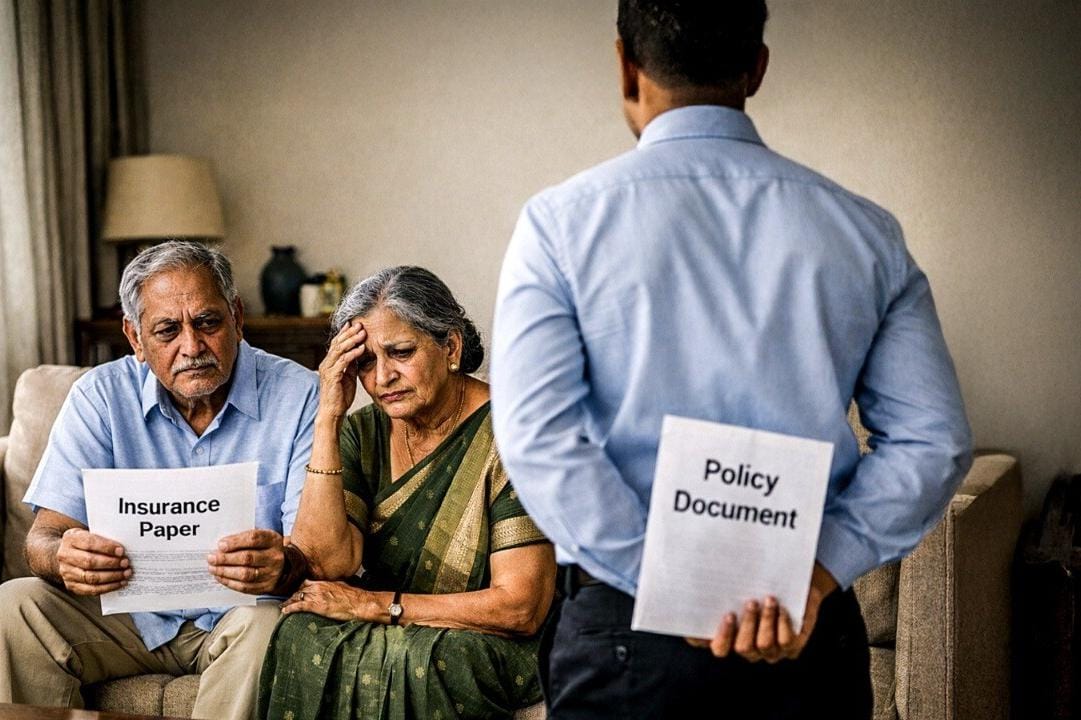
A 73-year-old retired associate professor in Hyderabad has secured a total refund and compensation of Rs. 10.6 lakh after a district consumer commission ruled that an insurance policy was forced upon her without her free will or informed consent.
The Hyderabad District Consumer Disputes Redressal Commission ordered the insurance company and the partner bank to jointly refund Rs. 10 lakh, alongside an additional Rs. 50,000 for compensation and Rs. 10,000 toward litigation costs. The landmark August 27, 2026 verdict addresses widespread grievances regarding financial mis-selling, establishing that physical signatures gathered on financial documents do not inherently constitute valid informed consent if systemic transparency is absent.
Transaction Dispute and Branch Visit
The case originated from an incident on September 4, 2023, when the retired academic visited her bank branch to complete a routine international funds transfer for her son living in the United States. According to her complaint, bank staff introduced her to two insurance agents who falsely marketed an insurance product as a direct, one-time investment yielding fixed high returns.
The complainant, whose monthly pension stood at approximately Rs. 57,000, discovered later that her annual income had been incorrectly documented as Rs. 1 crore on proposal papers. Furthermore, she alleged that bank personnel acquired her signatures under the pretext of loan-related formalities before routing Rs. 10 lakh into a recurring-premium insurance product. When she subsequently realized the discrepancy and attempted to cancel the policy, local branch officials repeatedly deflected her requests, asking her to wait across multiple consecutive years.
Commission Findings on Free-Look Period and Senior Citizens
In its detailed analysis, the consumer forum focused heavily on the mechanics of the statutory "free-look period"—a designated 10-to-15-day window allowing policyholders to cancel new policies and secure full refunds.
The insurance provider argued that the policy pack had been physically dispatched and delivered to the customer’s address on September 18, 2023, fulfilling all baseline regulatory obligations. However, the commission noted that the insurer delivered the welcome communication to the consumer's permanent address while she was physically residing abroad, thereby stripping her of any realistic opportunity to review terms or exercise her cancellation rights.
Official Sources Section
According to official announcements from the Hyderabad District Consumer Disputes Redressal Commission, the bench comprising President B Uma Venkata Subba Lakshmi and members C Lakshmi Prasanna and B Raji Reddy heard the consumer dispute. Regulatory defense filings were submitted through legal representatives for the insurer, while the consumer's case was registered under consumer protection frameworks.
Quote Section
"This commission is of the opinion that the insurance policy was not obtained with free will and informed consent; the conduct of opposite parties... amounts to deficiency of service and unfair trade practice," stated the August 27 order issued by the Hyderabad District Consumer Disputes Redressal Commission.
Why It Matters
The ruling creates a significant legal precedent for retail bank customers and senior citizens across financial markets. Financial institutions can no longer lean exclusively on signed application forms as a foolproof defense against mis-selling allegations. The verdict reinforces that banks and insurers bear a affirmative duty of care to ensure elderly or vulnerable consumers fully comprehend complex policy terms, recurring financial commitments, and exit protocols prior to fund transfers.
Key Facts at a Glance
Total Payout Ordered: Rs. 10.6 lakh total, consisting of a Rs. 10 lakh principal refund, Rs. 50,000 in compensation, and Rs. 10,000 in litigation costs.
Core Legal Principle: Physical signatures on documents do not constitute legally binding informed consent if the customer was misled or deprived of the free-look period.
Judicial Body: Hyderabad District Consumer Disputes Redressal Commission.
Complainant Profile: A 73-year-old retired associate professor dependent on pension income.
FAQ Section
What is an insurance free-look period?
It is a statutory window of 10 to 15 days from the receipt of policy documents during which a policyholder can return the policy, state objections, and secure a complete refund.
Does a signature guarantee that an insurance contract is legally unchallengeable?
No. Consumer forums evaluate whether the consumer possessed adequate context, clear communication, and unhindered access to policy terms before signing.
What recourse do senior citizens have against banking mis-selling?
Aggrieved citizens can approach District Consumer Disputes Redressal Commissions or file grievances through national consumer helplines such as India's National Consumer Helpline (1915).
Are banks liable for third-party insurance products sold on their premises?
Yes. Consumer courts frequently hold banks jointly and severally liable alongside insurance underwriters if branch staff facilitate deceptive sales practices or tie-in sales.
Source: Ministry of Consumer Affairs, National Consumer Helpline, Financial Express Legal Desk