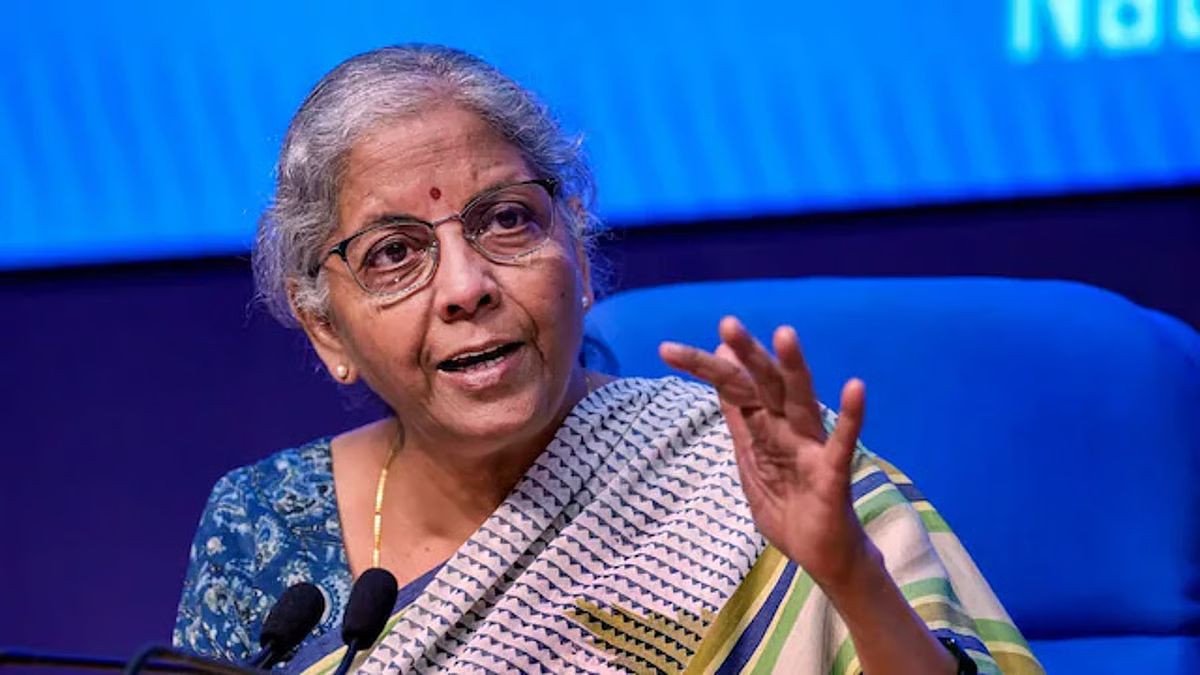
Union Finance Minister Nirmala Sitharaman stated that intellectual freedom in India is gaining immense strength, asserting that the country no longer requires external validation or permission to study its rich civilizational heritage. Speaking at an academic forum, she emphasized a decisive shift toward autonomous, decolonized national scholarship.
Backed by official ministerial statements, the central government has highlighted a cultural shift toward independent, decolonized academic research across national institutions.
Asserting a definitive departure from colonial-era intellectual dependencies, Union Finance Minister Nirmala Sitharaman declared that intellectual freedom in India is gaining unprecedented momentum. Speaking at a prominent academic event on Saturday, September 5, 2026, the senior minister emphasized that the nation no longer seeks permission or foreign validation to study, interpret, and propagate its vast civilizational history and cultural heritage.
The remarks reflect a broader administrative and academic push toward fostering indigenous perspectives, encouraging homegrown historians, and re-evaluating historical narratives through autonomous frameworks rather than external lenses.
Evaluating Decolonized Scholarship, Intellectual Autonomy, and Cultural Pride
Analyzing the policy and philosophical dimensions of the minister's address highlights a growing emphasis on self-reliance in higher education and historical research. According to official ministry transcripts and institutional dispatches released on September 5, 2026, key principles of the shift include:
Eradicating Colonial Mindsets: The push centers on freeing historical analysis from frameworks historically imposed by colonial administrators, ensuring research reflects authentic indigenous texts and archeological discoveries.
Empowering Domestic Institutions: Universities and research bodies across the country are increasingly encouraged to spearhead autonomous studies on ancient science, literature, art, and philosophy.
Global Academic Integration: While fostering self-reliance, the intellectual movement seeks to present objective Indian viewpoints on international academic platforms without seeking external approval.
Youth Engagement: Academic leaders are tasked with integrating these decolonized perspectives into contemporary curricula to inspire younger generations toward deep civilizational awareness.
Why It Matters
The practical implications of this intellectual pivot affect educational curricula, academic publishing, cultural institutions, and the broader societal self-image across India. By encouraging uninhibited indigenous scholarship, universities can uncover neglected aspects of regional history, ancient technological advancements, and classical arts. For students, researchers, and global scholars, this shift opens up diverse analytical frameworks that enrich world history with authentic, domestically grounded perspectives.
Key Facts at a Glance
Key Speaker: Union Minister Nirmala Sitharaman.
Core Theme: Growing intellectual freedom and self-reliance in studying Indian heritage.
Objective: Moving away from external historical frameworks toward autonomous indigenous research.
Target Audience: Academicians, researchers, and students across national educational institutions.
FAQ Section
What did Finance Minister Nirmala Sitharaman state regarding intellectual freedom?
Sitharaman stated that intellectual freedom in India is gaining significant strength and that the country no longer needs external permission or validation to study its heritage.
Why is this shift in historical scholarship important today?
It marks a departure from colonial-era academic frameworks, allowing Indian researchers to analyze indigenous history, science, and culture through authentic domestic perspectives.
How does this impact universities and educational institutions?
Academic bodies are encouraged to develop autonomous research programs and curricula that explore ancient Indian knowledge systems without relying on foreign approval.
Where can readers access the full text of the ministerial address?
Official transcripts and press summaries are available through the Ministry of Finance Portal and verified national news archives.
Source: Ministry of Finance, The Hindu Business Line, Press Trust of India (PTI)