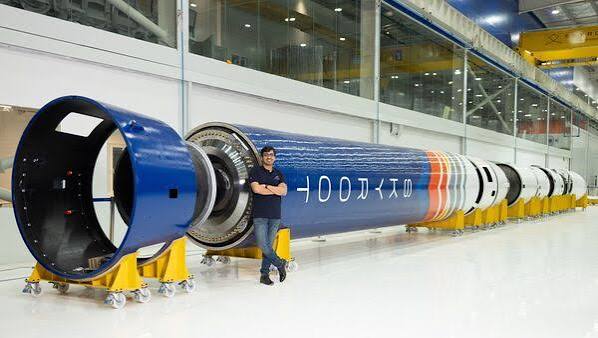
A recent peer-reviewed study reveals that India's per-kilogram space launch cost to Low-Earth Orbit reaches $13,302, ranking highest among major spacefaring nations. Driven by small rocket reliance and low launch frequency, the findings highlight the urgent need for increased commercial cadence and reusable heavy-lift systems.
NEW DELHI — Even as India's private space sector celebrates historic milestones—such as Skyroot Aerospace achieving the nation's first privately developed orbital launch—a recent peer-reviewed economic study reveals that India maintains the highest per-unit space launch costs among major spacefaring nations.
Published in Economics Letters and authored by researchers Alessio Terzi and Francesco Nicoli, the analysis evaluates six decades of global rocket launches. The findings estimate India's cost to send a single kilogram to Low-Earth Orbit (LEO) at $13,302, significantly outpacing the global average of $3,868 and exceeding major competitors including the United States, China, and Europe.
Unpacking the Economics of Small Launch Vehicles
The stark contrast between India's renowned mission-level thriftiness—exemplified by historic interplanetary probes—and its high per-kilogram launch cost stems from structural and operational dynamics. While Indian Space Research Organisation (ISRO) missions are celebrated for low overall budgets, the country's reliance on smaller launch vehicles and a modest launch cadence distributes fixed infrastructure expenses across limited payload masses.
According to the study, official research disclosures, and space market analyses:
Per-Kilogram Cost Disparity: India's estimated cost of $13,302/kg to LEO contrasts with Europe ($9,897), Russia ($6,682), China ($5,809), Japan ($5,287), and the United States ($3,225).
Experience Curve Deficit: Only the United States and Europe have demonstrated a statistically significant downward cost curve since 2010, driven by high launch frequency and cumulative production scale.
Small Vehicle Bias: ISRO's historical reliance on smaller rockets restricts payload capacity, inflating per-unit expenses despite low absolute mission spending.
Heavy-Lift Limitations: The necessity to launch heavy payloads—such as the 4,700 kg GSAT-N2 satellite—via foreign providers like SpaceX underlines domestic heavy-lift and reusability constraints.
Official Sources Section
Quote Section
According to academic researchers and space industry analysts evaluating global launch economics:
"While India remains exceptionally efficient in overall spacecraft and mission design, low launch frequency and a heavy reliance on smaller rockets distribute fixed infrastructure costs over limited payload mass, resulting in higher per-kilogram deployment expenses."
Why It Matters
For commercial satellite operators, aerospace investors, and national policymakers, high per-kilogram launch costs pose a competitive hurdle in the rapidly expanding global space economy. Accelerating private sector participation through IN-SPACe, increasing launch cadence, and advancing heavy-lift and reusable rocket technologies are vital steps to improve commercial viability.
Key Facts at a Glance
India's Cost to LEO: Estimated at $13,302 per kilogram.
Global Average: $3,868 per kilogram.
Primary Drivers: Low launch frequency (cadence) and small payload vehicle capacity.
Industry Milestone: Skyroot Aerospace's recent orbital launch highlights growing private sector capabilities.
FAQ Section
Why are India's per-kilogram launch costs higher than other nations?
The high per-kilogram cost is primarily driven by a low launch frequency and heavy reliance on smaller rockets, which distribute fixed infrastructure expenses over limited payload masses.
Does this contradict India's reputation for frugal space missions?
Yes. While India excels at low overall mission budgets (such as interplanetary exploration), per-unit launch cost measures vehicle efficiency and payload mass utilization rather than spacecraft design frugality.
How is India addressing these launch limitations?
The government has opened the space sector to private enterprises via IN-SPACe to boost launch frequency, develop advanced commercial rockets, and introduce heavy-lift capabilities.
Where can researchers review the complete launch cost study?
The peer-reviewed study is published in the academic journal Economics Letters.
Source: Economics Letters, ISRO, IN-SPACe, The Hindu