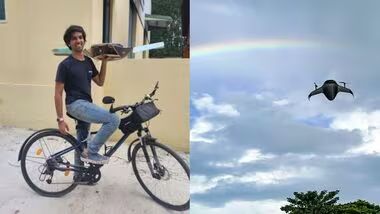
A Bengaluru-based aerospace startup, Airbound, has secured $37 million in a Series A funding round led by Greenoaks. Founded by 21-year-old Naman Pushp—who began building drones during the 2020 lockdown at age 15—the company aims to achieve cost parity with traditional road trucking for medical and cargo deliveries.
Backed by official venture capital disclosures, a Bengaluru aerospace enterprise founded by a former teen developer has secured significant new capital to expand autonomous drone logistics.
What began as a bedroom engineering experiment during the 2020 pandemic lockdowns has matured into a major commercial enterprise. According to official corporate funding announcements released on August 30, 2026, Bengaluru-based aerospace firm Airbound successfully raised $37 million in a Series A funding round led by Greenoaks, bringing the company's total capital raised to nearly $50 million.
The startup is led by 21-year-old founder and CEO Naman Pushp, who initiated the project as a 15-year-old school student. After winning a $500 prize at an early hackathon, Pushp chose to bypass a traditional university education at Carnegie Mellon University to focus entirely on solving deep-tech aerodynamic challenges. Under his leadership, Airbound has completed over 13,000 autonomous test flights across regional testing grounds in India.
Overcoming Aerodynamic Inefficiencies in Logistics
Conventional delivery drones often struggle economically because traditional aircraft expend the majority of their energy carrying their own structural weight rather than the cargo payload. According to engineering disclosures and company technical briefs, Airbound’s operational model focuses on redesigning this core physics equation:
Payload Efficiency Ratio: Airbound’s current TRT aircraft weighs approximately 1.5 kg while successfully carrying a 1 kg cargo payload.
Vertical to Horizontal Transition: The drones combine vertical takeoff and landing (VTOL) versatility with efficient horizontal cruising capabilities.
Cost Parity Targets: The engineering roadmap is designed to drive delivery expenses down until they match or beat conventional road trucking costs.
Scaled Manufacturing: Recent capital injections are slated to scale domestic production facilities and expand commercial deployment corridors for medical supplies and retail cargo.
Why It Matters
The practical implications of scalable, low-cost drone logistics affect healthcare delivery, urban traffic congestion, and supply chain timelines. For consumers and medical institutions in remote or congested areas, autonomous aerial delivery ensures life-saving pharmaceuticals arrive without road delay. For the broader technology sector, the rapid rise of indigenous deep-tech startups highlights India's expanding capability to foster world-class aerospace innovation from grassroots engineering talent.
Key Facts at a Glance
Startup Name: Airbound (Bengaluru, India).
Founder & CEO: Naman Pushp (age 21).
Funding Milestone: $37 million Series A round led by Greenoaks, totaling nearly $50 million in backing.
Core Mission: Achieving cargo delivery cost parity with traditional road transport.
FAQ Section
How did Airbound start?
The company originated as a lockdown hobby project called "Open Drone" built by Naman Pushp at age 15, which later won a $500 hackathon prize.
How much funding has Airbound raised to date?
The startup secured a $37 million Series A round led by Greenoaks, bringing its cumulative funding total to nearly $50 million.
What makes Airbound's drones different from standard models?
Airbound focuses on maximizing payload efficiency, building lightweight aircraft (such as a 1.5 kg frame carrying a 1 kg payload) to compete directly with trucking costs.
Where can stakeholders track ongoing developments at Airbound?
Official company updates, technological whitepapers, and expansion announcements are published on the Airbound Official Portal and financial news desks like Mint.
Source: India Today, LiveMint, NDTV Profit, Airbound Portal