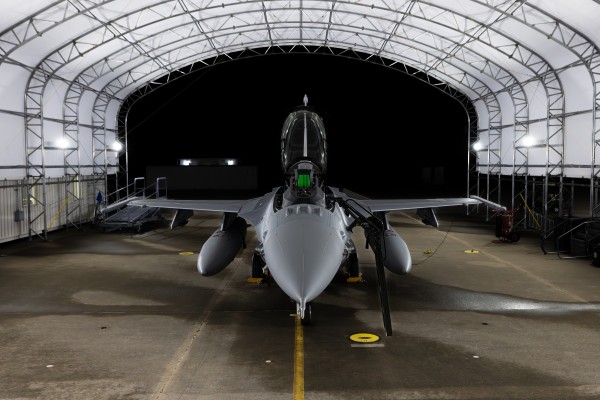
The Slovak government has approved a plan to buy four additional F-16 fighter jets for an estimated 390 million euros. The acquisition expands Slovakia's supersonic fleet from 14 to 18 aircraft, restoring independent national airspace protection and closing defense gaps left by the transfer of Soviet MiG-29s to Ukraine.
BRATISLAVA — The Slovak government has approved a procurement plan to acquire four additional F-16 fighter jets from the United States at an estimated cost of 390 million euros ($425 million), local media and defense officials reported on Wednesday. The decision, passed during a cabinet session in Bratislava, seeks to expand the Slovak Air Force’s supersonic combat aviation fleet to 18 aircraft. The move marks an operational effort to fully restore independent national airspace sovereignty after the country donated its legacy Soviet-era MiG-29 fleet to Ukraine in 2023.
Expanding Fleet Capabilities and Contract Framework
The approved procurement package enables the Slovak Ministry of Defence to negotiate the purchase of four additional F-16 Block 70/72 Viper aircraft through the United States Foreign Military Sales (FMS) framework. The 390 million euro allocation covers the aircraft airframes, advanced avionics systems, spare parts inventories, ground handling equipment, and specialized pilot training pipelines.
This deal supplements an earlier 2018 contract valued at approximately $1.6 billion (1.8 billion euros) for 14 F-16 Block 70 jets manufactured by American defense contractor Lockheed Martin. While the initial batch began arriving at Slovakia’s Kuchyňa military airfield in mid-2024 following supply-chain delays, defense planners determined that a 14-jet complement left limited margin for maintenance cycles, rotational readiness, and continuous air patrols.
By expanding the inventory to 18 aircraft, the Slovak Air Force secures an operational squadron structure capable of executing concurrent missions without depleting baseline territorial air defense.
Transition from Soviet Platforms to NATO Standardization
The procurement reflects Bratislava's long-delayed departure from legacy Soviet military hardware. Slovakia grounded and subsequently transferred its entire fleet of 13 Soviet-designed MiG-29 fighters to Ukraine between 2022 and 2023.
The resulting capability void forced Slovakia to rely on temporary airspace policing agreements with neighboring NATO allies, including the Czech Republic, Poland, and Hungary. Prime Minister Robert Fico noted that while allied support preserved regional airspace integrity, relying on foreign militaries for national defense compromised strategic autonomy. The delivery and operational integration of the additional F-16 fighter jets will end reliance on bilateral interim air policing pacts.
Regional Security and NATO Eastern Flank Impact
The modernization of Slovakia’s supersonic fleet holds operational significance for NATO's eastern frontier. Amid heightened military activity in Eastern Europe, advanced radar and beyond-visual-range missile capabilities embedded in the F-16 Block 70 platform improve regional deterrence.
The aircraft feature Northrop Grumman’s APG-83 Active Electronically Scanned Array (AESA) radar, upgraded electronic warfare defensive suits, and modernized cockpit displays interoperable with allied air combat command systems. Slovakia’s integration of the platform aligns its fleet logistically with regional operators, including Bulgaria, Romania, and Poland, facilitating interoperability in cross-border training, weapons logistics, and joint surveillance exercises.
Official Sources
According to official briefings released by the Government of the Slovak Republic and statutory purchase documentation prepared by the Ministry of Defence of the Slovak Republic, the procurement mandate proceeds under standard intergovernmental defense frameworks. Project authorizations adhere to standards established by the NATO Allied Air Command and the U.S. Defense Security Cooperation Agency.
Quote Section
According to officials cited in media briefings following the cabinet meeting:
"The decision taken by the government to approve the acquisition of four additional F-16 fighter jets ensures that our armed forces will have the necessary squadron capacity to protect sovereign airspace independently, fulfill our collective obligations to the NATO alliance, and sustain air policing without structural readiness deficits."
Why It Matters
The acquisition establishes an 18-jet operational squadron, providing Slovakia with enough combat airframes to maintain round-the-clock Quick Reaction Alert (QRA) duties while conducting pilot qualifications simultaneously. For Slovak taxpayers and businesses, ending allied air policing dependencies restores national airspace autonomy. For the broader NATO alliance, the platform expansion strengthens border surveillance along the alliance's eastern flank and solidifies supply-chain compatibility among European operators.
Key Facts at a Glance
Total Procurement Value: Estimated at 390 million euros ($425 million).
Equipment Ordered: Four Lockheed Martin F-16 Block 70/72 Viper multirole fighter aircraft.
Overall Fleet Strength: Increases planned national inventory from 14 to 18 F-16 jets.
Procurement Method: United States Foreign Military Sales (FMS) mechanism.
Strategic Objective: Replacing transferred MiG-29s and ending reliance on allied airspace policing.
Frequently Asked Questions
Why is Slovakia purchasing an additional four F-16 fighter jets?
Slovakia approved the purchase of four additional F-16 fighter jets to establish an 18-aircraft fleet. This capacity ensures continuous national air policing, pilot training, and fleet maintenance rotations without operational shortages.
How is Slovak airspace currently protected?
Following the retirement and transfer of Slovakia’s Soviet-built MiG-29 fighters to Ukraine, Slovak skies have been patrolled by NATO partners, including the Czech Republic, Poland, and Hungary, under temporary air defense arrangements.
Which specific variant of the aircraft is being acquired?
The procurement covers the advanced F-16 Block 70/72 Viper variant, which includes modernized AESA radar, digital cockpit displays, and compatibility with NATO-standard precision weapons.
Source: Official government reports published via the Government of the Slovak Republic and bilateral procurement notices registered with the Ministry of Defence of the Slovak Republic.