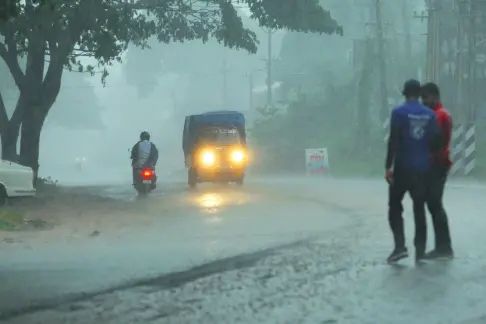
The India Meteorological Department reports that rainfall in South India will be subdued through July 16, 2026. After a period of heavy rains, the region will see isolated showers and thunderstorms. While flood risks have lowered, residents should prepare for potential heat and humidity as the monsoon activity shifts.
The India Meteorological Department forecasts reduced rainfall activity across South Peninsular India through July 16, shifting the focus from flood alerts to water management.
NEW DELHI — The South Indian peninsula is expected to see a significant decline in rainfall activity over the coming days, according to the latest bulletins from the India Meteorological Department (IMD). While the region has contended with active monsoon spells in early July, meteorological data for the period ending July 16, 2026, indicates a shift toward "subdued" precipitation.
The IMD’s current outlook suggests that the widespread rainfall previously observed across Kerala, Karnataka, and Tamil Nadu will likely transition into isolated and scattered showers. This change in the weather pattern is part of a broader national trend where the monsoon trough is currently positioned north of its usual location, leading to less intense moisture convergence over the southern states.
Regional Weather Outlook
For residents and local authorities, this development means a reprieve from the flood risks that characterized early July. However, the IMD has issued cautionary advisories regarding localized weather events:
Rainfall Patterns: Isolated to scattered rainfall is expected over North and South Interior Karnataka, Tamil Nadu, Puducherry, Karaikal, and Telangana through July 19. Kerala and Mahe are also likely to experience similar patterns through July 17.
Thunderstorm Activity: While heavy deluge is less likely, the IMD warns of isolated thunderstorms, lightning, and gusty winds, particularly in Coastal Karnataka, North Interior Karnataka, and South Interior Karnataka through July 17.
Coastal Andhra Pradesh: The region remains under a specific watch, with isolated thunderstorms accompanied by lightning and gusty winds (40-50 kmph) forecast for July 15. Furthermore, heatwave conditions are likely to persist in isolated pockets of Coastal Andhra Pradesh until July 15.
Why It Matters
The transition to subdued rainfall is a double-edged sword. While it reduces the immediate danger of localized flooding, landslides, and road congestion that impacted urban centers earlier this month, it also highlights concerns regarding the broader monsoon performance.
With the IMD’s monthly outlook for July 2026 indicating below-normal rainfall for the country as a whole, this period of reduced activity in the south could have implications for reservoir levels and agricultural planning. Stakeholders in the power and agriculture sectors are being urged to utilize current weather windows for water conservation and crop management, especially in regions that may face humidity and heat stress during this dry spell.
Key Facts at a Glance
Forecast Period: Subdued rainfall expected across South Peninsular India until July 16–17.
Weather Shift: Transition from widespread rain to isolated/scattered showers in Kerala, Karnataka, and Tamil Nadu.
Advisories: Heatwave conditions possible in parts of Coastal Andhra Pradesh; thunderstorm warnings in effect for Karnataka.
Context: The seasonal monsoon trough has shifted north, resulting in reduced rainfall intensity over the southern peninsula.
FAQ
Is the monsoon ending in South India?
No. The IMD clarifies that this is a period of "subdued" rainfall activity. The monsoon season continues, but the current atmospheric conditions are leading to a temporary decrease in precipitation intensity.
Should I be concerned about flooding?
The risk of widespread flooding has significantly decreased compared to early July; however, the IMD advises caution regarding localized thunderstorms and lightning, which can occur abruptly.
What precautions are recommended?
The IMD suggests checking local traffic advisories, avoiding structures vulnerable to high winds, and practicing water conservation during the predicted dry spells.
Source: India Meteorological Department (IMD), IMD Press Release (July 13, 2026)