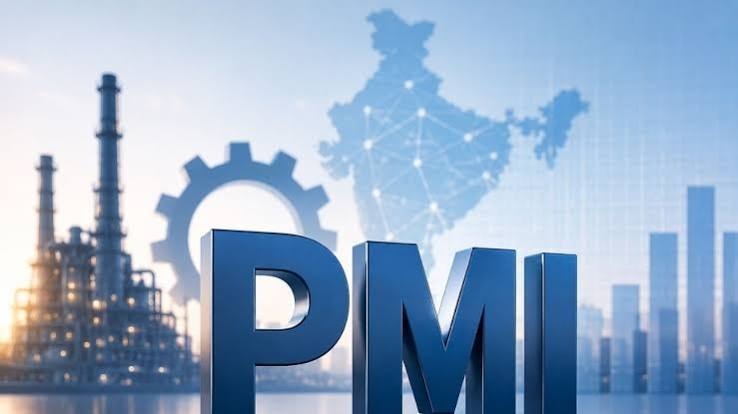
India's final HSBC Services PMI, compiled by S&P Global, settled at 53.3 for July, beating initial flash projections of 53.1. Despite marking a four-year low due to heightened competition and softer domestic demand, the sector extended its expansion streak above 50 alongside modest job creation and rising output prices.
Growth in India's dominant services sector cooled to a four-year low in July, though final figures came in slightly higher than initial preliminary estimates.
Overview of India's July Services PMI
BENGALURU — Growth across India's vital service sector slowed significantly in July, hitting its softest expansion rate in over four years due to intense market competition and tapering client demand, according to survey data released on August 5, 2026.
The final HSBC India Services PMI, compiled by S&P Global, landed at 53.3 for the month of July. While this marked a substantial decline from June's final reading of 57.4, it registered slightly higher than the preliminary flash estimate of 53.1. In the Purchasing Managers' Index framework, any figure above the neutral 50.0 threshold indicates ongoing expansion in business activity.
The deceleration in the India Services PMI contributes to a broader cooling trend across the domestic private economy. Earlier data showed the final manufacturing counterpart softening to 53.5, dragging the composite output index down to 54.3—its lowest level since March 2022.
Demand Dynamics and International Orders
The survey data highlighted a notable softening in new business pipelines. New orders—widely tracked as a primary gauge for domestic demand—grew at the weakest pace observed in close to four and a half years.
Despite domestic headwinds, international demand remained a relative bright spot. Although export orders softened marginally compared to June, external sales continued to expand at a pace that outstripped overall new business growth, supported by stronger inflows from overseas clients across targeted global regions.
Employment Trends and Price Pressures
Labor market metrics showed modest resilience amidst the slowdown. Hiring picked up from the six-month low recorded in June, extending the current sequence of job creation to seven consecutive months. However, survey analysts noted that the improvement remained marginal, as the vast majority of surveyed service providers kept headcounts unchanged and only a small fraction expanded their workforces.
On the inflation front, input cost pressures showed signs of relief. Input price inflation eased for the fourth straight month to hit its lowest level since January. Conversely, corporate pricing strategies shifted as firms passed accumulated operational burdens onto consumers; output charges rose at their fastest pace in three months. Consequently, overall business confidence dropped to a seven-month low.
Official Sources Section
The statistics and economic indicators in this report are based on official survey announcements and research data released by S&P Global and HSBC.
Quote Section
"According to officials and survey compilers at S&P Global, growth in India's dominant services sector slumped to its weakest pace in over four years in July as demand was weighed down by fierce competition and fading client appetite."
Why It Matters
The dip in the India Services PMI to 53.3 signals a crucial transition phase for South Asia's largest developing economy. For investors and corporate planners, the data points to moderation in domestic consumer absorption, which may influence future monetary policy adjustments by the Reserve Bank of India (RBI). While ongoing expansion proves that the economic engine remains positive, the softening momentum requires heightened vigilance regarding profit margins and consumer discretionary spending.
Key Facts at a Glance
Final July Figure: The HSBC India Services PMI was finalized at 53.3, ticking up from the flash estimate of 53.1.
Growth Slowdown: The reading represents the slowest expansion rate for the service sector in over four years.
Employment Growth: Job creation extended into its seventh consecutive month, though overall hiring remained modest.
Price Trends: Input cost inflation fell to a multi-month low, while output charges accelerated at their fastest pace in three months.
FAQ Section
What does a Services PMI reading of 53.3 mean?
A reading of 53.3 remains above the critical 50.0 threshold, indicating that the service sector is still expanding, albeit at a slower pace than in previous months.
Why did India's service sector growth slow down in July?
The expansion moderated due to intensified market competition, softer domestic demand, and more cautious client spending behaviors.
How does the services PMI impact inflation and interest rates?
While input cost pressures have eased, firms accelerating their selling prices will be closely monitored by central bank policymakers evaluating future interest rate trajectories.
Where can financial analysts review the primary survey data?
The comprehensive monthly data reports are published officially through S&P Global Market Intelligence and HSBC Holdings plc.
Source: S&P Global, HSBC Holdings plc, Reuters