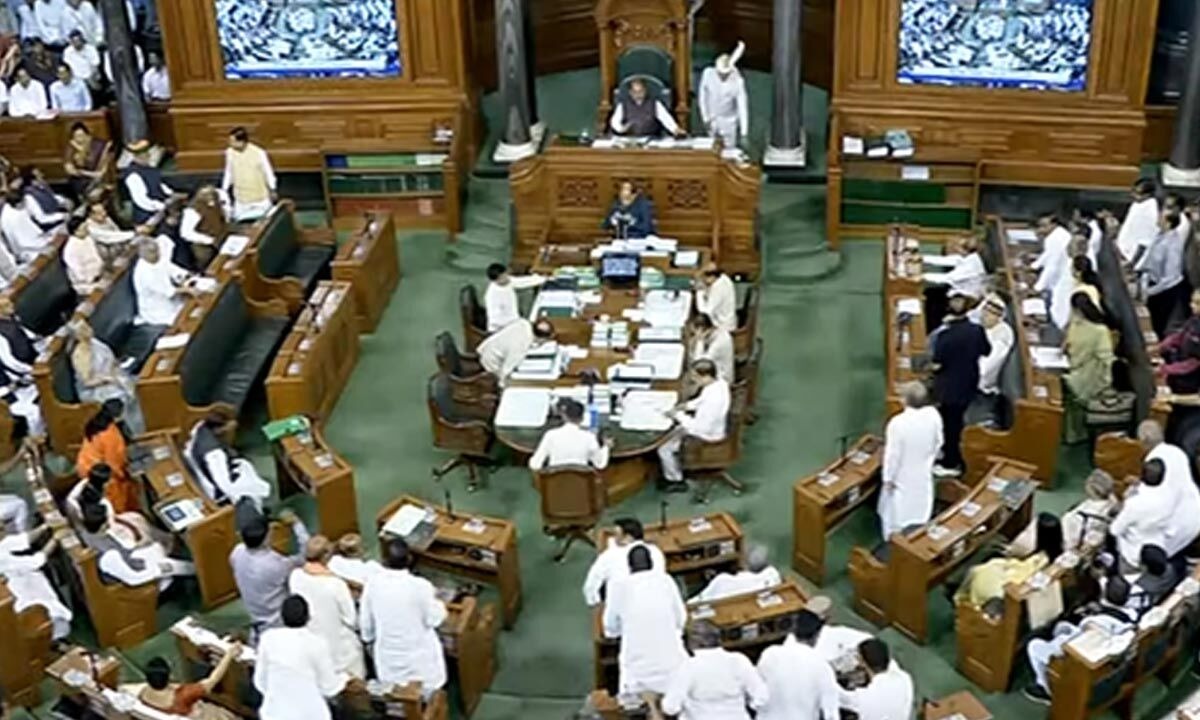
India's Parliament entered the third week of its Monsoon Session on Monday, August 3, 2026, amid persistent disruptions from opposition lawmakers. Demands for a statement from Union Home Minister Amit Shah regarding police force during recent student protests, alongside controversies surrounding alleged Ram Mandir donation theft, threaten to stall key legislative business.
NEW DELHI — The Indian Parliament entered its third week of the Monsoon Session on Monday, August 3, 2026, as opposition lawmakers intensified demonstrations over alleged financial irregularities in Ayodhya's Ram Mandir donations and police force against student protesters in the capital. Both the Lok Sabha and Rajya Sabha face potential disruptions while the central government seeks to introduce and pass several priority legislative measures.
Members of the opposition INDIA bloc, including representatives from the Congress, Samajwadi Party, and Trinamool Congress, gathered near Makar Dwar inside the Parliament House complex to demand accountability from the government. The protests come as the executive branch aims to advance key statutory business, including the Indian Statistical Institute Bill, 2026, the Bankers' Books Evidence Bill, 2026, and amendments to birth and death registration acts.
Twin Controversies Fuel Opposition Agitation
The legislative stalemate stems from two primary political flashpoints that escalated during the second week of the session:
Alleged Ram Mandir Donation Misappropriation
Lawmakers from the Samajwadi Party and Congress staged demonstrations carrying symbolic donation boxes (daan patra) to highlight allegations of embezzlement linked to the Shri Ram Janmabhoomi Teerth Kshetra Trust in Ayodhya. Opposition leaders, including Akhilesh Yadav and Priyanka Gandhi Vadra, demanded a comprehensive independent investigation into the management of offerings submitted by devotees.
Police Action Against Student Demonstrators
Opposition MPs continue to demand a formal statement on the floor of the House from Union Home Minister Amit Shah regarding police measures deployed against students protesting competitive exam paper leaks at Delhi's Jantar Mantar. Protesters raised slogans questioning who authorized the use of crowd-control measures, such as tear gas and stun batons, against student groups.
Government Pushes Priority Legislative Agenda
Despite noisy scenes and brief adjournments in earlier sittings, the government maintains its push to clear pending legislative business. During previous sittings, Parliament cleared the Prevention of Insults to National Honour (Amendment) Bill, 2026, alongside amendments to the Public Examinations (Prevention of Unfair Means) Act aimed at curbing exam leaks.
For the third week, the parliamentary bulletin lists several key measures for consideration:
Indian Statistical Institute Bill, 2026: Proposed for introduction in the Lok Sabha to update institutional governance standards.
Bankers' Books Evidence Bill, 2026: Streamlining evidentiary procedures for digital banking records.
Supreme Court (Number of Judges) Amendment Bill, 2026: Scheduled for consideration in the Rajya Sabha.
Registration of Births and Deaths (Amendment) Bill, 2026: Set for discussion to modernize civil registration databases.
Treasury benches have urged opposition parties to allow normal Question Hour and legislative debates to proceed, arguing that statutory amendments are essential for public administration and governance reforms.
Impact on Parliamentary Governance and Citizens
Impact on Legislative Timelines
Repeated adjournments compress the time available for detailed scrutiny of proposed bills, potentially leading to voice-vote approvals without exhaustive debate on specific statutory clauses.
Impact on Public Policy
Key policy measures—including anti-paper leak frameworks, economic data standards, and judicial administration—depend on timely parliamentary clearance to take structural effect.
Impact on Parliamentary Oversight
Structured debates provide opposition parties with an opportunity to hold the executive accountable regarding public spending, law enforcement conduct, and student welfare concerns.
Official Sources Section
Parliamentary proceedings, legislative schedules, and official statements are recorded under the official bulletins and records published by the Secretariat of the Parliament of India.
Quote Section
"According to officials and parliamentary bulletins, the government remains committed to taking up scheduled legislative business while maintaining that discussions must take place within established parliamentary rules and procedures."
Why It Matters
The smooth functioning of Parliament during the Monsoon Session is critical for passing statutory reforms that directly affect national administration, educational transparency, and judicial efficiency. When political standoffs lead to continuous disruptions, important legislative scrutiny is curtailed, delaying national policy execution and public governance updates.
Key Facts at a Glance
Event: Third week of the Monsoon Session of Parliament in New Delhi.
Key Disputes: Alleged Ram Mandir donation theft and police action against student protesters in Delhi.
Opposition Demand: Statement by the Union Home Minister and independent probes into reported irregularities.
Pending Bills: Includes the Indian Statistical Institute Bill, 2026, and the Supreme Court (Number of Judges) Amendment Bill, 2026.
Frequently Asked Questions (FAQ)
What are the main causes of the disruptions in Parliament?
The ongoing disruptions stem from opposition demands for discussions and official statements regarding alleged financial irregularities in Ram Mandir donations and police action against student protesters demonstration against exam leaks.
What major bills is the government seeking to pass this week?
The legislative agenda includes the Indian Statistical Institute Bill, 2026, the Bankers' Books Evidence Bill, 2026, and the Registration of Births and Deaths (Amendment) Bill, 2026.
When did the Monsoon Session of Parliament begin and when does it conclude?
The Monsoon Session began on July 20, 2026, and is scheduled to run through mid-August.
Source: Official bulletins and operational updates from the Lok Sabha Secretariat, daily business lists published by the Rajya Sabha Secretariat, and legislative press briefings issued by the Ministry of Parliamentary Affairs.