The Indian government confirmed in Parliament that it is actively engaging key stakeholders regarding the Chabahar Port project in Iran. Following the expiration of a conditional U.S. sanctions waiver on April 26, 2026, New Delhi is evaluating operational mechanisms including a potential stake transfer to preserve its long-term strategic connectivity.
NEW DELHI — The Indian government is actively consulting with international and domestic stakeholders to address the operational and geopolitical implications surrounding its involvement in the Chabahar Port project in Iran. In a written response submitted to the Lok Sabha, Minister of State for External Affairs Kirti Vardhan Singh confirmed that New Delhi remains engaged with all parties following the expiration of the U.S. Department of the Treasury's conditional sanctions waiver on April 26, 2026.
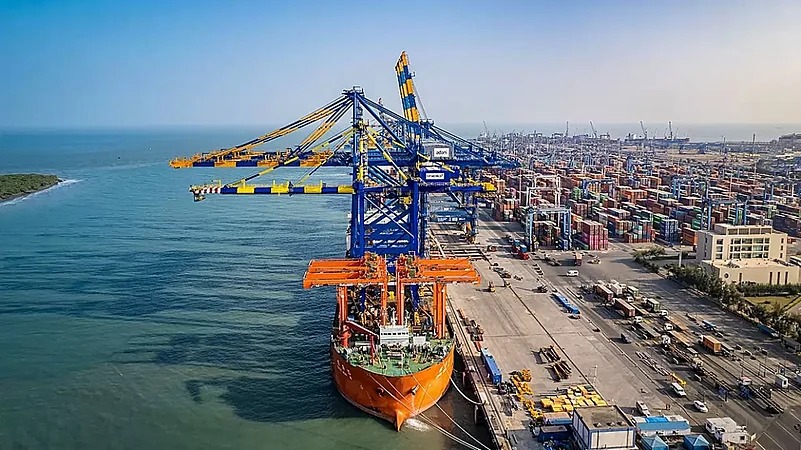
India's state-owned India Ports Global Limited (IPGL), through its subsidiary India Ports Global Chabahar Free Zone (IPGCFZ), has managed operations at the Shahid Beheshti Terminal since 2018. The project serves as a cornerstone of India's strategic initiative to establish trade access to Afghanistan, Russia, and landlocked Central Asian republics via the International North-South Transport Corridor (INSTC), bypassing terrestrial routes through Pakistan.
Expiration of Sanctions Relief and Financial Commitments
The operational framework of the port encountered new hurdles after the U.S. Department of the State revoked previous exemptions under the Iran Freedom and Counter-Proliferation Act. Following high-level diplomatic discussions between Indian and U.S. officials, Washington provided a temporary six-month conditional sanctions waiver that expired on April 26, 2026.
Addressing parliamentary queries regarding financial exposures, the Ministry of External Affairs (MEA) clarified that India has fully met its capital commitments. Under the long-term 10-year contract signed in May 2024 with Iran’s Ports and Maritime Organisation (PMO), India pledged $120 million for heavy port equipment and infrastructure upgrades.
"Under the provisions of the 10-year contract signed on May 13, 2024, India has fulfilled its commitment of contributing $120 million toward the procurement of port equipment," Minister of State Kirti Vardhan Singh informed the House. "Therefore, there is no further financial commitment from the Government of India towards the port. The government remains engaged with all concerned to address the implications of these developments."
Tactical Recalibration: Exploring Operational Workarounds
To mitigate the risk of secondary U.S. sanctions while maintaining its long-term strategic presence in the Gulf of Oman, New Delhi is evaluating tactical operational adjustments.
Reports indicate that Indian officials have discussed a potential temporary divestment or stake transfer of IPGL's holding in the Chabahar Free Zone subsidiary to a local Iranian counterpart. Such an arrangement would establish a protective buffer for Indian public sector firms from American financial penalties while retaining a legal mechanism to resume direct operations once geopolitical tensions stabilize.
The strategic importance of Chabahar remains high, situated approximately 140 kilometers west of Pakistan's Gwadar Port. Indian foreign policy analysts note that maintaining a foothold in Chabahar prevents a strategic vacuum that could otherwise be absorbed by rival regional economic powers.
Impact on Strategic Trade and Regional Stakeholders
Impact on Indian Exporters and Business
The uncertainty surrounding direct shipping lines to Chabahar complicates trade logistics for Indian exporters targeting Central Asian markets. Businesses relying on the INSTC route are monitoring government guidelines regarding payment clearing mechanisms and maritime insurance coverage.
Impact on Regional Connectivity
For landlocked Central Asian nations and Afghanistan, Chabahar offers an alternative commercial gateway. Any prolonged operational disruption at the Shahid Beheshti Terminal risks slowing regional freight integration and delaying planned infrastructure supply chains.
Official Sources Section
Official information regarding the status of the Chabahar Port project, U.S. sanctions waivers, and financial commitments was presented during proceedings of the Lok Sabha and Rajya Sabha, as recorded by the Ministry of External Affairs (MEA). Additional operational updates rely on regulatory entries from India Ports Global Limited and notifications published by the U.S. Department of the Treasury.
Quote Section
"According to officials from the Ministry of External Affairs, India remains in active consultations with all primary international partners to navigate regulatory frameworks and safeguard national connectivity objectives."
Why It Matters
Chabahar Port is India's principal maritime gateway to Eurasia, providing a crucial trade bypass around overland transit restrictions. Balancing compliance with U.S. economic sanctions against long-term strategic investments in Iran tests India's foreign policy autonomy. Securing continuous operational access to the port is vital for preserving billions of dollars in projected trade along the International North-South Transport Corridor.
Key Facts at a Glance
Project Terminal: Shahid Beheshti Terminal at Chabahar Port, Iran.
Operator: India Ports Global Limited (IPGL) via its wholly-owned subsidiary.
Investment Status: Full $120 million commitment for port equipment procurement completed.
Sanctions Timeline: U.S. conditional sanctions waiver expired on April 26, 2026.
Current Action: Government actively engaging stakeholders to evaluate tactical operational workarounds.
Frequently Asked Questions (FAQ)
What is the strategic importance of Chabahar Port for India?
Chabahar Port provides India with a direct sea-land trade route to Afghanistan, Iran, and landlocked Central Asian countries, completely bypassing Pakistan. It serves as a key ocean hub for the International North-South Transport Corridor (INSTC).
Why did the U.S. sanctions waiver expire in April 2026?
The U.S. Department of the Treasury issued a temporary, six-month conditional sanctions waiver in October 2025, which remained valid until April 26, 2026. Upon its conclusion, Washington declined further broad extensions under its intensified economic framework regarding Iranian commerce.
Has India stopped investing in Chabahar Port?
The Indian government confirmed that it has met its full $120 million contractual commitment for equipping the port under its 10-year agreement signed in May 2024, leaving no further pending financial obligations.
Source: Official statements and parliamentary submissions by the Ministry of External Affairs (MEA), operational updates from India Ports Global Limited, and official communications from the U.S. Department of the Treasury.