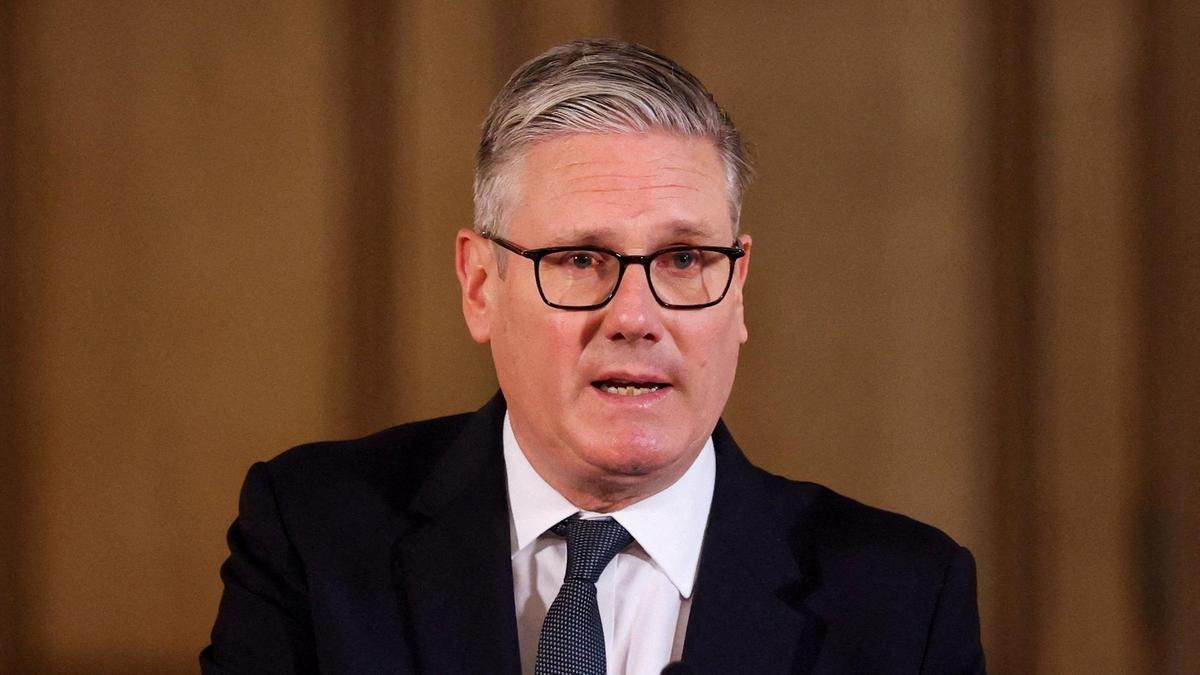
UK Prime Minister Keir Starmer has convened his divided cabinet at Downing Street on Tuesday morning and made clear he will not resign, despite more than 80 Labour MPs publicly calling for his departure following the party's devastating local election losses — the worst in decades - and mounting pressure from within his own government.
The political crisis engulfing Britain's Labour government reached a critical inflection point today. The cabinet met in Downing Street early Tuesday morning, with Starmer walking into a room where some of his most senior colleagues had already turned against him. The cabinet is said to be divided on whether he should remain, and Starmer's chief secretary MP Darren Jones told Sky News that the prime minister was talking to colleagues but was very clear he will not be walking away.
The Scale Of The Electoral Collapse
The trigger for this crisis was last week's local elections - a political earthquake by any measure. Labour lost the most seats of any party in the regional elections, while right-wing populist Reform UK gained more than 1,400 seats. The elections also saw the Labour vote collapse in Wales, where Plaid Cymru won the most seats meaning all three regions of the United Kingdom outside England are now governed by nationalist, pro-independence parties.
Starmer's Case For Staying
The Prime Minister has made his argument in unambiguous terms. Starmer told the BBC he is not going to walk away and plunge the country into chaos, adding that the right thing to do is to rebuild and show the path forward. In a speech on Monday, he warned that the chaos of constantly changing leaders under the Conservative Party cost Britain enormously, and vowed not to repeat it.
Starmer also took responsibility for the election results, acknowledging he had spent too much time talking about what he was doing for working people and not enough time talking about why or who he stands for.
Cabinet Rebellion And The Pressure From Within
The resistance is not confined to backbenchers. The BBC reported that Home Secretary Shabana Mahmood is among cabinet ministers who have urged Starmer to set out a timetable for his resignation. Six ministerial aides quit on Monday, and junior minister Miatta Fahnbulleh resigned on Tuesday, saying Starmer had lost the trust and confidence of the public.
Who Could Replace Him
Potential challengers include Health Secretary Wes Streeting, former Deputy Prime Minister Angela Rayner, and Greater Manchester Mayor Andy Burnham who polls most favourably of the three but would need to return to parliament as an MP before he could contest. A leadership contest requires the endorsement of 81 Labour MPs equivalent to a fifth of the party's seats in the Commons.
Key Highlights
- Starmer told his divided cabinet on Tuesday morning that he will not resign as Prime Minister
- More than 80 Labour MPs have publicly called for him to step down or set a departure timetable
- Labour lost over 1,400 council seats in last week's local elections — the worst losses in decades
- Reform UK gained over 1,400 seats; Labour also lost control of the Welsh parliament for the first time in decades
- Home Secretary Shabana Mahmood is among senior cabinet figures who urged Starmer to plan a transition
- Six ministerial aides resigned on Monday; junior minister Fahnbulleh resigned Tuesday
- Potential successors include Wes Streeting, Andy Burnham, and Angela Rayner
- A formal leadership challenge requires signatures from 81 Labour MPs under party rules
- Gordon Brown appointed Special Envoy on Global Finance as Starmer attempts a political reset
Sources: CNN, Al Jazeera, CNBC, NPR, Time Magazine, The Tribune, BBC