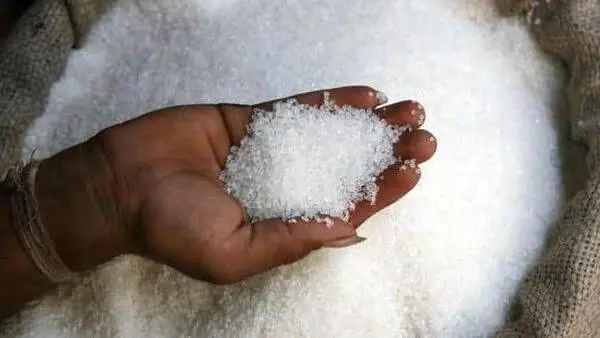
Wholesale sugar prices in India dropped by 15% following government approval for duty-free raw sugar imports and anti-hoarding measures. While wholesale rates settled near ₹62 per kg, retail prices remain elevated at around ₹75 per kg as merchants clear older stock prior to festive season demand.
Wholesale sugar prices decline following government intervention and duty-free imports, while retail consumer rates remain steady.
Executive Summary
Wholesale sugar prices across key Indian markets have registered a sharp correction of approximately 15% following the central government's policy pivot allowing duty-free raw sugar imports. Announced in August 2026 by the Ministry of Commerce and Industry via the Directorate General of Foreign Trade (DGFT), the intervention aims to arrest a nearly 40% surge in domestic prices. However, retail market rates have yet to reflect these wholesale reductions as local merchants continue clearing higher-cost inventories.
Wholesale Correction Follows Government Policy Intervention
NEW DELHI / KOLHAPUR — Wholesale rates for the sweetener experienced immediate downward pressure after authorities permitted the duty-free import of 1 million tonnes (10 lakh tonnes) of raw sugar under a Tariff Rate Quota (TRQ) valid through October 31, 2026. Factory-gate and wholesale prices dropped by roughly ₹800 per quintal over a three-day window, bringing wholesale rates down to approximately ₹62 per kg from previous highs exceeding ₹70 per kg.
According to market updates and trade tracking via the Ministry of Consumer Affairs, Food and Public Distribution, the price escalation was driven by lower-than-anticipated domestic production, adverse weather impacts on sugarcane yields, and substantial diversion toward ethanol manufacturing. In response, the government halted exports, initiated anti-hoarding checks through enforcement squads, and introduced strict stockholding limits for bulk industrial consumers using over 10 tonnes monthly.
Retail Lag and Consumer Impact
Despite the swift correction in bulk and wholesale brackets, household consumers have not yet experienced proportional relief at local grocery stores. Retail prices continue to hover around ₹75 per kg across various municipal markets.
Retailers note that the lag is primarily structural: shopkeepers are currently liquidating existing stocks purchased at peak wholesale rates earlier in August. Market analysts indicate that once legacy inventories are completely exhausted and imported raw sugar supplies integrate into the supply chain ahead of the festive season—including Ganesh Chaturthi, Durga Puja, and Diwali—retail prices are expected to gradually soften.
Official Sources Section
According to official notifications and policy declarations issued by the Directorate General of Foreign Trade (DGFT), the Ministry of Consumer Affairs, Food and Public Distribution, and market monitoring updates via the Press Information Bureau (PIB), the measures were implemented to stabilize domestic availability and maintain supply chain equilibrium.
Quote Section
"According to officials, the approved duty-free import quota alongside strict stockholding controls will ensure adequate domestic availability and suppress speculative price spikes through the approaching festive period."
Why It Matters
For households and commercial bakeries, confectionery units, and beverage manufacturers, stabilizing sugar prices is critical for managing input costs and consumer inflation ahead of peak festive demand. For agricultural traders and millers, the shift from export promotion to import facilitation highlights the delicate balance between biofuel mandates and food security.
Key Facts at a Glance
Policy Action: Authorization of 10 lakh tonnes of duty-free raw sugar imports under TRQ until October 31, 2026.
Wholesale Impact: Factory-gate and wholesale prices fell by about 15% (roughly ₹800 per quintal) to around ₹62 per kg.
Retail Status: Retail rates remain near ₹75 per kg as old, higher-priced inventories clear.
Regulatory Measures: Enforcement teams deployed against hoarding alongside stockholding limits for bulk industrial users.
FAQ Section
Why did wholesale sugar prices drop recently?
Wholesale prices fell by approximately 15% following the central government's decision to permit duty-free raw sugar imports and crack down on speculative hoarding.
Why are retail prices still high if wholesale rates have fallen?
Retailers are currently selling older stock purchased at peak wholesale rates; consumer prices are expected to ease once these inventories clear and new wholesale supplies arrive.
Until when is the duty-free import window open?
The duty-free import of raw sugar under the Tariff Rate Quota is permitted until October 31, 2026.
Where can stakeholders monitor official trade and stockholding notifications?
Official policy orders and circulars can be tracked directly through the Directorate General of Foreign Trade (DGFT) and the Ministry of Consumer Affairs, Food and Public Distribution.
Source: Directorate General of Foreign Trade (DGFT), Ministry of Consumer Affairs, Food and Public Distribution, Press Information Bureau (PIB)