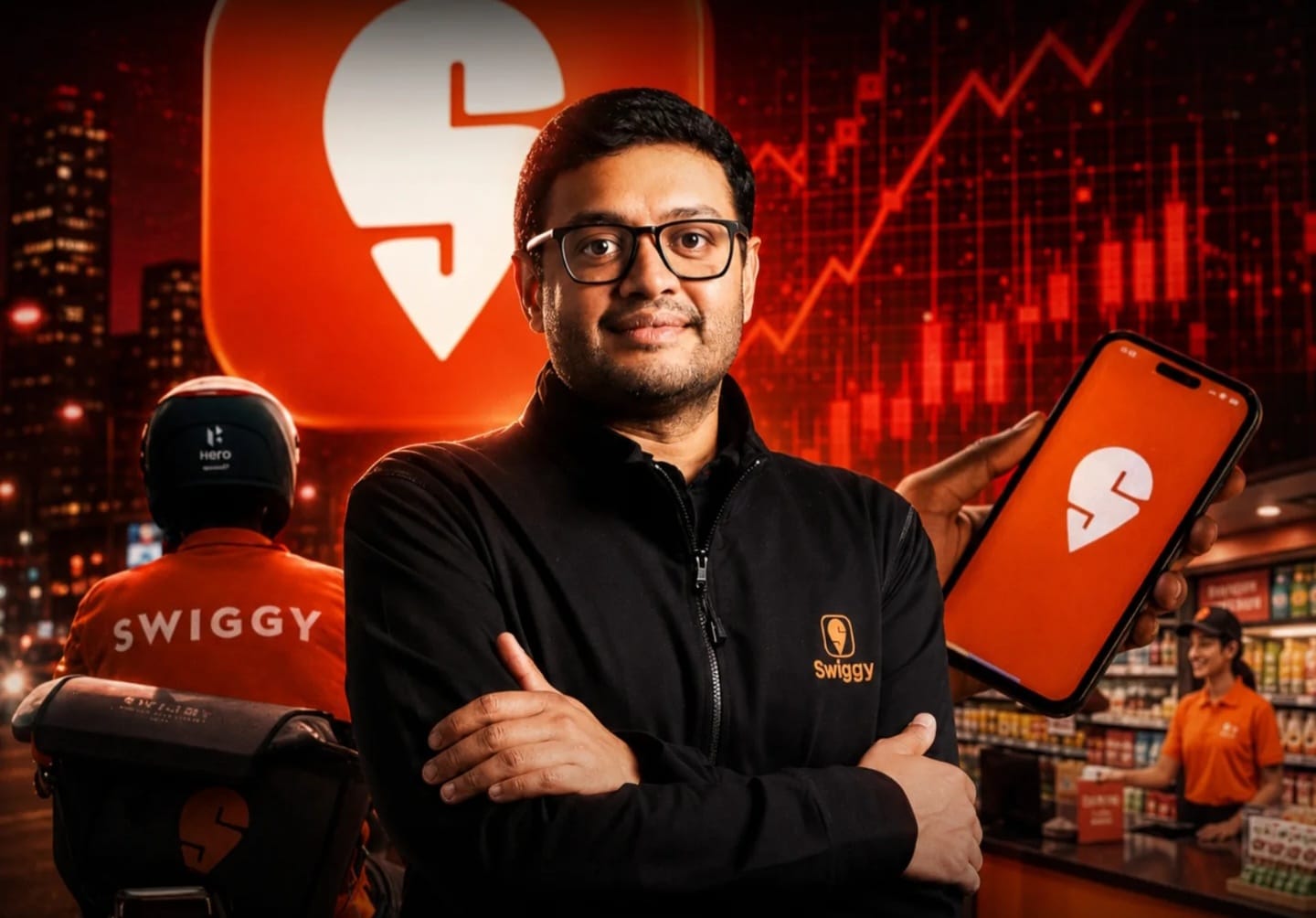
Swiggy shareholders have approved capping foreign ownership at 49.5%, qualifying the company as an Indian-Owned and Controlled Company. This regulatory milestone allows its quick commerce vertical, Instamart, to transition to an inventory-led model, improving procurement terms, supply chain control, and profit margins amid intense market competition.
BENGALURU, INDIA — In a major strategic milestone for India’s quick commerce landscape, Swiggy Limited has received shareholder approval to cap its aggregate foreign shareholding at 49.5%. The vote enables the food-tech giant to qualify as an Indian-Owned and Controlled Company (IOCC) under the Foreign Exchange Management Act (FEMA), clearing regulatory hurdles for its quick commerce vertical, Instamart, to move from a marketplace setup to an inventory-led business model.
The development arrives as quick commerce platforms face heightened operational costs, aggressive dark-store expansion, and narrowing contribution margins across major metro markets.
Shareholders Back Strategic Foreign Ownership Cap
According to regulatory filings submitted to stock exchanges following the company's 13th Annual General Meeting (AGM), investors overwhelmingly approved the amendment to Swiggy’s Articles of Association. The resolution to limit foreign shareholding received 99.9996% support, while the broader IOCC classification resolution passed with 93.97% of votes in favor.
The successful vote marks a decisive turnaround from May 2026, when a similar proposal failed to secure the required 75% special majority threshold. Under Indian Foreign Direct Investment (FDI) guidelines, e-commerce platforms with majority foreign ownership are strictly restricted to operating as pure-play marketplaces for third-party sellers. By ensuring majority domestic ownership, Swiggy gains the legal authority to buy, store, and sell goods directly through Instamart.
Margin Expansion and Direct Brand Sourcing
Transitioning to an inventory-led framework provides Swiggy with direct control over its dark store supply chain. Under the traditional marketplace model, quick commerce players act primarily as fulfillment agents for registered vendor entities, limiting their ability to negotiate volume discounts or manage margins directly.
According to equity research analysts at brokerages like JM Financial and Nomura, shifting to direct inventory ownership provides several critical financial levers:
Improved Sourcing Economics: Direct procurement from FMCG brands and manufacturers eliminates intermediary seller markups.
Private-Label Scaling: Enhanced flexibility to launch and scale high-margin in-house products and exclusive SKUs.
EBITDA Margin Gains: Analysts estimate the shift could expand Instamart's adjusted EBITDA margins by 50 to 100 basis points over time, aligning its operational economics with rival Blinkit.
Corporate Restructuring Lays Operational Groundwork
The approval follows a series of internal corporate reorganizations. Board filings indicate Swiggy has already approved transferring its quick commerce assets into a step-down subsidiary, Swiggy Instamart Pvt Ltd. Furthermore, the leadership team appointed separate vice-presidents to oversee finance across food delivery and quick commerce, signaling heightened focus on vertical-level profitability.
Company executive statements indicate that fully rolling out the inventory model across Instamart's network will take two to four quarters to implement operationally.
Official Sources Section
According to official disclosures filed with the Securities and Exchange Board of India (SEBI) and stock exchanges, Swiggy confirmed the passage of all special resolutions at its annual shareholder meeting. Statements from Swiggy leadership during quarterly earnings updates also highlighted that domestic institutional participation had steadily increased, facilitating the IOCC transition.
Quote Section
"Achieving IOCC status allows us the regulatory capability to open up an inventory-led model for Instamart, which represents a natural evolution for our quick commerce business and unit economics," stated Swiggy Chief Financial Officer Rahul Bothra during investor interactions.
Why It Matters
For Indian retail consumers and brands, Instamart's model shift will likely lead to higher product availability, lower stockouts, and broader product categories, including fresh produce and non-grocery retail. For investors, direct inventory control offers Swiggy a much-needed lever to narrow operational losses and accelerate its path toward adjusted EBITDA breakeven in quick commerce.
Key Facts at a Glance
Shareholder Resolution Passed: Swiggy capped aggregate foreign ownership at 49.5% with near-unanimous investor approval.
Regulatory Compliance: IOCC status fulfills FEMA requirements, permitting direct product sales and inventory holdings.
Financial Impact: Analysts project a 50–100 basis point margin improvement due to direct procurement and private-label scaling.
Execution Timeline: Full implementation across dark stores is anticipated within two to four quarters.
Frequently Asked Questions (FAQ)
What is an Indian-Owned and Controlled Company (IOCC)?
An IOCC is an Indian corporate entity where over 51% of ownership and management control rests with resident Indian citizens or domestic institutions, complying with FEMA regulations.
Why couldn't Swiggy hold inventory previously?
Indian FDI regulations prohibit e-commerce entities with majority foreign ownership (above 50%) from owning inventory directly, restricting them to a marketplace framework.
How does an inventory-led model benefit quick commerce companies?
It allows platforms to source directly from manufacturers, negotiate bulk discounts, manage dark store stock more efficiently, and sell higher-margin private labels.
When will Instamart fully switch to the inventory model?
Swiggy management projects that operational implementation will take approximately two to four quarters following regulatory updates.
Source: Swiggy Regulatory Filings / BSE / NSE, Ministry of Finance