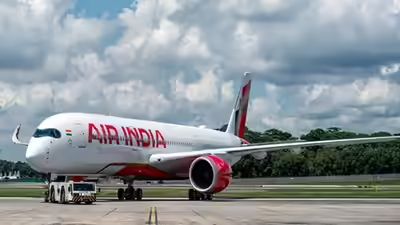
Three Air India Airbus A320 aircraft parked at IGI Airport’s Terminal 2 were damaged and taken out of operation after sudden storm winds hurled loose ground equipment into them on Sunday. The private operator noted that no advance weather warning was issued by Air Traffic Control to secure the tarmac hardware
NEW DELHI — A sudden, severe rainstorm threw ground operations into disarray at Indira Gandhi International (IGI) Airport on Sunday, June 7, 2026, causing significant physical damage to multiple commercial jetliners. According to official disclosures from the private airport operator, three Air India narrowbody aircraft parked in the tarmac bays near Terminal 2 were struck by heavy ground support equipment that drifted across the tarmac during intense crosswinds.
The consecutive collisions forced engineering teams to immediately pull all three standard-capacity aircraft out of active operation for structural integrity inspections. The incident occurred at approximately 4:40 PM, catching ground handlers off guard as heavy winds and torrential rain swept through the terminal grounds.
High Winds Overpower Tarmac Safety Anchorages
The incident was triggered by a rapid localized weather front that swept through the New Delhi region after a day of high summer temperatures. Terminal operations logs reveal that wind gusts peaked quickly, exerting enough aerodynamic pressure on unchocked or unsecured mobile maintenance platforms to turn them into dangerous tarmac hazards.
Information compiled by airport airside investigators indicates that multiple ground units broke free from their designated holding spots:
The loose heavy assets included a step ladder and a heavy maintenance trestle belonging to Air India Engineering and IndiGo. Pushed by wind, these heavy metal frames rolled across the asphalt until colliding directly into the aluminum fuselages and boarding doors of the stationary Air India planes.
Fleet Impact and Varied Damage Assessments
The three grounded aircraft are all Airbus A320-series single-aisle narrowbody jets, which typically carry between 156 and 162 passengers on domestic and regional routes. At the time of the storm, all three aircraft were entirely empty of passengers and cabin crews, preventing any injuries on the tarmac.
An analysis of airline engineering updates reveals a varied timeline for repairs across the damaged fleet:
| Affected Aircraft | Damage Classification | Specific Area Impacted | Estimated Grounding Time |
| Air India A320 (Jet 1) | Substantial | Main stairwell door frame and fuselage skin heavily buckled. | Extended grounding for deep structural repairs. |
| Air India A320 (Jet 2) | Minor / Superficial | Scuffs and shallow surface dents from rolling equipment. | 24 to 48 hours for standard aerodynamic checks. |
| Air India A320 (Jet 3) | Minor / Superficial | Superficial paint scrapes along the lower fuselage. | 24 to 48 hours for standard aerodynamic checks. |
While two of the narrowbody passenger jets are scheduled to return to active commercial flight rotations within the week, the third plane sustained deep structural deformation along its cabin entry framework, requiring long-term sheet-metal reconstruction.
The Controversy Over Missing Weather Alerts
The tarmac accident has sparked a heated debate regarding air traffic safety protocols and weather warnings. The private airport operator explicitly stated that the Air Traffic Control (ATC) center, managed by the Airports Authority of India, issued no advance weather warning or storm watch to the airport operator or the individual airlines ahead of the downpour.
Standard ground procedures mandate that when a severe weather warning is issued, all mobile tarmac equipment must be chained down, step ladders locked into heavy safety holds, and wheel chocks reinforced. Because no warning arrived, ground crews left the heavy hardware in standard standby positions, leaving them vulnerable to the sudden wind gusts.
An airline insider noted that other carriers also had aircraft affected by the sudden storm, though IndiGo personnel claimed their ground staff successfully intercepted their own step ladder before it could strike any planes.
Official Sources Section
The flight safety logs, tail evaluations, weather alert timelines, and equipment ownership details cited in this report are based on official public statements released by the Delhi Airport private operator, internal ground handling notes from Air India Engineering, and incident notifications filed with the Directorate General of Civil Aviation.
Quote Section
"According to officials, the ground equipment belonging to Air India Engineering and IndiGo moved from their positions due to the sudden inclement weather, hitting the aircraft parked at Terminal 2... Two of the three impacted aircraft will be back in operations soon, while the third will take a little longer to be fixed."
— Indira Gandhi International Airport Operational Statement
Why It Matters
When multiple aircraft are pulled from service at a major aviation hub like New Delhi, the operational fallout causes a chain reaction across regional flight networks. For business travelers and daily commuters, the sudden loss of three narrowbody passenger jets means short-notice flight delays, cancellations, and gate changes during busy summer schedules.
On an industrial scale, the incident emphasizes the critical need for tight, real-time communication between Air Traffic Control and ground crews. Without reliable, early weather alerts, even the most modern airports remain highly vulnerable to localized storms. Unsecured ground support equipment can easily turn into multi-million-dollar liabilities that disrupt travel and compromise safety.
Key Facts at a Glance
Tarmac Collision: Three parked Air India Airbus A320 passenger jets were taken out of operation after being struck by windblown ground equipment.
Zero Warning: The airport operator confirmed that Air Traffic Control issued no early weather warnings to alert airlines to secure their tarmac gear.
Shared Assets: The drifting equipment included an Air India Engineering maintenance trestle and an IndiGo boarding step ladder.
Varying Damage: Two planes suffered minor scrapes and will fly within days, while the third sustained deep fuselage impact damage requiring extended repairs.
No Injuries: The parking bays were clear of ground crews and passenger boarding operations when the storm hit, keeping injury numbers at zero.
FAQ Section
1. Which airline owned the aircraft damaged at IGI Airport?
All three of the damaged passenger aircraft taken out of active operations belong to Air India’s single-aisle narrowbody fleet.
2. What kind of ground equipment broke loose during the storm?
The storm winds broke loose a heavy mobile step ladder and an aircraft maintenance trestle, sending them rolling across the Terminal 2 apron.
3. Why wasn't the ground equipment locked down before the rainstorm arrived?
Ground handlers did not deploy heavy weather anchorages because Air Traffic Control failed to issue an advance severe weather alert to the airport operator or airlines.
4. Will this incident cause cancellations for traveling passengers?
Yes. Pulling three narrowbody aircraft out of rotation can cause short-notice scheduling adjustments and minor delays across domestic routes while Air India adjusts its fleet.
Source: Directorate General of Civil Aviation Safety Feed; Airports Authority of India ATC Log Records; Delhi International Airport Limited (DIAL) Operational Press Release Archive.