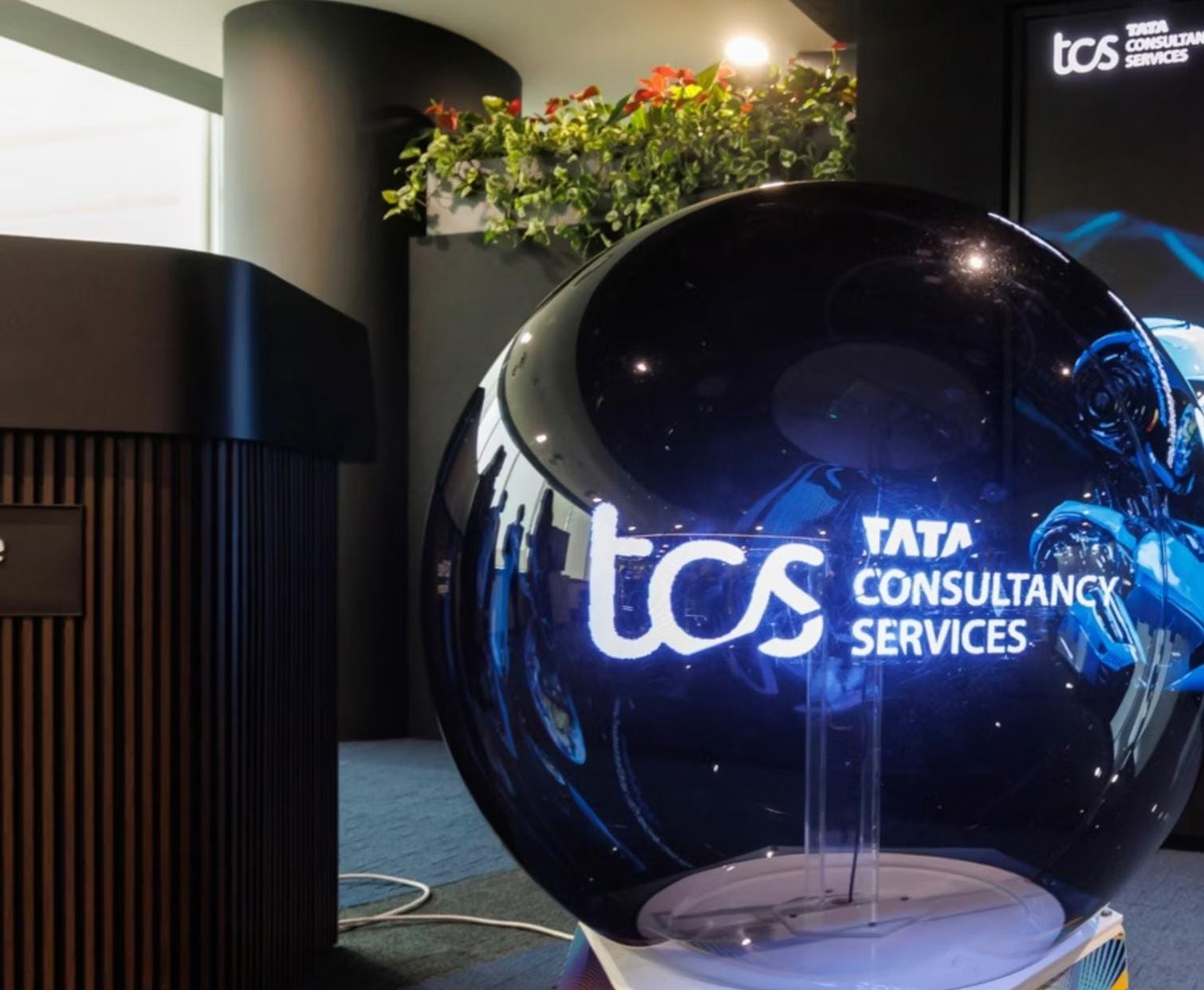
Tata Consultancy Services reported an AI revenue run-rate of $2.6 billion for Q1 FY27, confirming it has passed 10% to 15% productivity savings directly to clients. The company integrated 14,000 campus graduates, posted a ₹13,349 crore net profit, and projected a vertical recovery in manufacturing and life sciences by Q2.
MUMBAI — Tata Consultancy Services Limited (NSE: TCS), India's premier information technology services provider, disclosed on Thursday, July 9, 2026, that it is systematically passing artificial intelligence-driven productivity gains directly to its enterprise customers. During its first-quarter earnings conference call for the 2026–2027 fiscal year (Q1 FY27), executive management revealed that these software automation efficiencies have yielded average cost savings between 10% and 15% across several active client deployments.
AI Productivity Gains Shift Contract Economics
The financial disclosures come as global enterprise clients increasingly demand definitive financial returns on their artificial intelligence investments. TCS management confirmed that the deployment of generative and agentic artificial intelligence tools across software engineering, application modernization, and lifecycle management has structurally altered project execution metrics.
Rather than retaining these structural margins internally, the Mumbai-headquartered technology major is deploying an optimization-first commercial strategy. By passing a 10% to 15% pricing or effort reduction back to client corporations, TCS executives aim to anchor long-term vendor consolidation deals and stimulate discretionary spending on subsequent transformational AI initiatives.
This strategic framework helped protect the firm’s pipeline velocity, yielding a solid total contract value (TCV) of $9.5 billion for the three months ending June 30, 2026. The tech giant's annualized AI revenue run-rate similarly expanded by 13.6% sequentially, jumping to a record $2.6 billion during the reporting quarter. This growth was underpinned by landmark agreements, including a massive $800 million global AI-led business transformation deal with Swedish industrial group SKF.
Manufacturing and Life Sciences Turnaround Slated for Q2
While top-line performance remained resilient, overall revenue growth encountered localized friction, edging up by a modest 0.4% quarter-on-quarter in constant currency terms. Corporate filings submitted to the National Stock Exchange of India (NSE) highlighted temporary budget constraints within specific industrial sub-verticals, particularly across North American and European corridors.
However, executive leadership issued upbeat forward guidance regarding stalled industrial projects. Speaking to equity researchers and market analysts, the TCS executive team stated they expect a visible growth turnaround within the manufacturing and life sciences divisions beginning in the second quarter (Q2 FY27).
Management noted that delayed engineering pipelines, medical platform modernization programs, and sovereign cloud infrastructure deployments are showing strong signs of revival, which should provide broader operational momentum going into the second half of the fiscal year.
Massive Talent Injection via Campus Recruitment
To support these upcoming project pipeline commitments, TCS aggressively expanded its human capital base during the April–June window. The IT services bellwether successfully onboarded 14,000 campus graduates during Q1 FY27.
This structural intake drove the company's total closing headcount to 593,798 professionals as of June 30, 2026. This aggressive entry-level hiring strategy helps optimize delivery costs following recent annual wage hikes, which compressed the firm's consolidated operating margin by 130 basis points quarter-on-quarter down to 24.0%.
Concurrently, the company stabilized its trailing 12-month (LTM) IT services attrition rate at 13.6%, demonstrating an improving workforce retention landscape compared to previous macro cycles.
Official Sources Section
The operational metrics, quarterly profit parameters, and executive commentary presented in this article are based entirely on official corporate disclosures issued by Tata Consultancy Services Limited on July 9, 2026. Source documents include the unaudited financial statements filed with the Bombay Stock Exchange (BSE), official press releases, and verified transcripts from the corporate investor earnings conference call.
Quote Section
"We won multiple AI-led transformation deals with our dual commitment to AI-led optimization as well as innovation-led outcomes. These wins validate our approach to AI-led efficient IT operations and accelerated software engineering. The AI-driven productivity gains passed on to customers averaged 10% to 15% across projects."
— TCS Executive Management, Investor Analyst Call Transcript
"Q1 FY27 reflects continued growth momentum and the strength of our strategic positioning, despite geopolitical and macro-economic headwinds. We delivered a strong order book of $9.5 billion, including a marquee AI-led transformation deal with SKF, while continuing to add clients across key revenue bands and scaling our AI business."
— K Krithivasan, Chief Executive Officer and Managing Director of TCS
Why It Matters
The pricing adjustments implemented by TCS signal an evolving competitive paradigm within the global IT outsourcing market. As automated software generation engines and agentic systems compress the traditional human hours required to write code, technology vendors must pass these cost savings down to maintain market share. This development benefits corporate IT buyers by reducing administrative overhead, though it pressures service providers to consistently generate higher contract volumes to sustain long-term revenue growth.
Key Facts at a Glance
Efficiency Transfers: TCS confirmed that client organizations are realizing direct savings of 10% to 15% as project delivery benefits from integrated AI systems.
Vertical Outlook: Leadership expects the manufacturing and life sciences business lines to achieve a clear financial turnaround in Q2 FY27.
Workforce Scaling: The multinational successfully integrated 14,000 entry-level campus graduates during the first quarter to augment its digital delivery arms.
Financial Foundations: Consolidated net profit for the quarter rose nearly 5% year-on-year to ₹13,349 crore, matching underlying market expectations.
AI Revenue Runway: The firm's annualized AI revenue run-rate reached $2.6 billion, expanding 13.6% over the preceding three-month sequence.
Frequently Asked Questions
How are the 10% to 15% AI productivity gains calculated?
The efficiency gains reflect reductions in total engineering hours, streamlined testing schedules, and automated legacy code updates achieved across specific pilot projects and enterprise contracts using generative tools.
Why did TCS experience operating margin compression in Q1?
The 130 basis point reduction in operating margins to 24.0% was driven by the planned implementation of annual employee wage hikes alongside substantial on-going investments in sovereign cloud architectures and global AI infrastructure.
Which business segments are expected to lead the Q2 rebound?
TCS expects its manufacturing and life sciences verticals to drive the turnaround, supported by a healthy backlog of delayed transformation programs and renewed spending from North American industrial clients.
Sources: Tata Consultancy Services Investor Relations Portal, Company Disclosure to Stock Exchanges