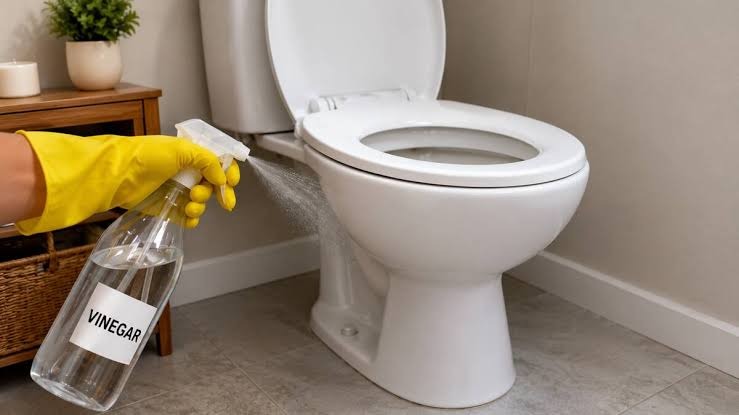
Spraying white vinegar around the base and exterior of toilets has gained traction as a low-cost, eco-friendly cleaning method. Experts highlight that the natural 5% acetic acid content in white vinegar effectively dissolves hard-water crusts, neutralizes lingering organic odors, and breaks down grime in hard-to-reach floor seams.
Households worldwide are increasingly adopting a simple maintenance habit of spraying white vinegar around the base of their toilets to combat stubborn bathroom hygiene blind spots.
As cleaning enthusiasts shift toward non-toxic routines, targeting the often-neglected perimeter where porcelain meets bathroom tile has emerged as a viral home-maintenance practice. Industry experts and cleaning specialists note that while traditional bathroom routines focus heavily on scrubbing the interior bowl, the floor seams, grout lines, and exterior base frequently accumulate persistent mineral residue, microscopic splashes, and odor-causing bacteria.
Chemistry and Mechanics of Vinegar Cleaning
According to home care documentation, standard distilled white vinegar contains approximately 5 percent acetic acid, giving it a mild acidic pH of around 2.5. This chemical composition allows the liquid to react directly with alkaline calcium and magnesium deposits left behind by hard water.
When sprayed around the base of a toilet fixture, the acetic acid helps loosen stubborn film and urine-acid residue that standard surface wipes often fail to lift. Specialists recommend misting the exterior perimeter, letting the solution sit for 10 to 15 minutes to allow adequate dwell time, and then wiping the area clean with a damp microfiber cloth.
Impact on Household Maintenance and Safety
The rising popularity of this cleaning practice stems from its high safety profile and cost-effectiveness compared to commercial chemical descalers. Because white vinegar is fully biodegradable and non-toxic, it presents minimal health risks for homes with small children or pets.
However, cleaning authorities emphasize important safety limitations. While vinegar effectively neutralizes odors and breaks down mineral crusts, public health agencies note that it does not replace EPA-registered disinfectants required to eliminate high-risk pathogens during illness outbreaks. Furthermore, experts strictly warn against mixing vinegar with chlorine-based bleach, as the combination triggers the release of toxic chlorine gas.
Quote Section
"According to official cleaning specialists and home care experts, treating the outer floor joints and the space behind the fixture as an active cleaning zone helps neutralize odors at their source rather than merely masking them," organizers stated.
Why It Matters
Adopting a targeted perimeter spray routine prevents long-term grime accumulation in difficult grout lines, reducing the need for heavy scrubbing later. For homeowners, consumers, and property managers dealing with hard-water regions, this affordable habit extends the lifespan of bathroom fixtures and keeps indoor air fresh without introducing harsh caustic fumes into living spaces.
Key Facts at a Glance
White vinegar contains roughly 5% acetic acid with a pH level of 2.5.
Spraying the base and letting it sit for 10 to 15 minutes loosens embedded mineral scale and urine residues.
The method successfully targets neglected floor seams and grout lines where bacteria typically multiply.
Combining vinegar with chlorine bleach creates hazardous chemical fumes and must be strictly avoided.
FAQ Section
Why is spraying vinegar around the toilet base recommended?
It targets neglected floor seams and grout lines where splashes, dust, and mineral films accumulate, neutralizing odors and breaking down residue.
How long should vinegar be left on the surface before wiping?
Cleaning specialists recommend letting the vinegar sit for 10 to 15 minutes to ensure adequate dwell time for breaking down mineral buildup.
Can vinegar replace chemical disinfectants?
No. While vinegar is an effective natural cleaner and descaler, it is not an EPA-registered disinfectant and should not be relied upon to sanitize surfaces after illness.
Is it safe to mix vinegar with commercial bleach?
Never mix vinegar with bleach. The combination produces toxic chlorine gas, which can severely irritate the respiratory tract and eyes.
Source: Good Housekeeping Institute, EPA, CDC, Journal of Clinical & Medicine Images Case Report