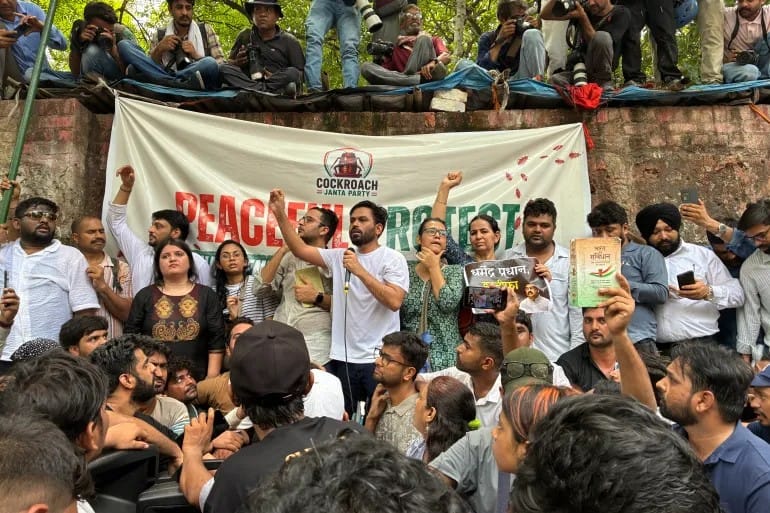
Hundreds of thousands of Generation Z students and activists have taken to the streets across 60 Indian cities to demand systemic education reforms following repeated competitive exam paper leaks. The movement marks a historic shift in Indian youth activism, challenging institutional governance through satyagraha and digital mobilization.
NEW DELHI, India — India is experiencing an unprecedented surge in youth-led demonstrations as hundreds of thousands of Generation Z protesters gather across New Delhi and over 60 major cities, demanding comprehensive national education reforms and official accountability. Initiated following recurring competitive examination paper leaks—including the National Eligibility cum Entrance Test (NEET)—the movement has grown into a nationwide civic movement uniting students, young professionals, and civil society groups.
The demonstrations represent a major generational shift in India, home to over 600 million people under the age of 30, as young citizens utilize satyagraha tactics, satirical digital campaigns, and peaceful marches to confront institutional systemic failures.
Origins and Rapid Expansion of the Movement
The agitation gained momentum following repeated administrative failures surrounding national competitive exams, which impacted millions of medical and university aspirants. What began as an online satirical initiative under the banner of the "Cockroach Janata Party" (CJP)—referencing judicial and political remarks directed at youth dissenters—quickly evolved into sustained street demonstrations at New Delhi's Jantar Mantar and across regional centers.
By mid-July 2026, the movement had expanded beyond student unions to include civil rights groups, families affected by exam-related student distress, and high-profile activists, including environmental innovator Sonam Wangchuk, who initiated a fast-unto-death in solidarity with student demands.
March to Parliament and Escalation of Security Measures
Tensions mounted on July 20, 2026, when over 100,000 young marchers attempted to proceed toward Parliament House in New Delhi. Security forces deployed barricades, water cannons, and crowd-control measures, leading to clashes and detentions.
Despite police action and internet restriction attempts, demonstrations have persisted across educational hubs in Maharashtra, West Bengal, Telangana, and Uttar Pradesh. Protesters continue to demand legal protections against examination fraud, independent audits of testing agencies, and the resignation of key education administrators.
Official Sources Section
Information regarding student demands, march security measures, and official responses is derived from announcements by the Ministry of Education, security updates from the Delhi Police, and statements published by civil liberty groups including the People's Union for Civil Liberties (PUCL).
Quote Section
"Young people took ownership as they felt it was time to discuss the future of education on the streets," stated representatives from the People's Union for Civil Liberties (PUCL) in a public summary evaluating the civil demonstrations.
Why It Matters
The movement signifies a turning point in India's democratic engagement, demonstrating how Gen Z can bypass traditional party apparatuses to influence national policy. The outcome of these protests will directly affect testing protocols, employment prospects, and institutional transparency for hundreds of millions of students navigating India's highly competitive education system.
Key Facts at a Glance
Primary Cause: Systemic leaks and irregularities in national entrance examinations like NEET.
Scale: Demonstrations spanning New Delhi and over 60 cities across multiple Indian states.
Key Figurehead: Environmental activist Sonam Wangchuk joined the hunger strike at Jantar Mantar.
Core Demands: Structural education reforms, rigorous testing oversight, and official accountability.
Frequently Asked Questions (FAQ)
What triggered the Gen Z protests in India?
The protests were triggered by repeated paper leaks and administrative irregularities in national competitive exams, particularly NEET, affecting millions of youth.
What is the Cockroach Janata Party (CJP)?
It began as a satirical online movement by youth activists responding to judicial and political remarks, before growing into an organized campaign for education reform.
Where are the main protest sites located?
While New Delhi's Jantar Mantar remains the central hub, demonstrations have spread to over 60 cities nationwide.
What are the main demands of the protesters?
Protesters are demanding legal safeguards against paper leaks, structural reforms in testing bodies, independent investigations, and administrative resignations.
Source: Statements released by the Ministry of Education, court filings reviewed by the Supreme Court of India, and news bulletins verified by The Wire and the People's Union for Civil Liberties (PUCL).