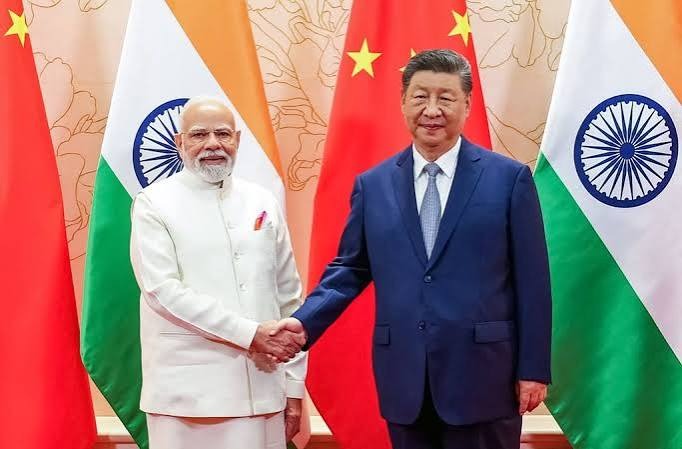
Despite a cautious diplomatic thaw between New Delhi and Beijing, Chinese soft-power outreach in India faces severe roadblocks. Analysts attribute this disconnect to a heavy reliance on top-down state media propaganda, a severe shortage of non-governmental opinion leaders, and historical public mistrust following border tensions.
NEW DELHI — Even as bilateral state-level channels between India and China register pragmatic adjustments, recent policy analyses indicate that Beijing continues to struggle significantly with winning over the Indian public. According to recent academic evaluations published by researchers at Tsinghua University, deep-seated historical frictions, a persistent cognitive gap, and top-down communication strategies have limited Beijing's soft-power outreach. While diplomatic and trade mechanisms have experienced tentative resumptions following years of friction, experts note that the lack of grassroots cultural alignment leaves public sentiment deeply cautious.
The Limitations of Top-Down Public Diplomacy
The core obstacle in shifting public sentiment lies in the structural mechanics of China's external communication apparatus. According to a research paper published in International Communications by Zhou Qingan, dean of Tsinghua University’s school of journalism, and research assistant Li Yiming, Beijing's current approach relies heavily on official state media outlets that prioritize policy promotion.
The authors argue that this framework remains weak, lacks long-term planning, and fails to resonate with the broader Indian population. Furthermore, the cultivation of non-governmental voices, independent cultural exchanges, and digital opinion leaders remains severely inadequate compared to Western communication footprints within South Asia.
Historical Distrust and the Cognitive Gap
Beyond media strategy, a massive cognitive gap continues to separate the two populations. Deep-rooted historical memories—particularly the fallout from the 1962 border conflict and the ongoing security anxieties stemming from the 2020 Galwan Valley clashes—have shaped an enduring backdrop of public suspicion in India.
Chinese researchers have pointed out that mutual stereotypes are reinforced by respective social media ecosystems, where competitive geopolitical narratives frequently overshadow economic cooperation. Consequently, even when governments attempt transactional stability, public skepticism remains resilient against standard promotional messaging.
Quote Section
"Though the relationship between the Chinese and Indian governments has been thawing, Beijing has yet to win over the Indian public as it lacked a long-term strategy and communication channels."
— According to policy researchers Zhou Qingan and Li Yiming from Tsinghua University's School of Journalism.
Why It Matters
The friction in winning public hearts and minds demonstrates that high-level state diplomacy cannot easily bypass societal skepticism. For policymakers, investors, and regional analysts, this persistent trust deficit means that economic and trade adjustments will likely remain pragmatic and transactional rather than evolving into deeper strategic alignment.
Key Facts at a Glance
Communication Deficit: Beijing's reliance on top-down state media fails to engage the broader Indian demographic.
Strategic Gap: Researchers emphasize an urgent need for bottom-up engagement and non-governmental dialogue.
Historical Baggage: Lingering public caution is heavily influenced by past border standoffs and geopolitical rivalries.
Transactional Ties: Economic and diplomatic thaw remains driven by practical state interests rather than public warmth.
FAQ Section
Why is Beijing struggling to influence public opinion in India?
Analysts point to an over-reliance on state-run promotional media, a lack of long-term grassroots planning, and inadequate cultivation of non-governmental opinion leaders.
Does the diplomatic thaw include efforts to change public perception?
While governments have resumed limited dialogue, trade, and transport links, public diplomacy efforts by Beijing remain top-down and have failed to bridge the cognitive gap between populations.
What role do historical factors play in modern Indian public sentiment toward China?
Events such as historical border conflicts and recent military standoffs have established a baseline of public skepticism that resists conventional state messaging.
How do researchers suggest Beijing improve its outreach?
Scholars advocate for an urgent pivot toward bottom-up strategies, focusing on non-governmental channels and cultural platforms that resonate organically with the Indian public.
Source: South China Morning Post, Eurasia Review, International Communications Journal