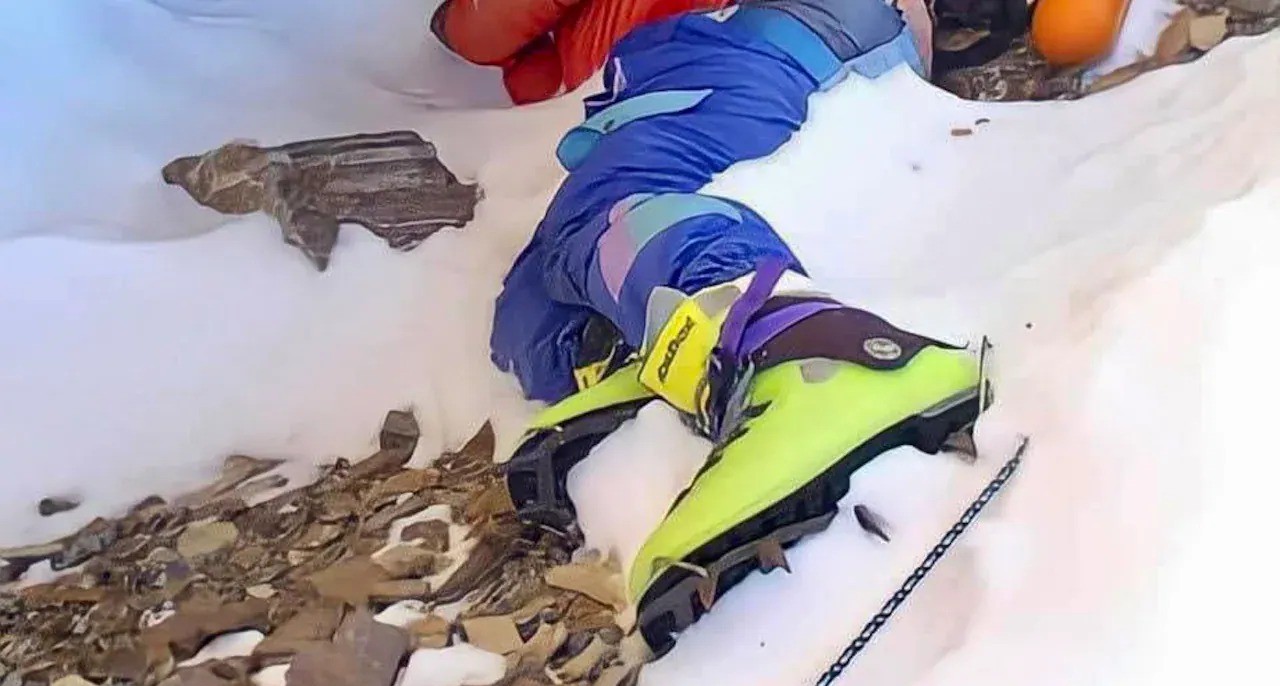
India is undertaking a high-risk expedition to recover the body of ITBP soldier Dorje Morup—infamous as Everest's "Green Boots"—nearly 30 years after his death in a 1996 blizzard. The ITBP has issued tenders inviting elite high-altitude teams to execute the complex mission from the Tibetan side by October 2026.
NEW DELHI — In one of the most daring high-altitude recovery operations planned in mountaineering history, Indian authorities have mobilized efforts to bring home the remains of an elite soldier frozen on Mount Everest since 1996. Announced by the Indo-Tibetan Border Police (ITBP), the mission targets the retrieval of Lance Naik Dorje Morup, widely known to generations of climbers as "Green Boots". Resting at an altitude of approximately 8,500 meters (27,887 feet) inside a limestone alcove on the mountain's northern ridge, the body became a grim, recognizable landmark following a catastrophic blizzard that struck the historic Indian expedition. Recent DNA evaluations and clothing cross-verification officially confirmed the identity of the remains, prompting the government to launch an official repatriation push ahead of an October deadline.
The 1996 Tragedy and the Legend of 'Green Boots'
The historical backdrop of the mission traces back to May 10, 1996, when a six-member ITBP team attempted to scale Mount Everest via the rigorous northern Chinese route. While severe weather forced half the team to turn back, climbers Dorje Morup, Tsewang Smanla, and Tsewang Paljor pressed forward, successfully reaching the summit. However, a sudden, blinding blizzard trapped the trio during their descent.
While the other two climbers vanished into the storm, Morup’s body came to rest in a shallow cave along the main climbing route. Clad in distinct lime-coloured Koflach mountaineering boots, the body served as an unavoidable waypoint for passing expeditions for nearly 30 years. For decades, public consensus mistakenly attributed the moniker to teammate Tsewang Paljor; however, recent ITBP archival analysis and DNA testing definitively established the identity as Dorje Morup.
Logistical Challenges of the 'Death Zone' Recovery
Executing a retrieval operation at 8,500 meters presents extreme physical and environmental hazards. Operating within Everest's notorious "death zone"—where ambient temperatures plunge to -40°C and oxygen levels are roughly one-third of sea-level measurements—places recovery personnel at severe risk.
According to high-altitude climbing experts and expedition tenders, the mission requires an elite team of 10 to 12 summit-capable mountaineers and experienced Sherpa guides to fix ropes, manage treacherous rocky outcrops on the northern face, and navigate the immense dead-weight of frozen remains. The ITBP's formal tender mandates that the contracted agency successfully transfer the remains down to base camp and eventually to New Delhi, providing closure to the soldier's family in Ladakh.
Quote Section
"The all-round efforts to bring our braveheart home underscore our unwavering commitment to our personnel, ensuring that those who make the ultimate sacrifice in the line of duty are returned to their families with dignity."
— According to official statements released by Indo-Tibetan Border Police (ITBP) representatives.
Why It Matters
The planned repatriation shifts a decades-old mountaineering landmark back into a human context, honoring a fallen soldier who gave his life for the nation. For families of missing service members and the broader climbing community, the operation establishes a vital precedent regarding institutional responsibility for recovering high-altitude casualties.
Key Facts at a Glance
Target Subject: Lance Naik Dorje Morup of the Indo-Tibetan Border Police.
Location: Limestone alcove at 8,500 meters on Everest's North Ridge.
Timeline of Disappearance: May 1996 during a severe high-altitude blizzard.
Projected Completion: Retrieval targeted ahead of an October deadline.
FAQ Section
Who was 'Green Boots' on Mount Everest?
For nearly 30 years, "Green Boots" was the widely recognized nickname for the frozen body of Indian ITBP climber Dorje Morup, who perished near the summit during a 1996 storm.
Why is recovering a body from 8,500 meters so difficult?
The site lies within Everest's death zone, characterized by extreme cold (-40°C), minimal oxygen, steep vertical drops, and heavy frozen remains that make transport physically exhausting and hazardous.
How was the identity of the body confirmed?
The ITBP confirmed the identity through rigorous DNA testing, personal equipment tracking, and cross-referencing archival data from the 1996 expedition.
What will happen to the remains once brought back to India?
Following formal DNA verification upon repatriation, the family plans to hold a funeral near Martyrs Park in Leh, Ladakh, honoring his legacy.
Source: Indo-Tibetan Border Police, BBC News, The Guardian