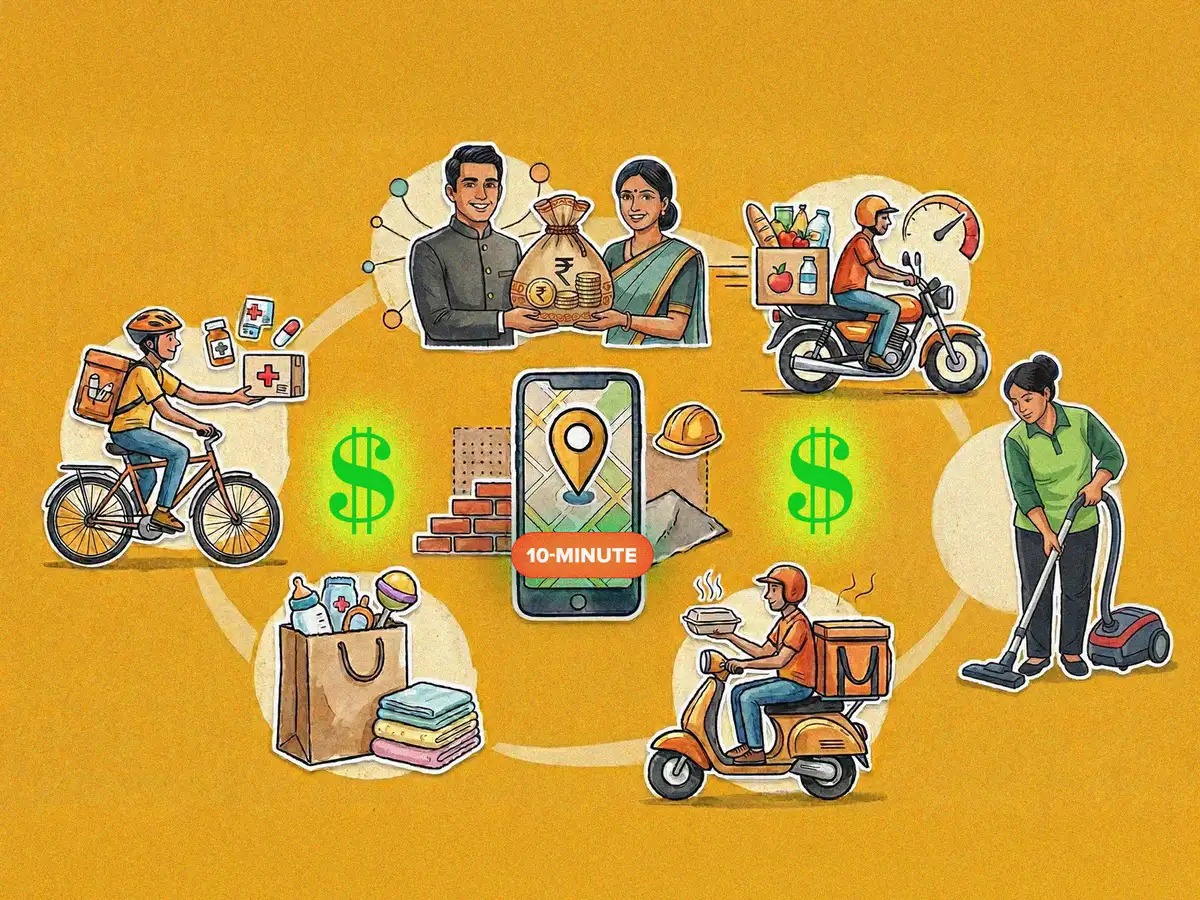
India’s quick-commerce sector is maturing, shifting toward profitability as it targets a $35 billion market. However, this growth rests on a gig workforce facing significant economic precarity, safety hazards, and algorithmic pressure. The industry now faces intensifying calls for structural accountability and social security protections for its delivery partners.
As platforms race toward profitability, the 10-minute delivery model faces mounting scrutiny over the physical, mental, and safety risks borne by the gig workforce.
NEW DELHI — India’s quick-commerce sector, which transformed urban consumption with promises of groceries and essentials arriving in 10 to 30 minutes, is entering a more sober, mature phase. While the industry pushes toward a projected $35 billion market value by 2030, a growing chorus of labor activists, researchers, and delivery partners is challenging the "innovation" narrative, highlighting a steep human cost hidden behind the app-based convenience.
The industry’s rapid expansion, led by major players like Blinkit, Zepto, and Swiggy Instamart, has created one of the world’s largest gig workforces. However, reports indicate that this workforce is increasingly vulnerable, caught between algorithmic management and the intense pressures of a speed-driven delivery culture.
The Algorithmic Pressure Cooker
At the heart of the debate is the "10-minute" delivery promise. Delivery partners allege that the pressure to meet these rigid timelines—often regardless of traffic, weather, or road conditions—forces them to engage in dangerous driving behaviors, including jumping traffic signals and driving against the flow of traffic.
"At the traffic signals, delivery partners are often worried that any delays might result in lower ratings, loss of incentives, or even account suspension," notes one labor report. This constant state of urgency creates significant physical and psychological stress, with riders reporting exhaustion, anxiety, and long hours without adequate breaks.
Economic Precarity and Gig Work
While platforms classify delivery personnel as "partners" or "independent contractors," researchers argue that the reality is closer to employment without the benefits. Unlike formal employees, these gig workers generally lack access to health insurance, provident funds, paid leave, or retirement benefits.
Furthermore, income remains highly unpredictable. Pay structures are typically based on the number of deliveries rather than hours worked, making earnings susceptible to algorithmic changes and demand fluctuations. According to the Economic Survey 2025–26, nearly 40% of gig workers in India earn less than ₹15,000 per month, leaving many in a state of financial precarity.
Safety Hazards in an Unpredictable Environment
The risks for delivery partners extend beyond just speed. The lack of standardized occupational safety laws in the gig economy leaves workers largely on their own when faced with road accidents or work-related injuries.
In extreme conditions, such as India’s severe heatwaves where temperatures can exceed 45°C, delivery riders face heightened risks of dehydration and heat exhaustion. While some companies have implemented summer mitigation measures like hydration support or cooling stations at "dark stores," these remain inconsistent across the industry, and riders often report that slowing down to stay safe results in direct financial penalties through missed incentive targets.
Official and Industry Perspectives
Industry analysts from Bernstein suggest that the sector is shifting its focus from rapid, loss-making expansion to unit economics and profitability. While platforms are diversifying into higher-margin categories like gourmet groceries and non-grocery items to increase average order values (AOV), the core delivery model remains labor-intensive.
Organizers and industry representatives have defended their models, emphasizing the technological and logistical achievements that make rapid delivery possible. Some firms have introduced structured breaks and heat-safety training, though critics argue that such measures do not address the fundamental structural power imbalance.
Why It Matters
The debate over quick commerce is a moral challenge for a society that values speed but often ignores the insecurity of those fulfilling the promise. As the gig workforce is projected to grow to 23.5 million by 2030, the question of whether India’s convenience-led economy can be socially defensible remains a critical issue for policymakers, regulators, and consumers alike.
Key Facts at a Glance
Market Growth: Quick commerce is projected to reach a $35 billion potential serviceable addressable market by FY30.
Workforce Size: The Indian gig workforce grew to approximately 12 million in FY 2024–25 and is projected to reach 23.5 million by 2029–30.
Income Concerns: Nearly 40% of gig workers earn less than ₹15,000 per month.
Structural Risks: Delivery partners frequently face road safety hazards and lack access to standard social security benefits like insurance or provident funds.
FAQ
Are quick-commerce platforms profitable?
Most platforms are currently working toward profitability and are shifting their strategy from aggressive expansion to sustainable unit economics, though many still operate with significant losses.
Why do delivery workers face so much pressure?
Pressure stems from algorithmic management, customer expectations, and incentive structures that prioritize speed and delivery volume over hours worked or worker safety.
What protections do gig workers have in India?
Currently, most gig workers are classified as "partners" rather than employees, meaning they do not receive standard labor law protections like health insurance, paid leave, or retirement benefits.
What is the "10-minute" model’s impact on road safety?
The intense time pressure encourages riders to speed, jump traffic signals, and ignore safety norms to avoid penalties, significantly increasing the risk of road accidents.
Source: Business World, Economic Times, Jus Corpus, HR News, Vidhikarya, Observer Research Foundation, Business Standard