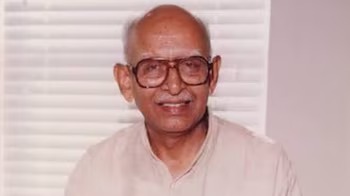
K.S. Sudarshan, the fifth RSS Sarsanghachalak (2000–2009), was a visionary intellectual who modernized the organization's ideology. A trained engineer, he championed the Swadeshi economic model and a scientific approach to Hindutva. His focus on self-reliance, national security, and social reform laid the foundational groundwork for many contemporary Indian policy initiatives.
As the fifth Sarsanghachalak, K.S. Sudarshan redefined the RSS’s ideological and economic framework, leaving a lasting imprint on modern Indian nationalist thought.
NAGPUR – K.S. Sudarshan, who served as the fifth Sarsanghachalak (Chief) of the Rashtriya Swayamsevak Sangh (RSS) from 2000 to 2009, remains one of the most intellectually rigorous leaders in the organization's history. A trained engineer with a polyglot’s intellect, Sudarshan transformed the Sangh’s approach to global affairs, economic self-reliance, and the cultural assertion of Hindutva during a pivotal decade for India.
A Visionary Ideologue
Sudarshan’s tenure was marked by a synthesis of deep-rooted cultural traditionalism and a modern, scientific worldview. As a former head of the RSS Bauddhik (intellectual) cell, he possessed a rare ability to translate complex geopolitical and civilizational trends into a theoretical framework that resonated with swayamsevaks and intellectuals alike.
His philosophy was built on the core tenet of Swadeshi—a model of economic and technological self-reliance that he championed long before it gained contemporary political momentum. Colleagues and associates frequently noted his "awesome" grasp of subjects ranging from metaphysics and environmental sustainability to global diplomacy, which he used to argue that India’s path to progress must be rooted in its own civilizational ethos rather than colonial legacies.
Intellectual Foundations of Modern Policy
Analysts often point to Sudarshan as the architect of the ideological foundations underpinning several key policy frameworks seen in contemporary India. His focus on "Atmanirbhar Bharat" (Self-reliant India) was rooted in the Swadeshi model he developed alongside thinkers like Dattopant Thengadi.
Furthermore, he was an early and vocal advocate for addressing illegal migration, particularly from Bangladesh, viewing it not merely as a demographic challenge but as an existential threat to national security. His advocacy for a more assertive, "unapologetic" form of Hindutva, presented through a scientific and logical lens, shifted the internal discourse of the RSS from reactive to proactive, influencing the organization's trajectory well into the 21st century.
Bridging Barriers and Internal Discipline
Beyond his intellectual contributions, Sudarshan was known for his accessibility and unconventional leadership style. He broke organizational barriers by engaging in direct dialogues with diverse sections of society, including Islamic scholars and Christian leaders, often challenging misconceptions about the Sangh’s exclusionary nature. He was also a staunch advocate for social reform, campaigning heavily against ostentatious displays of wealth during weddings and societal ills like female foeticide.
Internally, he emphasized austerity and discipline, mandating simple living standards for swayamsevaks within Sangh offices to ensure the organization remained grounded in its mission.
Official Sources
RSS Facts: Official biography and institutional history of K.S. Sudarshan's tenure.
VSK Telangana: Documentation of his contributions to Swadeshi and Bharatiya languages.
Grokipedia: Analysis of his organizational impact and transition of leadership.
Why It Matters
Sudarshan's leadership was characterized by a principled confrontation over political compromise. By placing ideological purity above electoral expediency, he helped the RSS navigate the complexities of coalition governance during the early 2000s. His legacy persists in the current emphasis on indigenous technological development, cultural nationalism, and the strategic assertion of India’s identity on the global stage.
Key Facts at a Glance
Tenure: Served as the fifth Sarsanghachalak of the RSS from 2000 to 2009.
Academic Background: Held a Bachelor of Engineering (Honours) in Telecommunications.
Key Contributions: Championed the Swadeshi economic model and modern, scientific perspectives on Hindutva.
Ideological Impact: Laid the intellectual groundwork for initiatives like Atmanirbhar Bharat and rigorous citizenship policies.
Frequently Asked Questions
How did Sudarshan influence the RSS economy policy?
He was a primary architect of the Swadeshi model, emphasizing indigenous production and self-reliance to reduce dependence on multinational corporations and foreign economic structures.
What was his approach to interfaith dialogue?
Sudarshan frequently engaged with Islamic ulema and maulanas, and advocated for an Indian-centric church framework for Christians, aiming to build a national identity free from foreign control.
Why is he considered a "modernizer" of Hindutva?
He presented Hindutva not just as a religious concept, but as a scientific and civilizational response to global challenges like environmental degradation and cultural erosion.
Source: RSS Facts, VSK Telangana, Grokipedia