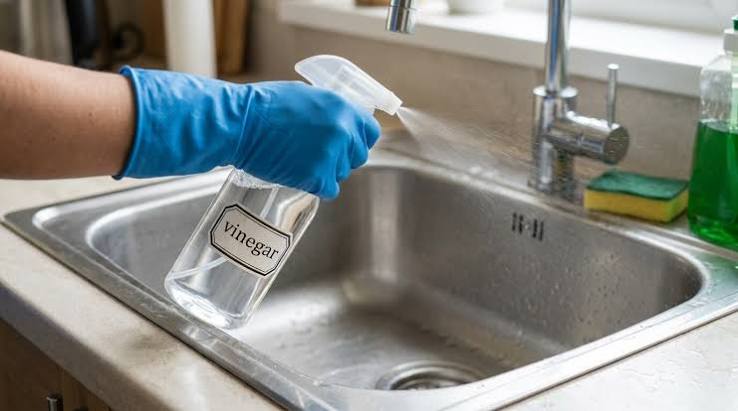
Spraying vinegar on the kitchen sink is an effective method for dissolving hard-water scale and mineral deposits. However, experts warn that the acidic solution can etch natural stone countertops and degrade sealants if not used carefully and rinsed promptly with clean water.
LONDON / NEW YORK — Homeowners frequently turn to natural cleaning solutions for routine maintenance, with spraying vinegar on the kitchen sink emerging as a popular method for tackling mineral deposits and surface grime.
While acetic acid offers natural deodorizing and mild disinfecting properties, sanitation authorities and material manufacturers caution that improper application can damage vulnerable plumbing fixtures. Understanding the chemical interaction between acidic cleaning agents and different countertop materials is essential for preventing costly home maintenance errors.
The Cleaning Mechanism of Acetic Acid
Household white vinegar typically contains around 5% acetic acid, which acts as a mild solvent capable of dissolving alkaline mineral deposits. According to consumer product safety and sanitation guidelines, spraying vinegar on the kitchen sink effectively breaks down calcium carbonate scaling, soap scum, and hard-water spots that accumulate around faucets and stainless-steel basins.
Furthermore, the acidic properties help neutralize sulfur-based odors originating from organic waste trapped in drain traps. However, cleaning specialists emphasize that vinegar is not a registered broad-spectrum disinfectant. While it can inhibit certain bacteria like E. coli or Salmonella to a limited degree, it does not replace EPA-registered disinfectants required for rigorous kitchen sanitization.
According to official consumer safety reports, material science disclosures, and home maintenance bulletins:
Mineral Dissolution: Acetic acid actively breaks down calcium and magnesium hard-water deposits.
Odor Neutralization: Neutralizes alkaline odors caused by food residue in drain channels.
Disinfection Limitations: Functions as a mild cleaner but lacks the efficacy of commercial disinfectants against resilient pathogens.
Material Sensitivity: Prolonged exposure can etch natural stone, degrade specific silicone sealants, and dull polished metal finishes.
Risks and Material Degradation Hazards
Despite its utility on stainless steel and ceramic basins, spraying vinegar on the kitchen sink carries significant risks when used near sensitive countertop materials. Material scientists and stone fabrication associations warn that acetic acid reacts chemically with calcium-based stones, including marble, limestone, and travertine.
Applying acidic liquids to these surfaces can cause permanent chemical etching, dulling the polished finish and pitting the stone. Additionally, continuous runoff can degrade the silicone sealants around sink rims, potentially leading to water seepage and cabinet water damage over time.
Official Sources Section
Quote Section
"According to cleaning product safety experts and material science guidelines, while acetic acid is effective for dissolving mineral buildup on stainless steel, homeowners must exercise caution to prevent chemical damage to natural stone countertops and rubber seals."
Why It Matters
For homeowners and property managers, utilizing natural ingredients like vinegar offers a cost-effective and eco-friendly approach to routine chores. However, recognizing the limitations and potential hazards of acid-based cleaners prevents accidental damage to expensive kitchen installations such as marble benchtops and specialized plumbing fixtures, safeguarding household investments.
Key Facts at a Glance
Primary Agent: 5% acetic acid solution (white vinegar).
Effective Use: Removing hard-water scale and soap scum from stainless steel or ceramic sinks.
Major Risk: Chemical etching and permanent dulling of natural stone countertops (marble, limestone).
Best Practice: Rinsing thoroughly with water immediately after application and avoiding prolonged contact.
FAQ Section
Why do people spray vinegar on the kitchen sink?
Spraying vinegar on the kitchen sink helps dissolve hard-water mineral deposits, removes soap scum, and neutralizes unpleasant food odors.
Can vinegar damage my kitchen countertops?
Yes, if your countertops are made of natural stone containing calcium carbonate—such as marble, travertine, or limestone—acidic vinegar can cause permanent etching and dull spots.
Is vinegar an effective kitchen disinfectant?
While vinegar possesses mild antibacterial properties, sanitization experts note it is not a registered disinfectant and should not replace commercial sanitizers for eliminating dangerous foodborne pathogens.
Where can homeowners check official guidelines for cleaning delicate kitchen surfaces?
Detailed care and maintenance manuals are published directly through the Natural Stone Institute Care Portal and American Cleaning Institute.
Source: NSF International, Natural Stone Institute, American Cleaning Institute, Better Homes & Gardens