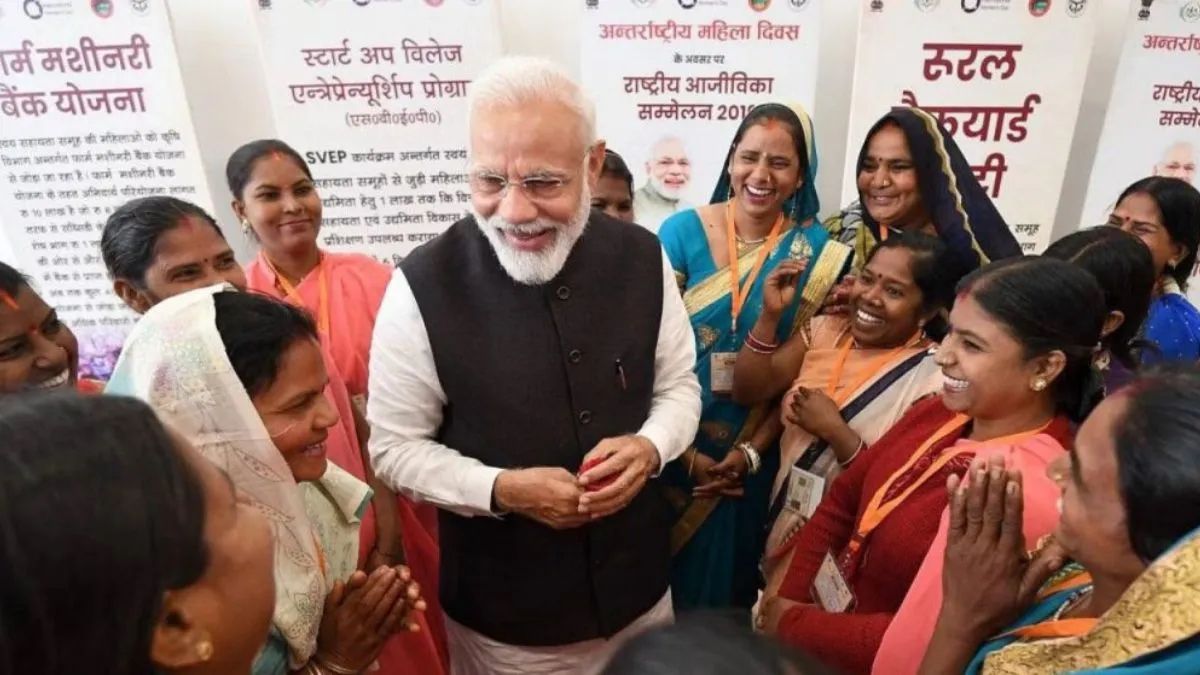
Driven by grassroots self-help groups, India’s Lakhpati Didi initiative has empowered over 3.46 crore rural women to achieve sustainable annual household earnings exceeding Rs 1 lakh. Implemented by the Ministry of Rural Development, the program leverages structured skill training, micro-credit linkages, and diversified agricultural enterprises to transform local economies.
Spurred by targeted financial inclusion and localized enterprise models, millions of rural households cross vital income milestones across the nation.
In a transformative shift for rural economic development across India, official deployment metrics released by the Ministry of Rural Development confirmed that over 3.46 crore women have crossed the threshold to become certified Lakhpati Didis. Operating under the broader framework of the Deendayal Antyodaya Yojana – National Rural Livelihoods Mission (DAY-NRLM), the nationwide program aims to secure sustainable annual household incomes exceeding Rs 1 lakh for members of women’s Self-Help Groups (SHGs). As administrative data highlights massive participation across agricultural, artisanal, and dairy sectors, the initiative serves as a core driver of grassroots financial resilience and women-led micro-entrepreneurship.
Mechanics of the Livelihood Transformation Model
Achieving the status of a Lakhpati Didi requires structured economic engagement sustained across multiple agricultural seasons or business cycles. According to program guidelines, beneficiaries must demonstrate an average monthly household income of at least Rs 10,000 derived from diversified micro-enterprises. Rather than relying on direct welfare handouts, the framework focuses on institutional capacity building, peer mentoring through community resource persons, and robust bank credit linkages.
Key operational pillars supporting this economic framework include:
Diversified Livelihood Portfolios: Encouraging members to engage in multi-source revenue generation, spanning organic farming, livestock rearing, food processing, handicrafts, and modern tech ventures like drone operation services.
Capitalization Support: Facilitating collateral-free institutional loans up to Rs 20 lakh per SHG, backed by interest subventions and revolving community investment funds.
Digital Integration: Utilizing the Aajeevika Register and digital tracking applications at the village level to monitor enterprise output, inventory management, and market accessibility.
Structured Mentorship: Deploying cascade training methodologies to impart financial literacy, accounting skills, and modern supply chain management directly to rural cooperatives.
Impact on Regional Growth and Economic Inclusion
For local businesses, financial institutions, and regional markets, the surging economic power of rural women has unlocked unprecedented consumer demand and cooperative production capacity. State-level data compiled by the ministry indicates substantial participation across high-density rural belts, with states like Maharashtra, Bihar, West Bengal, and Uttar Pradesh reporting millions of active beneficiaries. Economists note that channeling credit through women-led collectives significantly improves household savings rates, enhances child nutrition, and reduces dependency on informal, high-interest moneylenders.
Why It Matters
Empowering women through structured micro-enterprise integration fosters macroeconomic stability at the village level. By institutionalizing credit access and skills training, the model converts informal household labor into formal, productive economic output.
Key Facts at a Glance
Nodal Ministry: Ministry of Rural Development, Government of India.
Umbrella Scheme: Deendayal Antyodaya Yojana – National Rural Livelihoods Mission (DAY-NRLM).
National Beneficiary Count: Over 3.46 crore rural women empowered as Lakhpati Didis.
Core Financial Benchmark: Sustained annual household income exceeding Rs 1 lakh.
FAQ Section
What defines a beneficiary under the Lakhpati Didi initiative?
A Lakhpati Didi is a member of a women’s Self-Help Group whose household achieves a sustainable annual income of Rs 1 lakh or more, averaging at least Rs 10,000 per month.
How do participants access financial support in the program?
Beneficiaries utilize collateral-free institutional bank credit, revolving funds, and community investment funds facilitated through DAY-NRLM network linkages.
Are individual applications accepted outside of Self-Help Groups?
No, the program operates strictly through registered community-based Self-Help Groups (SHGs) rather than direct individual window applications.
Where can researchers verify official state-wise data and implementation guidelines?
Detailed deployment reports and statistical updates are publicly accessible via the Ministry of Rural Development Official Portal and Press Information Bureau (PIB) Releases.
Source: Ministry of Rural Development Official Portal, Press Information Bureau (PIB) Releases, Lok Sabha Secretariat Proceedings, Vikaspedia Social Welfare Directives