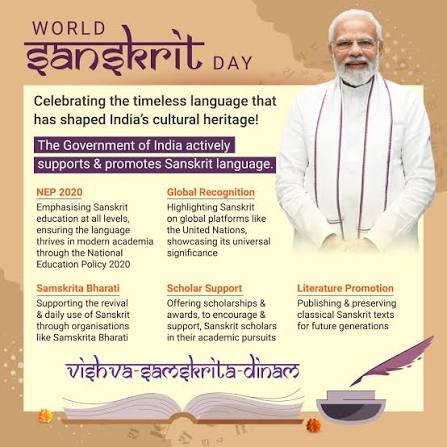
Prime Minister Narendra Modi extended warm greetings on World Sanskrit Day, emphasizing the language's role as a timeless source of knowledge. Highlighting administrative steps like digital archiving and university expansions, the event celebrated efforts by global scholars to preserve and popularize classical Indian literature and heritage.
Prime Minister Narendra Modi extended greetings to citizens across the nation on the observance of World Sanskrit Day, highlighting the language's enduring heritage and timeless literary value.
Observed annually to honor one of the world's oldest classical languages, World Sanskrit Day serves as an occasion to promote awareness, study, and preservation of its rich philosophical and scientific texts. The Prime Minister emphasized that Sanskrit remains an integral foundational pillar of India's cultural identity, serving as a treasure trove of ancient wisdom, art, and scientific literature.
Cultural Significance and Governmental Initiatives
In official communications released across digital channels, government bodies underscored recent administrative efforts aimed at revitalizing classical learning institutions. Over the past decade, initiatives spearheaded by central authorities have focused on expanding Central Sanskrit Universities, establishing dedicated language learning centers, and offering financial grants to traditional scholars. Furthermore, programs like the Gyan Bharatam Mission continue to accelerate the digitization of centuries-old manuscripts, ensuring global digital access for researchers and students.
Official Sources and Public Releases
According to official announcements from the Prime Minister's Office (PMI), national leaders highlighted how classical languages bridge historical heritage with modern academic exploration. Supplementary updates shared by the Press Information Bureau (PIB) noted the promotion of traditional Subhashitams—classical verses emphasizing diligence, societal duty, and moral conduct—across public platforms to encourage youth engagement.
"Organizers stated that preserving classical texts and integrating linguistic studies with modern technology remain vital priorities for safeguarding India's intellectual legacy."
Practical Implications for Heritage and Education
The national emphasis on Sanskrit preservation carries practical benefits for academic institutions, linguistic researchers, and cultural tourism sectors. By fostering multilingual education and digital archival access, academic bodies make ancient manuscripts more approachable for contemporary scholars. This administrative push also enhances cultural tourism by driving interest in ancient historical sites, epigraphy, and classical studies centers across India.
Key Facts at a Glance
Event Observed: World Sanskrit Day, celebrated globally on Shravan Poornima.
Key Figure: Prime Minister Narendra Modi.
Core Focus: Promotion of classical language heritage, institutional funding, and digital manuscript archiving.
Primary Media: Official statements and traditional verse shares disseminated via digital platforms and press releases.
Frequently Asked Questions
What is the significance of World Sanskrit Day?
World Sanskrit Day is observed to raise public awareness about the ancient classical language, celebrate its rich literary and philosophical heritage, and encourage its study among younger generations.
What initiatives have been taken to support Sanskrit studies?
Key efforts include establishing Central Sanskrit Universities, setting up localized learning centers, providing scholar grants, and digitizing historical manuscripts through national missions.
Where can official statements regarding the observance be accessed?
Official announcements and governance updates are available via the Prime Minister's Office (PMI) and the Press Information Bureau (PIB) portals.
Source: Prime Minister's Office (PMI), Press Information Bureau (PIB), Ministry of Tourism, Government of India