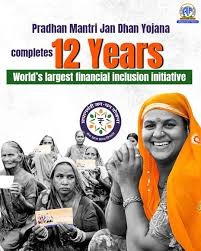
Prime Minister Narendra Modi highlighted the transformative reach of the Pradhan Mantri Jan Dhan Yojana as it completed 12 years. With 59.09 crore accounts and ₹3.16 lakh crore in deposits, the JAM trinity core has successfully driven rural inclusion, empowered women financially, and streamlined direct benefit transfers nationwide.
Prime Minister Narendra Modi highlighted the transformative impact of the Pradhan Mantri Jan Dhan Yojana (PM-JDY) as India’s flagship financial inclusion mission marked its 12th anniversary in August 2026.
Marking twelve years since the program's nationwide launch from the Red Fort in August 2014, the central administration emphasized how the Jan Dhan Yojana has fundamentally altered India's socio-economic landscape. By providing unbanked and economically marginalized citizens with formal banking access, the initiative has successfully integrated millions into the country's mainstream financial ecosystem.
Expansion of Bank Accounts and Financial Inclusion
Data compiled by national regulatory bodies indicates that total PM-JDY accounts surged to 59.09 crore by August 19, 2026, marking a nearly fourfold increase from early operational phases. Of these active accounts, approximately 45.95 crore are distributed across rural and semi-urban regions, demonstrating deep penetration into India's hinterlands. Furthermore, women account for 32.92 crore—or roughly 55.7 percent—of total beneficiaries, underscoring the scheme's vital role in advancing gender-inclusive economic participation and financial independence.
Growth in Aggregate Deposits and Digital Integration
Parallel to the rise in account volumes, aggregate deposits have climbed significantly to reach ₹3,16,514 crore. The average deposit per account expanded to ₹5,356, reflecting stronger household saving habits and growing trust in formal financial institutions. Additionally, the issuance of 41.29 crore RuPay debit cards has accelerated digital payment adoption among low-income households, facilitating seamless cash withdrawals and point-of-sale transactions.
Official Sources and Regulatory Disclosures
According to official updates released by the Ministry of Finance, Government of India, the Jan-Dhan-Aadhaar-Mobile (JAM) trinity continues to act as a leakage-proof conduit for direct benefit transfers (DBT). Supplementary data published via the Press Information Bureau (PIB) highlighted that the scheme has laid the groundwork for extending insurance and pension coverages, such as the Pradhan Mantri Jeevan Jyoti Bima Yojana and Pradhan Mantri Suraksha Bima Yojana, to unorganized sector workers.
"According to officials, the success of PM-JDY should not be measured merely by account volumes, but by its fundamental reshaping of India's financial architecture to empower the marginalized last-mile citizen."
Practical Implications for Citizens and Businesses
For millions of unbanked citizens, zero-balance Jan Dhan accounts remove traditional entry barriers, offering accidental insurance coverage up to ₹2 lakh and access to overdraft facilities. Regular savings patterns also qualify account holders for small-ticket commercial credit lines, including Mudra loans, which foster grassroots entrepreneurship and enhance financial resilience across micro-enterprises.
Key Facts at a Glance
Milestone: Pradhan Mantri Jan Dhan Yojana completed 12 years of implementation.
Total Accounts: Reached 59.09 crore beneficiaries as of August 2026.
Women Participation: Female account holders total 32.92 crore, representing over 55% of the base.
Aggregate Deposits: Total savings crossed ₹3.16 lakh crore.
Frequently Asked Questions
What is the primary objective of the Pradhan Mantri Jan Dhan Yojana?
PM-JDY serves as India's national mission for financial inclusion, ensuring universal access to banking services, credit, insurance, and pensions for unbanked households.
Are there any minimum balance requirements for Jan Dhan accounts?
No, PM-JDY accounts are opened with zero balance requirements and carry no mandatory maintenance charges.
What additional benefits are provided to account holders?
Beneficiaries receive a RuPay debit card bundled with an accident insurance cover of up to ₹2 lakh, alongside eligibility for overdraft facilities and micro-credit loans.
Source: Ministry of Finance, Government of India, Press Information Bureau (PIB), National Payments Corporation of India (NPCI)