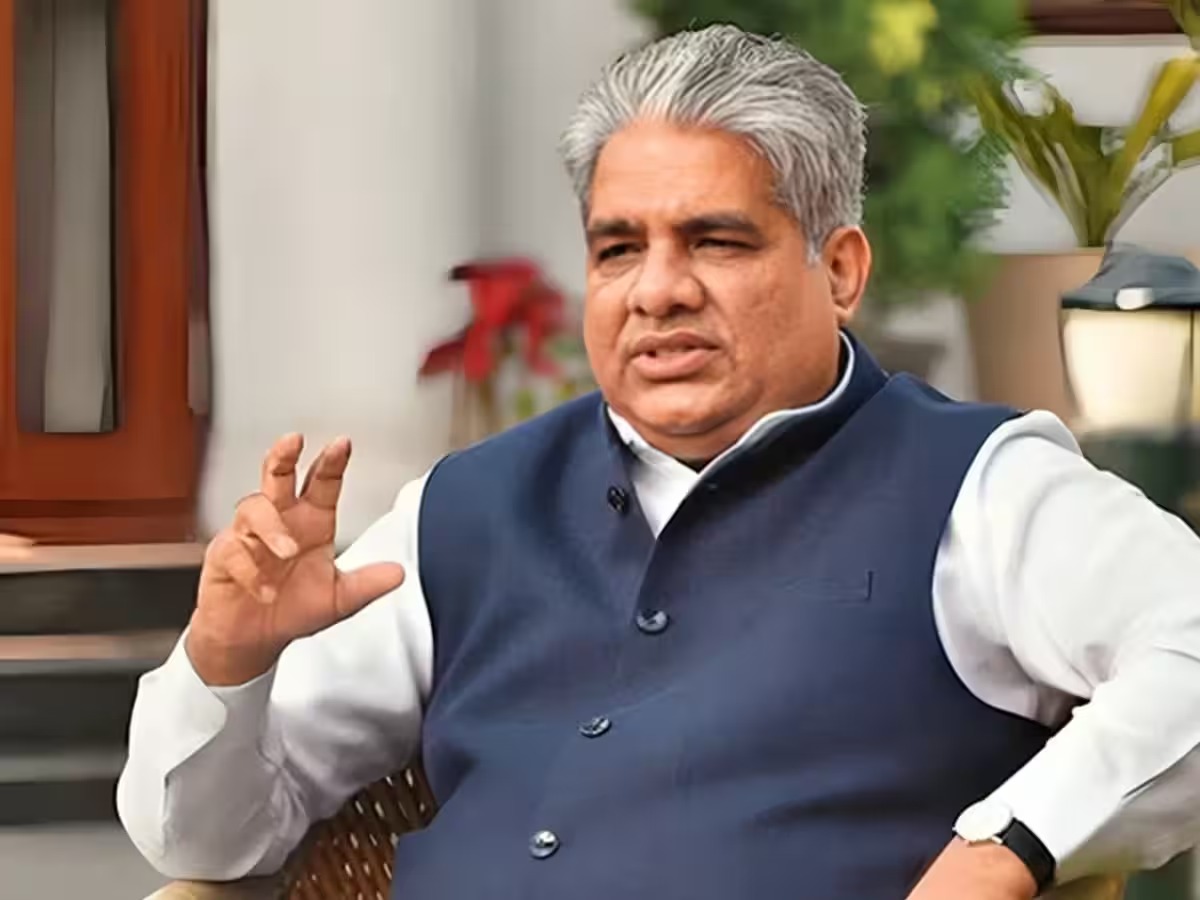
Union Minister Bhupender Yadav has pitched India's transition to a circular economy, emphasizing waste-to-wealth integration and stricter EPR regulations. By converting municipal and industrial waste into productive assets, the national framework aims to secure resource independence, cut landfill waste, and drive sustainable green industrial growth.
Union Minister Bhupender Yadav outlines India’s national transition toward a robust circular economy to accelerate sustainable growth.
In New Delhi, Union Minister for Environment, Forest and Climate Change Bhupender Yadav delivered a comprehensive policy address outlining India’s strategic pivot toward a resource-efficient circular economy. Speaking at a national sustainability summit on September 15, 2026, Yadav emphasized that converting municipal solid waste, industrial scrap, and electronic discarded materials into productive economic assets is vital for meeting the nation's net-zero targets while fueling green industrial growth. The policy push highlights an urgent national shift from a linear "take-make-dispose" model to an integrated framework focused on material recovery, recycling, and responsible resource stewardship.
Scaling Up Waste-to-Wealth Infrastructure and E-Waste Recycling
According to official policy briefs published by the Ministry of Environment, Forest and Climate Change (MoEFCC), the government is actively scaling up waste-to-wealth processing plants and enforcing stringent Extended Producer Responsibility (EPR) mandates across multiple manufacturing sectors. These regulatory frameworks require consumer goods, electronics, and automotive enterprises to manage the complete lifecycle of their products, ensuring high rates of material recovery.
Environmental economists note that institutionalizing circular practices across Tier-1 and Tier-2 cities can significantly reduce raw material import dependencies, curb municipal landfill overflows, and generate millions of specialized jobs in green engineering and waste logistics. Concurrently, collaborative initiatives with urban local bodies are being strengthened to streamline source segregation and commercial recycling pipelines.\
"According to officials, accelerating the transition toward a circular economy is no longer optional but essential for reconciling industrial expansion with long-term ecological preservation and resource security."
Why It Matters
For Indian industries and corporate investors, compliance with mandatory circular economy frameworks ensures future-proofing against resource scarcity and shifting global supply chain standards. For citizens and urban local bodies, enhanced waste management infrastructure translates to cleaner urban environments, reduced pollution levels, and sustainable job creation in the green technology sector.
Key Facts at a Glance
Key Speaker: Union Minister Bhupender Yadav.
Core Focus: Transitioning India from a linear economic model to a circular, resource-efficient framework.
Regulatory Tool: Extended Producer Responsibility (EPR) mandates across electronics and manufacturing.
Primary Oversight: Ministry of Environment, Forest and Climate Change (MoEFCC).
Frequently Asked Questions
What is the core objective of India's circular economy push?
The initiative aims to convert waste materials, industrial scrap, and electronic goods into productive economic assets to support sustainable growth.
Which ministry is leading these sustainability policies in India?
The Ministry of Environment, Forest and Climate Change (MoEFCC), alongside the Central Pollution Control Board (CPCB), spearheads these regulatory frameworks.
How do Extended Producer Responsibility (EPR) mandates function?
EPR guidelines legally require manufacturers to manage the post-consumer lifecycle of their products, ensuring proper recycling and material recovery.
What are the primary benefits of scaling waste-to-wealth infrastructure?
It reduces landfill pressures, cuts raw material import dependencies, and creates specialized employment opportunities in green industries.
Source: Ministry of Environment, Forest and Climate Change (MoEFCC), Central Pollution Control Board (CPCB), Press Information Bureau (PIB)