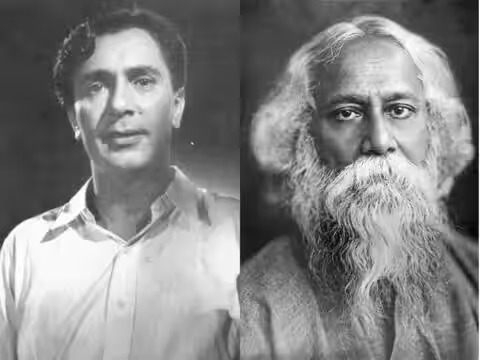
Before rising as a Bollywood legend, actor Balraj Sahni served as a teacher at Visva-Bharati University in Santiniketan. A transformative meeting with Rabindranath Tagore, who urged him to write in his native Punjabi and observe everyday realities, helped shape Sahni’s iconic, naturalistic acting style in classics like Do Bigha Zamin.
SANTINIKETAN, India — Decades before cementing his legacy as one of Hindi cinema’s most respected actors, late Bollywood superstar Balraj Sahni spent formative years as a teacher at Visva-Bharati University in Santiniketan during the late 1930s. Institutional archives and autobiographical memoirs highlight how a pivotal encounter and profound guidance from Nobel laureate Rabindranath Tagore redirected Sahni’s creative ambitions, leading him to leave academia, embrace literature in his mother tongue, and eventually pioneer realistic character acting in post-independence Indian cinema.
From Santiniketan Educator to Global Broadcaster and Screen Legend
Balraj Sahni, born Yudhishthir Sahni in Rawalpindi, completed his Master’s degree in English literature from Government College, Lahore, before relocating to West Bengal in the late 1930s. Drawn by the pedagogical philosophy of Gurudev Rabindranath Tagore, Sahni joined Visva-Bharati University in Santiniketan alongside his wife, Damayanti Sahni, taking up responsibilities as an English and Hindi language instructor.
During his tenure at the institution, Sahni aimed to establish himself as an author, initially drafting short fiction and essays in English. It was during this period that Tagore observed Sahni’s academic and literary work, prompting an interaction that permanently redirected the future actor’s intellectual and creative path.
According to Sahni’s published autobiography and institutional records preserved at Rabindra Bhavana, Tagore advised the young educator to stop writing primarily in a foreign language. Tagore urged him to write in his native language—Punjabi—and connect his creative output directly to the lives, struggles, and culture of common citizens. The advice left an enduring mark on Sahni, prompting his subsequent involvement with grassroots cultural institutions and progressive literature.
The Transformation: BBC London and the Path to Hindi Cinema
Following his teaching tenure at Santiniketan, Sahni moved to the United Kingdom in 1939, joining the British Broadcasting Corporation (BBC) in London as a radio announcer for the Hindi service during the Second World War. Upon returning to India in the mid-1940s, he settled in Mumbai and integrated into the Indian People’s Theatre Association (IPTA), an artistic collective committed to social realism and working-class advocacy.
Sahni transitioned into professional cinema with landmark roles in films such as Dharti Ke Lal (1946) and Bimal Roy’s internationally acclaimed masterpiece Do Bigha Zamin (1953), which won the Prix International at the Cannes Film Festival. Throughout his film career, which included monumental performances in Kabuliwala (1961), Waqt (1965), and Garm Hava (1973), Sahni maintained his literary commitment, publishing acclaimed travelogues, plays, and memoirs in Punjabi and Hindi.
Historical Context and Legacy at Visva-Bharati University
Visva-Bharati University, founded by Rabindranath Tagore in 1921 and later designated an Institution of National Importance by the Parliament of India, served as an open-air laboratory for intellectual exchange, drawing scholars, artists, and international dignitaries.
The institution's archival documentation illustrates how the Santiniketan ecosystem shaped multiple cultural figures who later influenced modern Indian performing arts, public broadcasting, and national literature. Sahni's historical association with the university underscores the broader influence of Bengal's cultural renaissance on Hindi cinema's golden era.
Cultural Impact on Indian Cinema and Performing Arts
The historical narrative of Balraj Sahni's early pedagogical career continues to offer valuable context for students of Indian arts and cinematic history:
Realism in Cinema: Sahni’s commitment to authentic character portrayal transformed Indian cinema from stylized melodrama toward grounded social realism.
Linguistic Heritage: Tagore’s mentorship preserved Sahni’s connection to regional literature, producing celebrated Punjabi works including Mera Pakistani Safarnama.
Educational Heritage: Emphasizes Santiniketan’s historical role as an incubator for national cultural leaders across academia, literature, and cinema.
Official Sources Section
Historical records and archival references regarding this period are preserved and verified through:
Official Statements and Archival Quotes
According to archival documentation and biographical records maintained by cultural research bodies:
"Rabindranath Tagore’s counsel to young scholars at Santiniketan emphasized rootedness in one's own mother tongue and lived cultural reality, a philosophy that deeply influenced Balraj Sahni's lifelong artistic discipline."
Why It Matters
Cinematic Evolution: Demonstrates how early intellectual mentorship shaped one of Indian cinema’s foremost proponents of method acting and naturalistic performance.
Preservation of Mother Tongues: Serves as a historical precedent for modern creative writers and artists regarding the cultural importance of creating literature in native languages.
Institutional Memory: Highlights the ongoing cultural and historical significance of Visva-Bharati University as a crucible of modern Indian intellectual development.
Key Facts at a Glance
Individual: Balraj Sahni (Legendary Hindi film actor, author, and broadcaster).
Early Role: English and Hindi instructor at Visva-Bharati University, Santiniketan, in the late 1930s.
Turning Point: Rabindranath Tagore advised Sahni to write in his native language and focus on the lived realities of common people.
Career Milestones: BBC London broadcaster, IPTA activist, and lead actor in Do Bigha Zamin, Kabuliwala, and Garm Hava.
Literary Contributions: Author of prominent Punjabi works, including Mera Roosi Safarnama and Mera Pakistani Safarnama.
Frequently Asked Questions
Which Bollywood actor taught at Santiniketan before entering cinema?
Acclaimed actor Balraj Sahni taught English and Hindi at Visva-Bharati University in Santiniketan during the late 1930s before pursuing broadcasting and film acting.
What advice did Rabindranath Tagore give to Balraj Sahni?
Tagore advised Sahni to abandon writing solely in English, urging him instead to write in his native language, Punjabi, and depict the authentic life and struggles of common people.
What are some of Balraj Sahni's most famous films?
Balraj Sahni is best remembered for his iconic performances in classic films such as Do Bigha Zamin, Kabuliwala, Waqt, Seema, and Garm Hava.
Where are records of Balraj Sahni's time at Santiniketan kept?
Archival materials, correspondence, and institutional records of his tenure are preserved at Visva-Bharati University’s Rabindra Bhavana and the National Film Archive of India.
Source: Visva-Bharati University, National Film Development Corporation of India (NFDC), and the Sahitya Akademi.