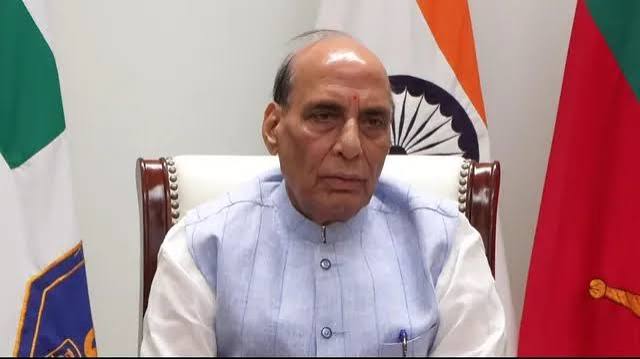
Defense Minister Rajnath Singh inaugurated India’s first dedicated military medicine research and training facility in New Delhi. Established under the Armed Forces Medical Services (AFMS), the center focuses on specialized battlefield trauma management, extreme-altitude combat medicine, radiological defense, and advanced medical research for deployed defense personnel nationwide.
NEW DELHI — Defense Minister Rajnath Singh officially inaugurated India’s first dedicated military medicine research and training facility on Thursday, July 30, 2026, in New Delhi. Developed under the purview of the Armed Forces Medical Services (AFMS), the newly established center aims to advance clinical research, combat trauma management, extreme-altitude healthcare, and chemical, biological, radiological, and nuclear (CBRN) medical countermeasures. The operational launch marks a strategic modernization step for the Indian Armed Forces, addressing the evolving medical requirements of personnel serving across diverse operational environments.
Modernizing Combat Trauma and Specialized Healthcare
The specialized institute serves as a national hub for developing military-grade medical protocols and training field corps personnel in advanced tactical combat casualty care (TCCC). Designed to bridge operational field medicine with modern clinical innovation, the facility incorporates simulated high-altitude combat environments, blast trauma laboratories, and specialized telemetry systems to monitor real-time physiological data during field operations.
Prior to the establishment of this centralized center, specialized military medical research was distributed across regional command hospitals and civilian institutions. By unifying these disciplines under a dedicated AFMS institute, defense medical officers can accelerate the development of specialized medical technologies, lightweight field resuscitation kits, and rapid-evacuation protocols tailored to India's varied border terrains.
Strategic Research Focus on High-Altitude and CBRN Defense
A core operational focus of the new facility includes medical research tailored to high-altitude warfare, particularly for forces deployed in sectors such as Siachen, Ladakh, and the Northeastern border zones. Researchers at the institute will investigate hypobaric hypoxia, frostbite treatments, and extreme-cold acclimation strategies to reduce non-combat casualties among deployed troops.
Additionally, the facility houses specialized research units dedicated to CBRN medical management, equipping defense medical personnel to handle contamination risks and toxicological emergencies during conventional or hybrid warfare scenarios.
Joint Services Integration and Civil-Military Collaboration
Speaking at the inauguration ceremony, Defense Minister Rajnath Singh emphasized that the facility will foster jointness across the Army, Navy, and Air Force medical cadres while collaborating with civilian institutions, including the Indian Council of Medical Research (ICMR) and the Defense Research and Development Organization (DRDO).
The center will also offer specialized postgraduate diploma programs, clinical fellowships, and operational training modules for military doctors from friendly foreign nations, strengthening international defense healthcare cooperation.
Official Sources Section
Information in this news report is based on official briefings published by the Press Information Bureau, press communications from the Ministry of Defence, and operational releases issued by the Armed Forces Medical Services.
Quote Section
"According to officials from the Ministry of Defence, the establishment of India's first dedicated military medicine facility enhances self-reliance in military healthcare, ensuring that combat troops receive world-class, specialized medical support under extreme operational conditions."
Why It Matters
For Indian defense personnel, the facility ensures access to advanced tactical medical care and field trauma management tailored to harsh environments like high-altitude borders. For the national healthcare sector, innovations developed at the center—such as advanced trauma care protocols and emergency resuscitation technologies—can be adapted for civilian disaster response and emergency care systems.
Key Facts at a Glance
Facility Inauguration: India’s first dedicated military medicine facility inaugurated by Defense Minister Rajnath Singh in New Delhi.
Governing Body: Established under the Armed Forces Medical Services (AFMS).
Core Research Areas: High-altitude combat medicine, battlefield trauma management, and CBRN medical defense.
Inter-Agency Collaboration: Partnering with DRDO and ICMR for joint clinical research and medical technology development.
Training Scope: Offers specialized tactical healthcare training for Indian defense forces and partner nations.
FAQ Section
What is the primary purpose of India's first military medicine facility?
The facility focuses on advancing military-specific health research, battlefield trauma care, high-altitude operational medicine, and CBRN medical defense for the Indian Armed Forces.
Who inaugurated the new military medicine institute?
Defense Minister Rajnath Singh officially inaugurated the facility in New Delhi alongside senior leadership from the Armed Forces Medical Services.
How does this facility help troops deployed in extreme environments like Siachen or Ladakh?
The institute conducts targeted research into high-altitude sickness, hypobaric hypoxia, and cold-climate physiology to develop improved preventive measures, treatments, and rapid-evacuation protocols for deployed personnel.
Will civilian medical research benefit from this facility?
Yes, medical technologies, field resuscitation tools, and trauma care protocols developed at the institute can be adapted for civilian emergency response, disaster management, and critical care medicine.
Source: Press Information Bureau, Ministry of Defence, Armed Forces Medical Services