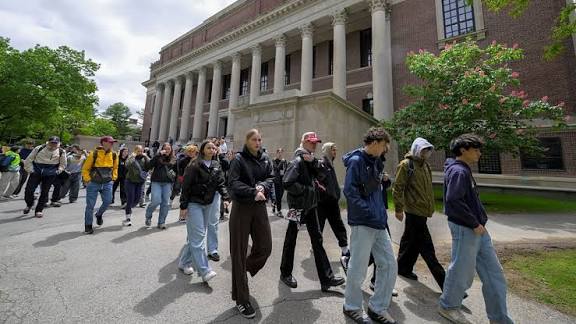
Top American institutions like Harvard, NYU, MIT, and Purdue are exploring setting up operations in India amid soaring student demand, according to US Ambassador Sergio Gor. The move aims to bring world-class education directly to Indian students over the next year, strengthening bilateral educational ties and high-tech corporate partnerships.
NEW DELHI — Top American higher education institutions, including Harvard University, New York University (NYU), the Massachusetts Institute of Technology (MIT), and Purdue University, are actively exploring plans to establish institutional presences in India amid massive demand from Indian students. Speaking at The Economic Times World Leaders Forum in New Delhi on Saturday, United States Ambassador to India Sergio Gor announced that the diplomatic mission is working to facilitate the entry of premier American universities over the next year. The initiative aims to address high international student mobility, navigate stringent visa screening processes, and expand direct bilateral academic integration under India’s liberalized regulatory frameworks.
Bilateral Academic Engagement and Offshore Campus Ambitions
Addressing delegates at the summit, Ambassador Gor stated that he has initiated formal discussions with senior leadership across premier American academic institutions, including recent deliberations with the provost of MIT. The ambassador noted that high demand from Indian scholars makes establishing branch operations or collaborative academic centers in India a strategic priority for both nations.
The push aligns with regulatory guidelines established by the University Grants Commission (UGC) under the National Education Policy (NEP), which allows top-ranked foreign higher educational institutions to set up standalone campuses and offer certified degree programs on Indian soil. Establishing physical bases in India allows premier US universities to cater directly to the expanding pool of Indian applicants without exposing students to international relocation costs or foreign currency fluctuations.
Visa Screening Standards and Global Travel Demand
Ambassador Gor directly addressed current administrative protocols surrounding United States student and exchange visitor visas. Defending thorough applicant vetting under the Trump administration, Gor explained that digital footprint reviews and social media screenings are standard border security measures designed to maintain national safety and are not targeted specifically at Indian nationals.
The envoy highlighted the practical challenges of processing massive global travel demand, referencing demographic survey data indicating that hundreds of millions of individuals worldwide express interest in moving to the US. While visa wait times and appointment bottlenecks remain an ongoing administrative hurdle, Gor emphasized that expanding top-tier American university operations within India provides a scalable pathway for students to access world-class education locally while fostering workforce partnerships with multinational technology giants like Google, Microsoft, and Micron.
Corporate Synergy and Human Capital Exchange
The initiative to bring top US universities to India is expected to strengthen human capital pipelines supporting high-tech manufacturing, artificial intelligence, and semiconductor engineering. Both administrations are focusing on academic-industry partnerships that link Indian engineering talent with American research and development hubs.
Higher education analysts note that onshore American university campuses in India will also encourage joint research initiatives, faculty exchanges, and cross-border innovation clusters, transforming Indian metropolitan centers into regional higher education hubs for South and Southeast Asia.
Official Sources Section
Statements, diplomatic objectives, and policy frameworks cited in this report are based on official keynote addresses delivered at The Economic Times World Leaders Forum, official communications from the U.S. Embassy & Consulates in India, and higher education foreign campus regulations published by the University Grants Commission.
Quote Section
"We have a great amount of universities that are interested in coming here, and I'm determined over the next year, that we will have some of that happen," stated US Ambassador to India Sergio Gor. "We're talking about the top schools, whether that's NYU, Harvard, or Purdue... The United States wants to work with India, period."
Why It Matters
Educational Access: Enables Indian students to access Ivy League and premier US academic degrees locally at significantly lower overall costs.
Brain Drain Mitigation: Retains top domestic talent within national borders while equipping them with internationally recognized qualifications.
Tech Ecosystem Integration: Strengthens talent development for global tech enterprises operating research facilities and capability centers in India.
Key Facts at a Glance
Institutions in Discussion: Harvard University, NYU, MIT, and Purdue University are exploring Indian initiatives.
Timeline: The US diplomatic mission aims to achieve concrete institutional entry within the next year.
Regulatory Backbone: Facilitated under the University Grants Commission's foreign university campus regulations.
Strategic Context: Driven by soaring Indian student demand and bilateral cooperation across technology and research sectors.
Frequently Asked Questions
Why are US universities planning to establish campuses in India?
High student demand from India and progressive regulatory reforms under the National Education Policy have encouraged top US institutions to establish direct academic presences in the country.
Which US universities are in talks to come to India?
According to US Ambassador Sergio Gor, discussions are underway with institutions including Harvard, New York University (NYU), MIT, and Purdue University.
Will degrees from Indian campuses match US campus credentials?
Under UGC regulations, foreign university branch campuses in India must deliver degree programs of identical academic rigor and standard as those offered at their home campuses.
Source: U.S. Embassy & Consulates in India, University Grants Commission, Ministry of External Affairs.