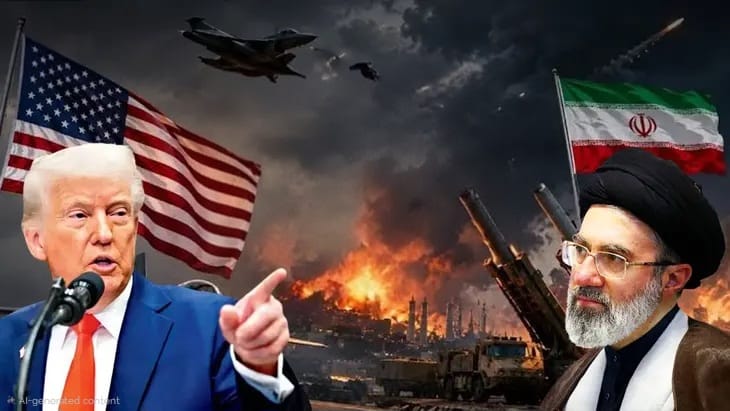
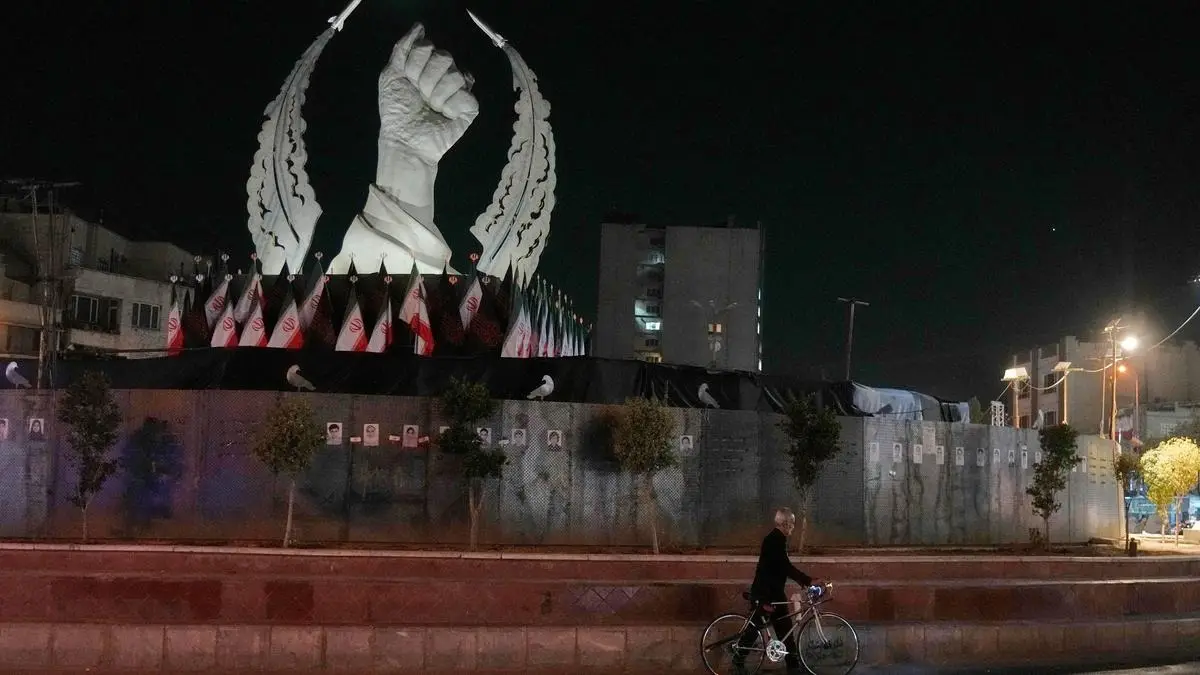
President Donald Trump has authorized targeted airstrikes against Iran following the deaths of two U.S. service members in Jordan. Executed by U.S. Central Command, the operation targets IRGC infrastructure along the Strait of Hormuz, effectively collapsing a month-old interim ceasefire and escalating global energy market anxieties.
WASHINGTON — U.S. President Donald Trump has ordered a fresh wave of military airstrikes against Iranian forces following an attack in Jordan that killed two American service members. The operation, described by defense officials as a direct action to "swiftly punish" Islamic Revolutionary Guard Corps (IRGC) elements, marks a sharp escalation in the ongoing regional conflict. The fatal drone and missile strike targeting the Muwaffaq Salti Air Base also left one American soldier missing and four others hospitalized. The White House stated the new offensive aims to degrade Tehran's capacity to threaten international commercial shipping corridors.
Expanded Aerial Campaign Targets IRGC Capabilities
According to operational briefings released by U.S. Central Command (CENTCOM), the latest wave of airstrikes focused heavily on critical Iranian infrastructure, command centers, and tactical assets along the Persian Gulf. U.S. forces expanded their targeting parameters to include underground weapons storage facilities, surveillance outposts, and logistical transit routes utilized by the IRGC.
Military records reveal that the conflict has inflicted significant casualties since hostilities erupted on February 28, 2026. To date, 16 U.S. service members have been killed and more than 430 wounded in theater. The new combat deaths in Jordan prompted an immediate re-evaluation of the brief interim ceasefire signed in June, which independent observers now consider entirely void.
Escalation Near the Strait of Hormuz Threatens Energy Markets
The geographic focus of the expanding conflict remains centered on the Strait of Hormuz, a vital maritime artery that historically accounted for roughly 20 percent of global oil supplies. Following Iran's closure of the waterway, the U.S. military fully reinstated a strict naval blockade of Iranian ports. CENTCOM confirmed its naval assets have already boarded non-compliant vessels and redirected multiple commercial ships attempting to bypass the enforcement zone.
In response to the American blockade, Iranian state media broadcasted warnings from political figures in Tehran. Officials representing Iran's deputy foreign ministry announced that the Islamic Republic is formally suspending all commitments to recent diplomatic frameworks, signaling an end to immediate mediation paths.
Official Sources Section
The details regarding target choices, operational directives, and service member statuses are verified through formal announcements published by U.S. Central Command (CENTCOM). Casualty data, diplomatic positioning, and regional movements are tracked via updates from the U.S. Department of Defense and official statements broadcast by the Islamic Republic of Iran Broadcasting (IRIB) network.
Quote Section
"The strikes are designed to further degrade Iran's ability to threaten commercial shipping in the Strait of Hormuz and swiftly punish Islamic Revolutionary Guard Corps forces who launched attacks against American service members," U.S. Central Command stated in an official release detailing the response.
Why It Matters
The resumption of intense, unmitigated kinetic strikes carries severe implications for global consumers, international businesses, and commodity investors. The militarization and subsequent closure of the Strait of Hormuz have triggered immediate volatility across international energy boards, driving up crude futures and insurance premiums for maritime transport. For citizens across the Middle East, the widening scope of targets raises acute humanitarian concerns regarding regional utility grids, supply logistics, and core civilian infrastructure.
Key Facts at a Glance
Direct Retaliation: Airstrikes ordered directly by President Trump to punish the IRGC following a fatal base attack in Jordan.
Casualties Sustained: Two U.S. service members confirmed dead, one missing, and four wounded in the initial missile barrage.
Economic Chokehold: Waterway conflict compromises the Strait of Hormuz, impacting a corridor tied to 20% of global oil transit.
Diplomatic Collapse: Tehran officially suspends its adherence to the month-old interim peace memorandum.
FAQ Section
What triggered this latest round of U.S. airstrikes against Iran?
The strikes were launched as a direct retaliatory measure after an Iranian drone and missile attack on a military base in Jordan killed two U.S. service members and wounded several others.
Is the Strait of Hormuz completely closed to commercial shipping?
Iran has taken steps to close the strait, prompting the U.S. military to enforce a naval blockade to protect navigation, causing significant disruptions to international energy transport.
What is the current status of the peace negotiations between the two nations?
Diplomatic efforts have fractured. Iran’s deputy foreign ministry confirmed that Tehran has officially suspended its commitments to the interim deal signed in June 2026.
Source: U.S. Central Command Official Disclosures, U.S. Department of Defense Press Operations, Iranian State Television Monitoring Desk.