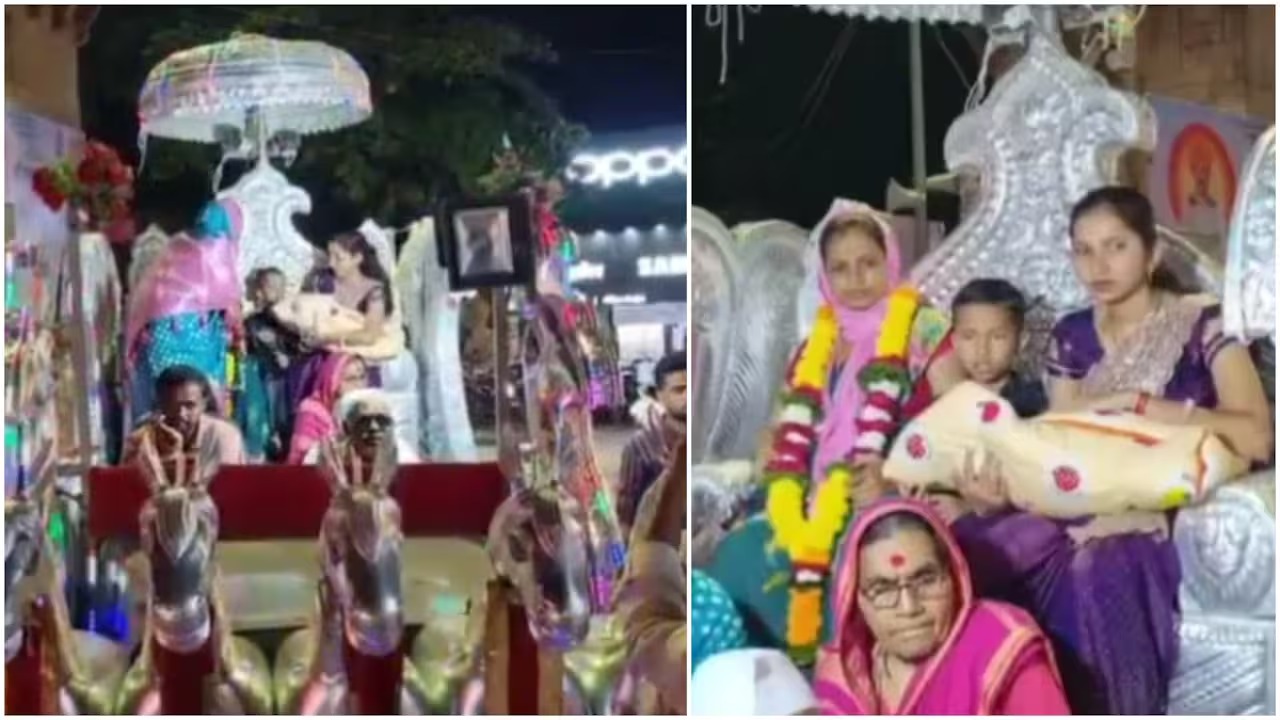
The Dahiphale family in Maharashtra's Beed district celebrated the birth of baby Gargi, reportedly the first girl born in their family in nearly 200 years. Welcomed like royalty with a decorated chariot, music, and fireworks, the joyous event delivered a strong social message against gender discrimination.
A family in Maharashtra’s Beed district marked the birth of a baby girl after nearly two centuries with a grand chariot procession.
Parli, Maharashtra — Breaking what family elders describe as a generational drought lasting nearly 200 years across five generations, the Dahiphale family in Parli taluka of Maharashtra's Beed district celebrated the birth of a baby girl named Gargi. Following her discharge from the hospital alongside her mother, Saubhagyavati Kalpana Rishikesh Dahiphale, the newborn was welcomed home in a spectacular, flower-decorated chariot procession on Saturday, September 5, 2026. The rare family milestone drew widespread community participation, complete with traditional drum beats, cymbals, dancing, and fireworks.
A Royal Homecoming and Generational Milestone
According to family accounts shared during the festivities, no female child had been born in the direct household lineage for approximately two centuries.
The Chariot Procession: Relatives and local residents mobilized a vivid street parade, escorting the mother and infant from the medical facility to their residence in a specially adorned chariot.
Festive Rituals: The homecoming featured a ceremonial entrance aarti, bursting firecrackers, distribution of sweets, and traditional folk music performances.
Symbolic Significance: Senior family members openly likened the newborn to Goddess Lakshmi, emphasizing a deliberate shift toward honoring female children in a region historically impacted by skewed child sex ratios.
Societal analysts and local civil activists noted that such public celebrations carry profound cultural weight, actively countering deep-seated patriarchal biases and son-preference norms prevalent in parts of rural Maharashtra.
Community and Expert Perspectives
The grand public display resonated across social media platforms, sparking broader national conversations regarding gender equality, female foeticide eradication, and shifting demographic attitudes. Local social workers commended the Dahiphale family for turning a private familial joy into a progressive public statement.
Impact on Local Society and Cultural Awareness
For the local community in Beed and neighboring Latur districts, the high-profile welcome serves as a progressive cultural marker. By treating the arrival of a daughter with royal fanfare, the family aims to inspire neighboring communities to reject gender discrimination and celebrate female births equally.
Official Sources Section
Details regarding the family lineage claims, community celebrations, and statements from relatives are sourced from local administrative updates, regional press statements, and reports documented by IANS and regional civic dispatches.
Quote Section
"According to officials," and family elders, the unprecedented celebration reflects a vital cultural shift in challenging traditional gender biases and celebrating the birth of daughters with pride.
Why It Matters
Publicly celebrating female births challenges entrenched son-preference mindsets and helps combat historical gender imbalances in rural districts. Such milestones foster progressive social attitudes toward gender equality.
Key Facts at a Glance
Newborn Name: Gargi Dahiphale.
Family Lineage: The Dahiphale family of Parli, Beed district, Maharashtra.
Reported Milestone: First girl child born in the family in nearly 200 years across five generations.
Celebration Style: Flower-decorated chariot procession with traditional music and fireworks.
Frequently Asked Questions
Who is the newborn baby girl in Maharashtra making headlines?
The newborn is baby Gargi, born into the Dahiphale family in Parli, Beed district.
Why is the family's celebration drawing so much attention?
The family stated that no girl child had been born in their household for nearly 200 years, spanning five generations.
How was the newborn welcomed home?
Gargi and her mother were brought home from the hospital in a flower-decorated chariot accompanied by drums, cymbals, and a community procession.
What message does this celebration send to society?
Local activists noted that the grand welcome actively promotes gender equality and counters traditional son-preference prejudices in the region.
Source: IANS, Regional Civil Dispatches, District Administrative Records