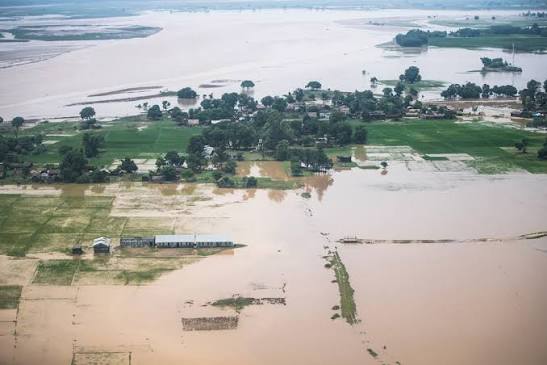
United Nations Secretary-General António Guterres announced that UN teams and humanitarian partners are mobilizing personnel and supplies to support flood-hit communities in Nepal. The international effort assists the government's response following devastating cross-border flash floods that left over 150 dead and extensive infrastructure damage across northern districts.
NEW YORK / KATHMANDU — United Nations Secretary-General António Guterres announced that UN country teams and international humanitarian partners are actively mobilizing emergency supplies and specialized personnel to support government-led rescue and relief operations in flood-ravaged Nepal.
The multilateral deployment comes as search-and-rescue teams intensify efforts following catastrophic cross-border flash floods and landslides that tore through the Bhote Koshi and Trishuli river corridors along the Nepal-China border. With more than 150 people confirmed dead and hundreds of residents, tourists, and pilgrims still unaccounted for, the rapid scaling of international aid is critical to delivering food, clean drinking water, emergency medical supplies, and shelter to cut-off mountain valleys.
International Humanitarian Deployment and Emergency Support
The United Nations disaster management apparatus has begun coordinating directly with Nepal’s National Disaster Risk Reduction and Management Authority (NDRRMA) to expedite aid delivery to hard-hit districts, including Rasuwa, Nuwakot, and Dhading. Special agencies, including the World Health Organization (WHO) and the World Food Programme (WFP), are coordinating emergency healthcare packs, water purification units, and logistics support to prevent waterborne disease outbreaks in displaced communities.
Alongside the UN's response, regional and global relief partners are scaling up parallel assistance programs. The International Federation of Red Cross and Red Crescent Societies (IFRC) released 1 million Swiss francs ($1.4 million) from its Disaster Response Emergency Fund to provide immediate shelter and hygiene kits. Meanwhile, neighboring countries, led by India, have initiated dedicated humanitarian aid corridors, dispatching disaster response personnel, emergency medicine, solar lanterns, and heavy-lift helicopters to evacuate stranded residents and international travelers.
According to official United Nations statements, regional disaster management logs, and diplomatic updates:
UN Mobilization: Field teams and specialized humanitarian personnel deployed to assist the government-led disaster framework.
Emergency Supplies: Dispatch of medical relief, temporary shelters, blankets, and water filtration equipment.
Impact Scope: Over 150 fatalities recorded across central and northern river basins, with critical road networks severed.
Satellite Mapping: Activation of emergency satellite observation mechanisms to chart landslide dams and flooded settlements.
Severe Cross-Border Deluge and Escalating Crisis
The sudden disaster was triggered by massive hydrological surges originating in the upper Himalayan catchments across the border in Tibet. The resulting wall of water, mud, and boulders swept downstream, destroying border settlements, wiping out market centers such as Timure, and damaging strategic highway bridges connecting Nepal and China.
The deluge also caused severe disruption to regional energy infrastructure, cutting off power lines and disabling several major hydropower stations operating along the Trishuli River basin. Downstream authorities in Nepal, as well as disaster management units in northern Indian states, remain on high alert as search operations continue through treacherous mud deposits and damaged road arteries.
Official Sources Section
Quote Section
"In Nepal, the UN is supporting the Government-led response. UN teams & humanitarian partners are mobilizing supplies & personnel to support communities affected by the floods,"
— stated United Nations Secretary-General António Guterres.
Why It Matters
For affected Himalayan communities, regional travelers, and rescue teams, immediate multilateral intervention provides essential logistics and medical support where domestic infrastructure has collapsed. The mobilization of UN personnel and emergency supplies accelerates search operations in isolated valleys, mitigates post-flood public health hazards, and helps re-establish temporary communication and transport channels across critical trade and pilgrimage routes.
Key Facts at a Glance
Announcement: UN Secretary-General António Guterres confirms full mobilization of UN teams and emergency supplies for Nepal.
Disaster Trigger: Heavy flash floods and debris flows originating along the Nepal-China border.
Impacted Regions: Rasuwa, Nuwakot, Dhading, and downstream river valleys.
International Aid: UN agencies, IFRC, and regional partners deploying financial grants, medical aid, and search-and-rescue assets.
FAQ Section
What did UN Secretary-General António Guterres announce regarding Nepal?
António Guterres announced that United Nations teams and humanitarian partners are mobilizing personnel and emergency relief supplies to support Nepal's government-led disaster response.
What primary assistance are international agencies providing?
Agencies are deploying search-and-rescue personnel, emergency medicine, clean drinking water, temporary shelters, and satellite mapping to assist stranded communities.
What caused the devastating floods in northern Nepal?
The flooding was triggered by sudden, massive water and debris surges originating in the upper Himalayan river basins along the Tibet border.
Where can families and organizations access verified disaster updates?
Verified casualty logs, emergency helplines, and relief updates are available directly through the NDRRMA Nepal Official Portal and UN OCHA Operations.
Source: United Nations, UN OCHA, NDRRMA Nepal, Reuters, AFP