The United Nations' shipping agency (IMO) has rejected the legal basis for implementing mandatory transit tolls in international waterways like the Strait of Hormuz. The announcement counters recent proposals by U.S. President Donald Trump for a 20% cargo security fee, preserving freedom-of-navigation laws amid ongoing maritime volatility.
LONDON — The United Nations' shipping agency stated on Monday that there is no legal basis under international maritime frameworks to introduce mandatory tolls on commercial vessels transiting straits used for international navigation. The declaration by the International Maritime Organization (IMO) comes amid heightened volatility in global supply chains and follows recent assertions by U.S. President Donald Trump that the United States would implement a 20 percent charge on cargo moving through the strategic Strait of Hormuz.
An IMO spokesperson confirmed that the agency is actively awaiting formal, detailed communication from Washington regarding the proposal. However, the regulatory body firmly reiterated its structural opposition to compulsory transit fees, warning that unilateral financial levies risk undermining decades of established freedom-of-navigation norms. The development marks a critical flashpoint for international law, global energy security, and commercial shipping alliances navigating the fallout of the 2026 Strait of Hormuz crisis.
UN Body Affirms Freedom of Navigation
The IMO framework relies strictly on the United Nations Convention on the Law of the Sea (UNCLOS), which guarantees the right of "transit passage" through straits utilized for international commerce. According to regulatory guidelines, these waterways must remain unimpeded and free from arbitrary national taxation.
Speaking from the IMO headquarters in London, an agency spokesperson clarified that while voluntary mechanisms for regional safety or environmental preservation exist globally, compulsory passage fees violate global maritime treaties. The agency's announcement addresses both the recent Iranian attempts to enforce mandatory insurance mandates via its newly formed Persian Gulf Strait Authority (PGSA) and the surprise economic declarations coming from the White House.
Trump Proposals Conflict with Maritime Law
The diplomatic friction escalated significantly after President Trump announced that the U.S. military would enforce a 20 percent toll on cargo transiting the Strait of Hormuz to offset the operational costs of maintaining naval security and escort operations in the region.
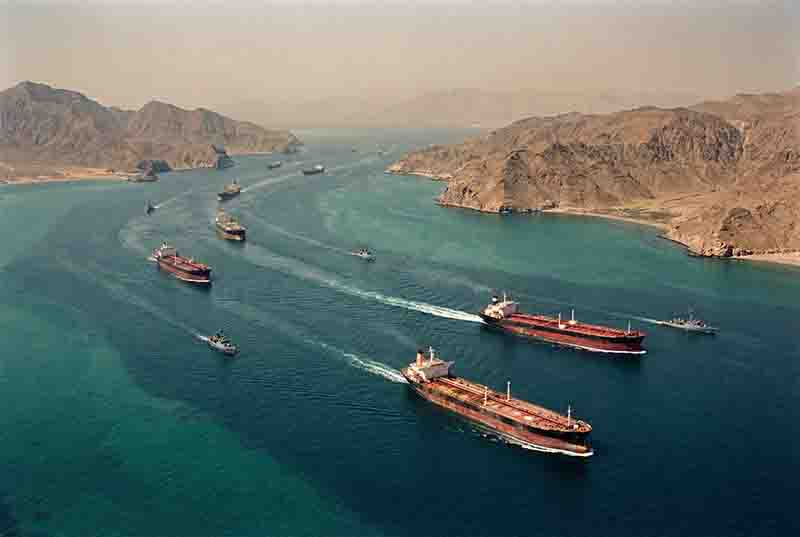
The Strait of Hormuz is widely considered the world’s most critical energy chokepoint, carrying roughly 20 to 25 percent of the global seaborne oil supply and a fifth of liquefied natural gas (LNG) trade. The U.S. administration argued that because American naval assets have been heavily deployed to counter Iranian mine-laying and hostile vessel boardings, commercial entities benefiting from that safety should contribute directly to its funding.
The IMO, alongside regional partners like Oman, has pushed back on the legality of such a move. While countries acknowledge that maritime security requires immense funding, executing it via mandatory shipping tolls alters the core tenets of international waters.
Official Sources Section
The baseline rules governing international straits are overseen by the following entities:
The International Maritime Organization (IMO), the UN specialized agency responsible for safety, security, and environmental performance in global shipping.
The Persian Gulf Strait Authority (PGSA), an administrative body recently established by Tehran.
The Joint Maritime Information Center (JMIC), operated under international naval coalitions to monitor maritime threats.
Quote Section
"The right of transit passage through straits used for international navigation is guaranteed under international law and does not support the imposition of transit fees on vessels," stated Omani delegate Khamis bin Mohammed Al Shamakhi during an emergency session of the IMO Council.
"According to officials at the United Nations, the international shipping community is awaiting further technical details on the recent U.S. statements, but the foundational principle remains that compulsory fees for passage through strategic straits cannot be introduced under current legal frameworks."
Why It Matters
For consumers, businesses, and energy investors, the threat of multi-sided tolls—whether from Iran or the United States—could trigger a sharp spike in global inflation. Shipping companies are already grappling with soaring war-risk insurance premiums following months of military strikes and naval blockades in the Gulf. If a mandatory 20 percent cargo levy or alternative compulsory fees are finalized, the added operational costs will be passed directly to global supply chains, increasing the price of consumer goods and crude oil worldwide.
Key Facts at a Glance
No Legal Precedent: The UN shipping agency confirms international maritime law provides zero legal basis for charging mandatory tolls in international straits.
20% Cargo Proposal: U.S. President Donald Trump stated intentions to charge a 20 percent fee on transit cargo to fund American naval security operations.
Voluntary Precedents: Successful maritime safety programs, such as those in the Strait of Malacca, rely strictly on voluntary state contributions rather than mandatory entry fees.
Economic Impact: The Strait of Hormuz handles up to 25% of global seaborne oil trade; any added transit fees directly threaten global energy price stability.
FAQ Section
Can a country legally close or charge a toll in an international strait?
No, under international maritime treaties like UNCLOS, straits used for international navigation are governed by the principle of transit passage, meaning ships have the right to continuous and expeditious navigation without being subject to arbitrary fees or blockades by coastal states.
What is the alternative to a mandatory toll for maritime safety?
The UN and regional nations favor "cooperative mechanisms," modeled after systems used in the Strait of Malacca. Under these frameworks, user states and shipping industries make voluntary financial contributions to fund safety, navigation aids, and environmental protection without directly taxing the passage of ships.
How would a 20 percent cargo charge affect global shipping?
A 20 percent toll on cargo would radically increase transport costs for shipping lines. These expenses would inevitably cascade down to businesses and consumers, inflating the retail price of energy, manufactured goods, and commodities.
Source: International Maritime Organization (IMO), Council on Foreign Relations (CFR), Oman Ministry of Transport