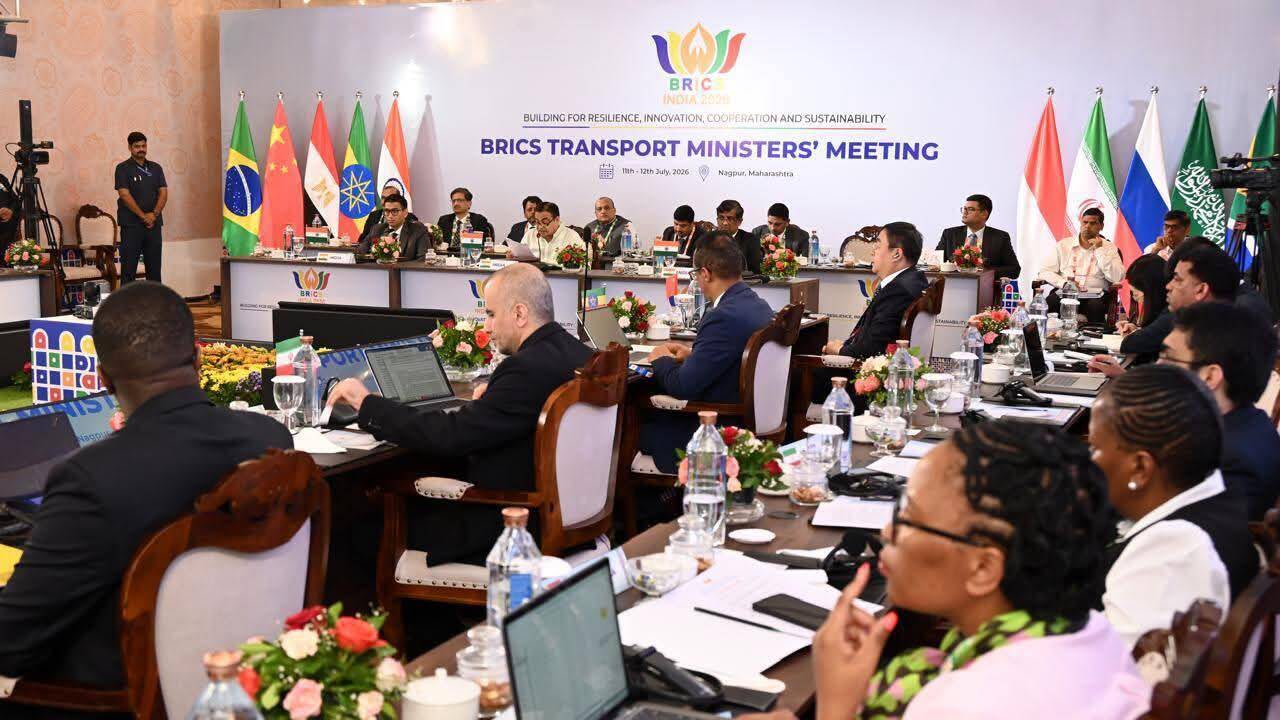
The 3rd BRICS Transport Ministers' Meeting in Nagpur concluded with a unanimous declaration to deepen cooperation on sustainable transport. Key outcomes include commitments to adopt Sustainable Aviation Fuel, promote circular infrastructure, and decarbonize transit, aiming to enhance global logistics efficiency across the 11-member bloc representing 40% of global GDP.
Transport ministers from across the BRICS bloc have finalized a landmark declaration to accelerate decarbonization, promote sustainable aviation fuel, and adopt circular infrastructure models.
NAGPUR, Maharashtra — Transport ministers and senior delegates from the expanded BRICS bloc concluded their 3rd Ministerial Meeting on July 12, 2026, marking a pivotal shift toward unified, green, and resilient logistics across member nations. Held under India’s 2026 BRICS Chairship, the gathering in Nagpur resulted in the unanimous adoption of a Ministerial Declaration that prioritizes the adoption of cleaner technologies to reshape global supply chains.
The meeting, which spanned four days, included intensive deliberations by the Transport Working Group and concluded with a commitment to modernize transport infrastructure across the 11 member nations—Brazil, China, Egypt, Ethiopia, India, Indonesia, Iran, Russia, Saudi Arabia, South Africa, and the United Arab Emirates.
A Shared Framework for Green Transit
The adopted Ministerial Declaration establishes a collaborative framework focusing on several "hard-to-abate" sectors. Recognizing that transport is one of the largest sources of energy consumption, the bloc has pledged to prioritize:
Sustainable Aviation Fuel (SAF): A collective effort to standardize and scale the use of SAF to decarbonize long-distance air travel.
Circularity in Infrastructure: Adopting circular economy principles—such as recycling materials and optimizing resource efficiency—in the design and construction of transport networks.
Transport Decarbonization: A strategic push to transition road, rail, and waterway transport toward alternative biofuels and emission-free technologies.
Digitalization and AI: Leveraging Artificial Intelligence and data-driven solutions to optimize logistics, reduce congestion, and enhance safety in multimodal transport hubs.
Union Minister for Road Transport & Highways, Nitin Gadkari, who chaired the ministerial session, emphasized that the sharing of latest innovations is essential for a more connected and resilient transport ecosystem. "We discussed efforts to make transport carbon-neutral across road, rail, aviation, and waterways by adopting alternative biofuels and pollution-free technologies," Gadkari noted in his post-meeting address.
Impact on Global Logistics and Trade
The collaboration among BRICS nations, which now represent nearly 50% of the global population and approximately 40% of the world’s GDP, holds significant implications for the global economy. By aligning standards and sharing best practices, the bloc aims to reduce logistics costs—a key component of India’s Viksit Bharat 2047 vision—and build more robust intercontinental connectivity.
For the private sector and logistics businesses, this declaration signals a move toward standardized "green corridors." As BRICS members synchronize their policies on electric vehicle deployment and logistics efficiency, it is expected that new technologies will scale more rapidly, making sustainable options more cost-effective for developing economies.
Why It Matters
This agreement effectively turns transport diplomacy into an instrument of energy transition policy. By aligning on frameworks for Sustainable Aviation Fuel and resilient logistics, BRICS members are not only aiming to lower their own emissions but also influencing global standards. For citizens, this could translate into more efficient public transport, improved urban mobility hubs, and reduced logistics costs for consumer goods.
Key Facts at a Glance
Unanimous Adoption: The Ministerial Declaration was adopted by all 11 BRICS member countries.
Core Themes: Focus on Transport Decarbonization, Sustainable Aviation Fuel (SAF), and circularity in infrastructure.
Bloc Strength: The expanded BRICS grouping accounts for 40% of global GDP and half of the world's population.
Strategic Vision: Aligns with India’s Viksit Bharat 2047 goal of creating a climate-conscious and disaster-resilient transport ecosystem.
FAQ
What does "circularity in infrastructure" mean for transport?
It refers to designing transport systems that minimize waste, utilize recycled materials, and ensure resource efficiency throughout the lifecycle of infrastructure projects.
How will this declaration affect air travel?
The focus on Sustainable Aviation Fuel (SAF) aims to facilitate the transition to cleaner energy for the aviation industry, which is traditionally difficult to electrify.
Why is this BRICS meeting significant for logistics?
By standardizing logistics supply chain cooperation, the member nations aim to enhance efficiency, reduce costs, and build more resilient global supply chains that can withstand external shocks.
Sources