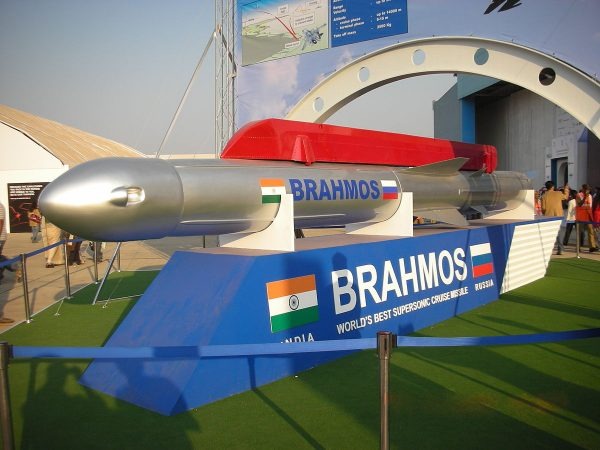
India has finalized major defense agreements with Indonesia during Prime Minister Modi's state visit to Jakarta. The deals include the export of India's indigenous Astra air-to-air missiles, an expansion of Indonesia's BrahMos cruise missile inventory, and the joint development of the strategically vital Sabang Port near the Strait of Malacca.
JAKARTA, Indonesia — In a major expansion of its defense export footprint, India has finalized agreements to supply its indigenous Astra air-to-air missiles and expand BrahMos supersonic cruise missile inventories for the Indonesian Armed Forces. The high-profile defense pacts were finalized on Tuesday, July 7, 2026, during bilateral talks between Indian Prime Minister Narendra Modi and Indonesian President Prabowo Subianto at the Istana Merdeka.
The defense breakthroughs anchor a series of highly consequential agreements signed during Prime Minister Modi’s official state visit to Jakarta. Government officials familiar with the negotiations disclosed that the procurement decisions reflect Jakarta's deepening confidence in India's advanced military hardware following high-profile operational deployments.
Technical Integration of Astra Missiles and BrahMos Batteries
The export of the Astra Beyond Visual Range Air-to-Air Missile (BVRAAM) marks a technological milestone for India's defense manufacturing sector. Developed by the Defence Research and Development Organisation (DRDO), the Astra boasts an operational strike range exceeding 100 kilometers and features advanced Radio Frequency (RF) seeker technology for pinpoint accuracy.
Indonesia's decision to procure the Astra was heavily influenced by its proven performance in real-world air combat scenarios, notably during Operation Sindoor. Because the Indonesian Air Force operates Russian-origin Sukhoi Su-30 fighter aircraft, the integration of the Astra missile will be seamless, as the weapon system is already fully certified on Sukhoi platforms.
Simultaneously, the two nations solidified a long-discussed agreement to expand Indonesia’s coastal defense infrastructure via the BrahMos cruise missile system. India will support Indonesia by supplying additional BrahMos mobile coastal batteries. Officials noted that Jakarta is initially procuring one additional BrahMos battery, with the strategic intent to scale the order up to three batteries over the next few years to safeguard its vast maritime boundaries.
Strategic Maritime Footprint at the Strait of Malacca
Beyond standalone missile technology transfers, the bilateral summit delivered a major geopolitical breakthrough regarding regional maritime security. India and Indonesia have formally committed to the joint development of the Sabang Port.
Strategically situated at the absolute entryway of the Strait of Malacca—the world's busiest maritime chokepoint carrying roughly 22% of global trade—Sabang Port sits a mere 100 miles away from India's ongoing mega-port infrastructure project at Great Nicobar Island. This infrastructure alignment allows both nations to establish a coordinated logistics and maritime surveillance network, altering the balance of security across the eastern Indian Ocean and the Indo-Pacific corridors.
Critical Minerals and Electoral Technology Pacts
The comprehensive bilateral matrix extended into deep economic and technology sharing frameworks designed to secure global industrial supply chains.
Critical Minerals Chain: India has finalized large-scale capital investments into Indonesian manufacturing sectors focusing on steel, nickel processing, and the fabrication of rare-earth permanent magnets. These materials are vital for electric vehicles (EVs), clean energy grids, and defense hardware.
Electronic Voting Cooperation: In a unique endorsement of India’s democratic infrastructure, India will provide direct technical support to build Indonesia-specific Electronic Voting Machines (EVMs), drawing from hardware models refined by the Election Commission of India.
Official Sources Section
The defense contracts, missile system allocations, port infrastructures, and macroeconomic investment totals detailed in this report correspond directly to the official statements released by the Ministry of External Affairs (MEA) India and public diplomatic briefs issued by the Ministry of Foreign Affairs of the Republic of Indonesia.
Quote Section
"The bilateral visit marks a highly consequential phase in our comprehensive strategic partnership," stated defense sources reviewing the text of the signed agreements. "Providing advanced indigenous platforms like the Astra missile and expanding the BrahMos defensive layout positions India as a primary, reliable security provider in the Indo-Pacific region."
Why It Matters
For international defense analysts and regional security blocks, the double missile transaction highlights India's swift transition into a major global defense exporter, with exports reaching a record ₹38,424 crore in the latest tracking cycle. For the broader Southeast Asian region, Indonesia’s deployment of Indian-made supersonic cruise missiles and advanced air-to-air systems builds a robust deterrent framework, improving supply chain safety and protecting critical shipping lanes like the Malacca Strait from external maritime dominance.
Key Facts at a Glance
Astra Missile Debut: Indonesia becomes the first international buyer of India's indigenous Astra air-to-air missile.
BrahMos Expansion: Jakarta is expanding its coastal defenses by procuring additional BrahMos supersonic cruise missile batteries.
Sabang Port Alliance: A joint development pact for Sabang Port will allow India and Indonesia to monitor the vital Strait of Malacca choke point.
Industrial Capital: India is launching manufacturing investments in Indonesian nickel, steel, and rare-earth magnet sectors.
Frequently Asked Questions
Why is the Astra missile easily compatible with Indonesia’s air force?
The Astra missile was engineered and thoroughly certified by Indian defense agencies to fire seamlessly from Sukhoi Su-30 fighter jets, a primary combat aircraft operated by the Indonesian Air Force.
What makes the joint development of Sabang Port strategically important?
Sabang Port sits directly at the entrance of the Strait of Malacca. Developing it alongside India's Great Nicobar facilities creates a powerful maritime monitoring network over the world's busiest trade lane.
Are these missile sales part of a formal military alliance against any country?
No. Official statements from both defense ministries emphasize that the deals are driven by mutual commercial security requirements and maritime self-defense needs, rather than a formal alignment against any specific nation.
Source: Diplomatic registry logs published by the Ministry of External Affairs (MEA) India, defense procurement briefs from the Ministry of Defence India, and regional security updates from the Indonesian Armed Forces (TNI) strategic command.