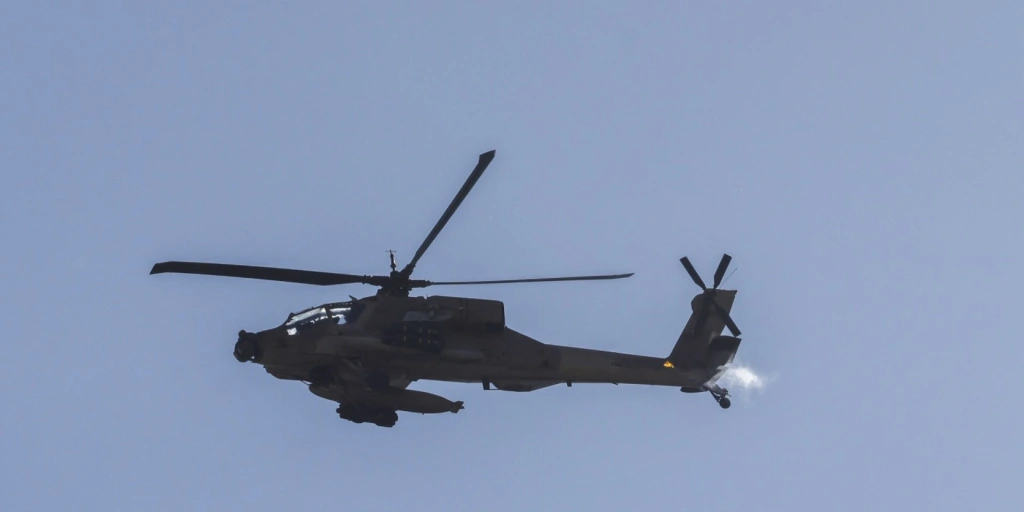
WASHINGTON — The United States military has launched a wave of retaliatory airstrikes across southern Iran after a US Army AH-64 Apache helicopter gunship was brought down over the strategic Strait of Hormuz. US Central Command (CENTCOM) confirmed that the precision airstrikes, authorized directly by President Donald Trump, began at approximately 5:00 p.m. ET on Tuesday, targeting key military facilities along the Iranian coastline. The military action has severely fractured a shaky, two-month-old maritime ceasefire, triggering immediate warnings of counter-retaliation from Tehran and sending fresh shockwaves through global energy markets.
WASHINGTON — The United States military has launched a wave of retaliatory airstrikes across southern Iran after a US Army AH-64 Apache helicopter gunship was brought down over the strategic Strait of Hormuz. US Central Command (CENTCOM) confirmed that the precision airstrikes, authorized directly by President Donald Trump, began at approximately 5:00 p.m. ET on Tuesday, targeting key military facilities along the Iranian coastline. The military action has severely fractured a shaky, two-month-old maritime ceasefire, triggering immediate warnings of counter-retaliation from Tehran and sending fresh shockwaves through global energy markets.
Retaliatory Strikes Target Iranian Coastline
The US military operation utilized Air Force and Navy fighter jets to hit specific defensive positions in southern Iran. Explosions were reported by local media across the Hormozgan province, including the port city of Bandar Abbas, Qeshm Island, and the coastal town of Sirik.
According to a detailed operational brief released by the Pentagon, the precision strikes focused exclusively on degrading Iran’s anti-access and area-denial capabilities along the strategic waterway. The primary targets included:
Coastal air-defense missile batteries.
Early-warning surveillance radar installations.
Drone ground-control stations utilized by the Islamic Revolutionary Guard Corps (IRGC).
Iranian state media reported that the strikes damaged a localized telecommunications tower and two municipal water storage tanks in Sirik, though comprehensive casualty figures have not yet been released by Tehran.
Drone Collision and Historic Sea Rescue
The military escalation was set in motion on Monday evening when a US Army Apache helicopter, operating on a routine maritime patrol off the coast of Oman, went down in the water. Initial assessments indicate that the helicopter was struck by an Iranian-produced Shahed one-way attack drone, though US defense officials note it remains unclear if the mid-air collision was intentionally executed.
Following the crash, US Naval Forces Central Command coordinated an unprecedented rescue operation. The two American pilots spent approximately two hours in the water before being recovered.
The rescue marks the first time in military history that an unmanned autonomous craft has successfully extracted downed aircrew at sea. The pilots were retrieved by a 24-foot "Corsair" unmanned surface vessel operated by Task Force 59, based out of the US Fifth Fleet in Bahrain. The drone transport vessel moved the aviators to a secure maritime staging location, where they were hoisted aboard a rescue helicopter. Both pilots have been listed in stable, uninjured condition.
Repercussions for Global Shipping and Energy Markets
The direct military confrontation has instantly reignited economic anxieties regarding the global energy supply chain. The Strait of Hormuz functions as the world's most critical transit chokepoint, with approximately 20% of global petroleum consumption passing through its narrow waters daily.
Though the White House has maintained that its actions are intended as a localized deterrent rather than an open declaration of war, shipping insurance premiums for commercial tankers operating in the Gulf of Oman have scaled up significantly. Commercial cargo fleets are currently facing extended transit delays due to overlapping blockades and heightened threat levels, directly compounding global inflationary pressures on consumer goods and fuel prices.
Official Sources Section
The actions executed during this military engagement have been documented via formal updates posted by U.S. Central Command (CENTCOM) and executive statements published by the White House. Counter-statements and regional developments were verified via official diplomatic briefings from the Ministry of Foreign Affairs of the Islamic Republic of Iran.
Quote Section
"Forces began launching self-defense strikes against Iran at 5 p.m. ET today at the Commander in Chief's direction, in response to yesterday's downing of a U.S. Army Apache helicopter," stated U.S. Central Command in an official public broadcast. "The mission is a proportional response to unjustified Iranian aggression. U.S. forces remain vigilant and postured to defend against continued threats to international commercial ships transiting regional waters."
Why It Matters
The exchange of fire shatters the fragile diplomatic truce established in April, proving how rapidly localized accidents or drone skirmishes can escalate into direct state-on-state violence. With the IRGC already claiming to have launched retaliatory drone volleys against US base assets in the region, the risk of a prolonged, wider military conflict threatening global energy lanes remains at its highest level this year.
Key Facts at a Glance
The Trigger: A US Army AH-64 Apache helicopter was downed by an armed Iranian Shahed drone off the coast of Oman.
The Response: US Air Force and Navy jets bombed Iranian air defense networks, radar arrays, and control hubs in southern Iran.
The Rescue: The two US pilots were successfully saved from the ocean by a Corsair autonomous robotic boat in a historic first.
Economic Threat: The renewed fighting threatens the security of the Strait of Hormuz, a critical chokepoint for 20% of global oil shipments.
Frequently Asked Questions (FAQ)
What targets did the United States bomb inside Iran?
The US military focused its strikes on the southern coastline of Iran, explicitly targeting radar stations, early-warning surveillance facilities, drone command hubs, and localized air-defense missile batteries near Bandar Abbas, Sirik, and Qeshm Island.
Did any American service members die during the downing of the helicopter?
No. Both of the US Army pilots aboard the Apache helicopter survived the crash without injury and were safely rescued within two hours of entering the water.
What technology was used to rescue the downed American pilots?
The extraction was carried out using a 24-foot "Corsair" unmanned surface vessel (sea drone) managed by Task Force 59 of the US Fifth Fleet. This marks the first documented real-world rescue of military personnel by an autonomous drone boat at sea.
Source: U.S. Central Command (CENTCOM) Official Portal, White House Executive Press Briefings, Ministry of Foreign Affairs of Iran, U.S. Naval Forces Central Command Operational Dispatches.