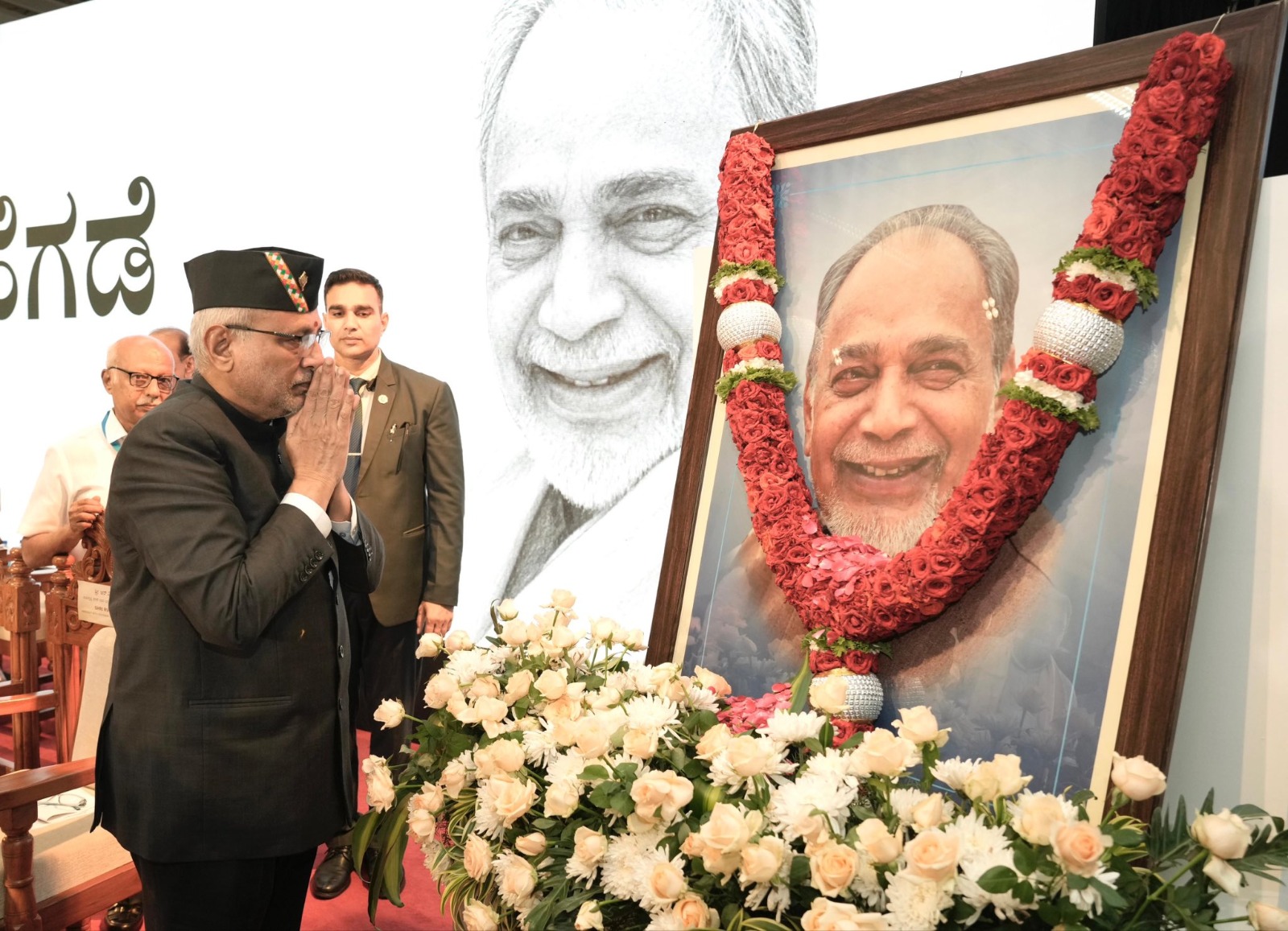
Vice President C.P. Radhakrishnan inaugurated the birth centenary celebrations of former Karnataka Chief Minister Ramakrishna Hegde in Bengaluru, praising his historic contributions to grassroots decentralization, institutional accountability, and transparent public administration during a bipartisan gathering at the Vidhana Soudha.
Vice President C.P. Radhakrishnan highlights institutional reforms and grassroots governance during the birth centenary event in Bengaluru.
BENGALURU — Vice President C.P. Radhakrishnan traveled to Bengaluru on August 29, 2026, to inaugurate the birth centenary celebrations of former Karnataka Chief Minister Ramakrishna Hegde. Held at the Banquet Hall of the Vidhana Soudha, the high-profile commemorative event brought together national and regional figures to honor Hegde's enduring contributions to decentralized governance, cooperative federalism, and value-based politics. The observance underscores the ongoing relevance of Hegde's administrative models as contemporary policymakers evaluate strategies for strengthening local administrative accountability and rural empowerment.
Legacy of Decentralization and Grassroots Reform
Addressing the assembly of dignitaries and citizens, Vice President Radhakrishnan lauded Hegde as a visionary statesman who transformed Karnataka into a role model for effective governance. Central to Hegde's administrative legacy was his foundational push for local democracy, most notably embodied by the Karnataka Zilla Parishads, Taluk Panchayat Samitis, Mandal Panchayats and Nyaya Panchayats Act of 1985. Official statements emphasized that this legislative milestone prefigured and heavily influenced the subsequent 73rd and 74th Constitutional Amendments, which institutionalized rural and urban local bodies nationwide. Furthermore, administrators highlighted Hegde's pioneering steps in establishing the Karnataka Lokayukta to enforce institutional transparency and protect public trust.
Bipartisan Commemoration and Regional Impact
The centenary event featured reflections from a diverse political spectrum, emphasizing Hegde's capacity to foster cross-party leadership and collaborative statecraft. Dignitaries attending the commemoration included Karnataka Chief Minister D.K. Shivakumar, former Vice President M. Venkaiah Naidu, Union Minister Pralhad Joshi, and former Karnataka Chief Minister Siddaramaiah. Chief Minister Shivakumar used the platform to announce structural tributes, including naming a regional medical college and a major metropolitan infrastructure corridor after the former leader, ensuring that subsequent generations retain a tangible connection to his developmental framework.
Official Sources and Institutional Context
According to official announcements released by the Press Information Bureau of India and state government event disclosures, the commemoration was organized to re-examine the structural impact of early decentralized fiscal policies. Archival overviews published via the Government of Karnataka portal noted that Hegde’s tenure established essential precedents for transparent budget allocation, institutional integrity, and citizen-centric administrative redressal systems.
"Organizers stated that a meaningful tribute and respectful homage to the stature of Hegde would be through imbibing his democratic values, integrity, and model of good governance."
Why It Matters
The practical implications of commemorating leaders like Ramakrishna Hegde resonate across modern public administration, civic planning, and federal policy design. For state administrators and regional planners, his emphasis on devolving financial and administrative powers to local bodies serves as an enduring blueprint for participatory democracy. For citizens and civil society organizations, revisiting these governance milestones reinforces demands for heightened accountability, transparent institutional frameworks, and robust grassroots representation.
Key Facts at a Glance
Vice President C.P. Radhakrishnan inaugurated the birth centenary celebrations of former Karnataka Chief Minister Ramakrishna Hegde in Bengaluru.
The commemorative event took place at the Banquet Hall of the Vidhana Soudha.
Key legislative achievements highlighted included the 1985 Panchayati Raj Act and the fortification of the Karnataka Lokayukta.
Prominent leaders across political lines, including D.K. Shivakumar, M. Venkaiah Naidu, and Siddaramaiah, attended the proceedings.
Frequently Asked Questions
Who was Ramakrishna Hegde?
Ramakrishna Hegde was a prominent Indian statesman who served as the Chief Minister of Karnataka, championing decentralized governance, institutional reforms, and value-based politics.
Where were the centenary celebrations held?
The official birth centenary program took place at the Banquet Hall of the Vidhana Soudha in Bengaluru.
What major administrative reforms are associated with Hegde?
He is widely credited with establishing a three-tier Panchayat Raj system through landmark 1985 legislation and strengthening the Lokayukta to ensure public accountability.
Where can citizens review official press releases regarding the event?
Official summaries and governmental reports are accessible through the Press Information Bureau of India and the Government of Karnataka portals.
Source: Press Information Bureau (PIB), Government of Karnataka Event Disclosures, Ramakrishna Hegde Digital Archive