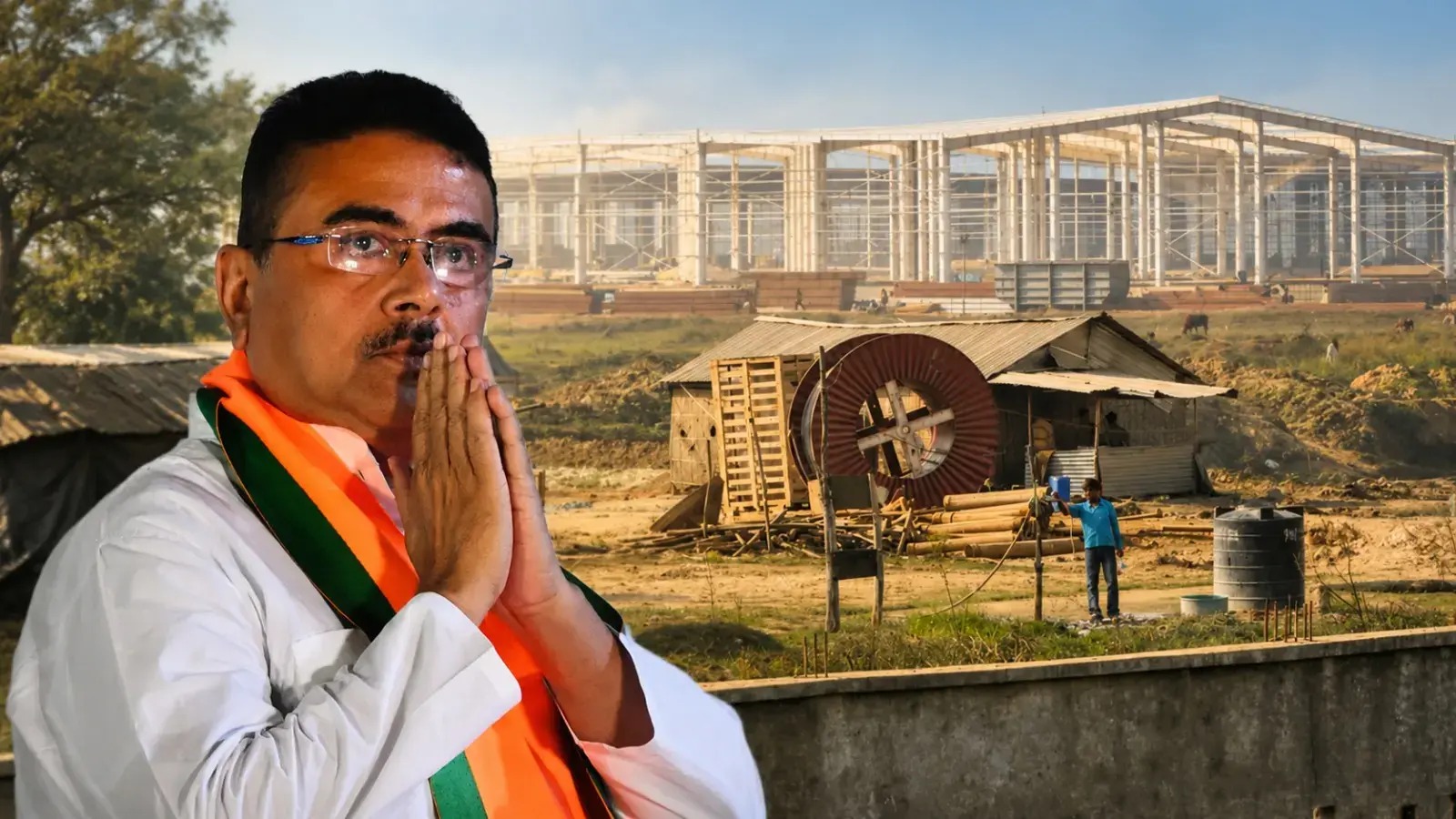
West Bengal Chief Minister Suvendu Adhikari announced a new initiative to bring the Tata Group back to the state to drive industrial growth. He clarified that the historic Singur factory site remains under private farmer ownership and is agricultural-unfit due to embedded concrete aggregates, prompting a shift toward consensus-led development on separate land banks.
KOLKATA — West Bengal Chief Minister Suvendu Adhikari announced that the newly formed state administration will actively work to bring the Tata Group back to the state. Addressing a press conference on Friday, June 12, 2026, the Chief Minister confirmed that driving massive industrial investments remains a top economic priority.
However, Adhikari explicitly clarified that the historic 997-acre site in Singur where Tata Motors had partially built its flagship Nano car manufacturing plant before pulling out in 2008 is no longer owned by the state government. The land was legally returned to local agrarian communities following a definitive Supreme Court verdict during the previous Trinamool Congress (TMC) regime. The policy announcement signals a sharp shift in West Bengal's industrial strategy, attempting to move past nearly two decades of political gridlock over corporate land development.
The Altered Composition and Status of Singur's Soil
The legacy of the 2006–2008 Singur land movement remains an influential focal point in West Bengal's political history. While the land was physically handed back to thousands of local farmers under a mandate to restore cultivation, the long-term industrial impact has left the plot structurally compromised.
Chief Minister Adhikari detailed that returning the physical plots did not successfully revive the local rural economy. Because Tata Motors had completed significant civil engineering works before abandoning the site, heavy industrial aggregates including reinforced concrete, iron rods, and foundational cement remain deeply mixed with the local soil matrix.
As a result, local landowners have found it virtually impossible to resume cultivating traditional local cash crops like paddy, potatoes, or poppy. State-backed attempts to pivot the parched infrastructure toward active fisheries or managed agricultural alternatives have similarly failed to achieve commercial viability.
Balancing Investor Security with Consensual Development
To prevent repeating the severe political unrest that defined the historic Singur and Nandigram agitations, the new Bharatiya Janata Party (BJP) administration is formalizing a completely restructured land acquisition master plan. Adhikari stated that the state will pursue a cooperative policy that rejects both the forced, low-compensation takeovers utilized by the older Left Front government and the complete industrial stagnation that characterized the subsequent TMC regime.
Under the upcoming industrial roadmap, the state will strictly avoid sourcing multi-crop fertile farmland without explicit stakeholder consent. Instead, the Department of Industry, Commerce and Enterprises will focus on identifying existing government land banks, unused public properties, and less fertile zones to accommodate upcoming commercial manufacturing proposals.
Official Sources Section
According to official administrative statements released by the Chief Minister’s Office (CMO) and transcripts from Football/State Information Bureau platforms, a high-level technical team led by the State Industry Secretary has been formed. This specialized unit is tasked with performing comprehensive background checks on all incoming corporate applicants to verify anti-money laundering compliance, evaluate asset integrity, and ensure that companies seeking land allotments possess genuine deployment plans rather than purely speculative real estate interests.
Quote Section
Detailing the administration's long-term corporate recruitment strategy during a press briefing in Kolkata, Chief Minister Suvendu Adhikari stated:
"We will bring back the Tatas here. However, the land at Singur is no longer with the state government. The previous government handed over ownership to the farmers. But they still cannot produce paddy or potatoes. The character of the land has changed since Tata's materials like rod and cement got mixed with the soil there. I have initiated initial work, but please do not hurry. We are working on a balanced approach to industrialisation, with a focus on public consent and sustainable development."
He further emphasized a move away from political showmanship:
"We don't want to indulge in lies and organise photo sessions like the previous government did to attract industries. My primary task is to look into whether potential investors have been clean business players or are facing financial fraud probes. If they bring specific, verified plans for 'Destination Bengal,' we are ready to facilitate land immediately."
Why It Matters
The formal commitment to bring back major industrial conglomerates like the Tata Group marks a significant turning point for West Bengal’s macroeconomic landscape. For millions of local youth, a successful manufacturing revival could create thousands of high-quality, local engineering and technical jobs, helping reverse the state's chronic migration of skilled labor to other industrial hubs like Maharashtra or Tamil Nadu.
For international corporate investors and financial markets, the new emphasis on strict regulatory vetting paired with consensus-based land mapping offers a much more stable, transparent, and predictable environment to deploy growth capital without the fear of sudden political or legal disruptions.
Key Facts at a Glance
Corporate Invitation: The West Bengal government has officially declared its intent to bring the Tata Group back to drive core state industrialization.
Singur Reality: The original 997-acre Nano car factory site is no longer under government ownership, having been returned to local farmers years ago.
Soil Damage: Industrial construction materials embedded during the 2006–2008 factory setup have left the Singur soil largely unfit for traditional farming.
Acquisition Reform: The incoming land policy bans coercive or forced farmland takeovers, making public consent a mandatory prerequisite.
Strict Vetting: A specialized oversight team led by the Industry Secretary will perform strict financial and land-fraud checks on all new investment proposals.
FAQ Section
Q: Why can't the state government simply buy back the Singur land for the Tatas?
A: Because the ownership of the land rests entirely with thousands of individual local farmers following a Supreme Court ruling, any consolidation would require separate, voluntary negotiations with each landowner. Furthermore, the physical mixing of industrial concrete and iron rods has severely altered the quality of the soil, making it expensive to clear for either modern farming or swift rebuilding.
Q: What kind of projects is the government targeting to bring the Tata Group back?
A: While specific projects have not been finalized, the state’s newly appointed Industries Minister has hinted at prioritizing large-scale automobile manufacturing, advanced component engineering, and tech-driven industrial units using available land banks.
Q: When will the state's official new land acquisition policy be made public?
A: Chief Minister Adhikari indicated that the comprehensive roadmap for industrial growth, land allocation parameters, and localized employment generation schemes will be formally introduced during the state Budget session scheduled for late June 2026.
Source: Government of West Bengal Official Portal, Ministry of Commerce & Industry State Database, The Hindu Kolkata Bureau Reportage, Press Trust of India (PTI) Archives.