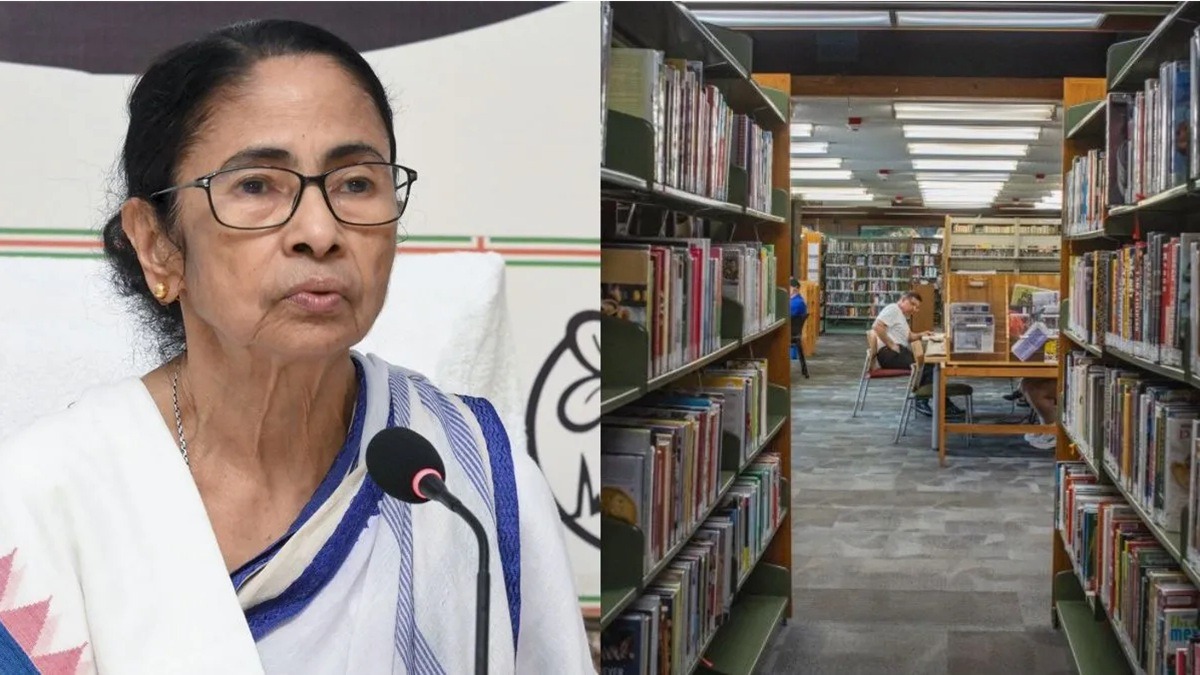
The West Bengal government has announced the removal of books authored by former Chief Minister Mamata Banerjee from state-run libraries. Minister Gouri Shankar Ghosh cited the need for "educational utility" and announced plans to probe the previous administration's procurement of these works, favoring literature centered on nationalist and academic themes instead.
KOLKATA — The West Bengal government has announced a comprehensive review of book collections across the state’s roughly 2,800 public libraries, signaling the removal of works authored by former Chief Minister Mamata Banerjee. The policy shift, confirmed by the newly appointed Minister for Mass Education Extension and Library Services, Gouri Shankar Ghosh, aims to prioritize "educational utility" and "nationalist thought" over what the current administration describes as "frivolous" or "unnecessary" political content.
The move marks a departure from the previous administration’s mandates, which had previously encouraged the inclusion and prominent placement of Banerjee’s writings in state-funded institutions.
Realigning State Library Collections
Minister Gouri Shankar Ghosh, who assumed office this week, stated that the state will rearrange library shelves to exclude titles deemed irrelevant to student learning. Among the books slated for removal is the children’s poem collection Epang-Opang-Jhapang, which has been a frequent subject of political debate.
According to officials, the review process is intended to modernize state facilities and restore a focus on academic and intellectual development. The administration plans to introduce literature by iconic figures such as Rabindranath Tagore, Kazi Nazrul Islam, and Swami Vivekananda, alongside historical biographies of personalities including Chhatrapati Shivaji Maharaj, Maharana Pratap, and Syama Prasad Mookerjee.
Controversy Over Fund Allocation
Beyond the content of the libraries, the government has flagged potential financial irregularities regarding the previous administration's procurement of Banerjee's books. Minister Ghosh indicated that he would request an investigation into the "misuse of government funds," alleging that public libraries were previously compelled to allocate significant portions of their book-buying budgets to purchase works authored by the former Chief Minister.
Critics of the previous government, including members of the current ruling party, have long alleged that the mandate to stock these titles at the expense of other academic resources hindered the educational utility of the state's library network.
Quote Section
"According to officials, the library spaces should focus on literature that enhances learning and nurtures young minds rather than political prints. Minister Gouri Shankar Ghosh stated: 'People visit libraries to acquire knowledge. Books that help in gaining knowledge will remain. Unnecessary books will be removed.'"
Why It Matters
This development highlights a major shift in West Bengal’s cultural and educational policy following the recent political transition in the state. For the thousands of students who rely on public libraries, the change signifies a pivot toward traditional literary icons and nationalist history. For investors and observers, the policy reversal and the proposed investigation into procurement practices underscore the government's intent to overhaul the administrative and cultural legacy of the previous administration.
Key Facts at a Glance
Policy Shift: State libraries will remove books authored by former Chief Minister Mamata Banerjee, including Epang-Opang-Jhapang.
Stated Objective: To prioritize books that promote "nationalist thought" and academic growth for students and youth.
Financial Review: The administration is considering a probe into the alleged mandatory purchase of Banerjee's works using public funds.
New Additions: Collections will be expanded to include works by Rabindranath Tagore, Kazi Nazrul Islam, and historical figures like Syama Prasad Mookerjee.
FAQ
Why are Mamata Banerjee’s books being removed?
The current government argues that the books are not educationally beneficial and that their mandatory purchase by libraries constituted a misuse of public funds.
Which books are specifically being targeted?
Works such as the children's collection Epang-Opang-Jhapang have been cited by the library minister for removal.
What will replace the removed books?
The administration plans to stock literature focusing on nationalist thought, Bengali scholars, and works by cultural icons like Rabindranath Tagore and Swami Vivekananda.
Are all libraries affected?
The directive applies to state-run public libraries and state-funded school libraries across West Bengal.
Source: West Bengal Ministry of Mass Education Extension and Library Services, The Times of India, The Telegraph