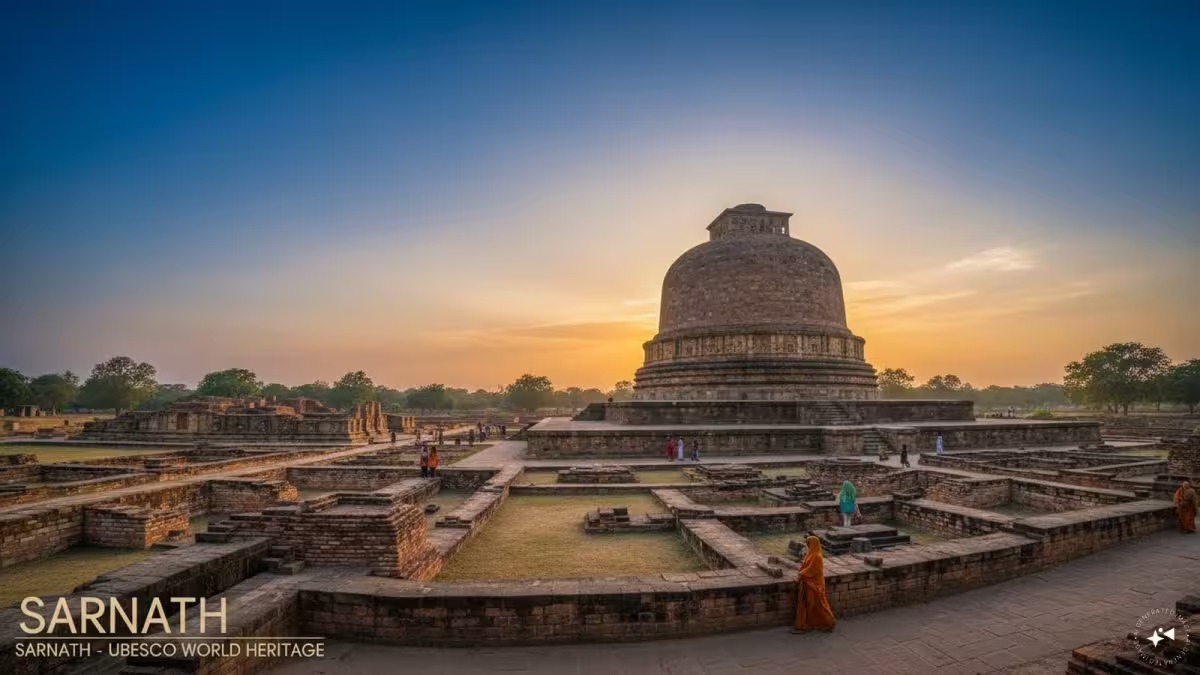
The ancient Buddhist site of Sarnath in Uttar Pradesh has been inscribed on the UNESCO World Heritage List during the 48th World Heritage Committee session in Busan, South Korea. Prime Minister Narendra Modi welcomed the decision, celebrating Sarnath's recognition as India's 45th UNESCO property and a sacred global pilgrimage center.
NEW DELHI — Prime Minister Narendra Modi expressed delight on Saturday, July 25, 2026, following the inscription of the "Ancient Buddhist Site of Sarnath" on the UNESCO World Heritage List. The decision was officially taken during the 48th session of the World Heritage Committee held in Busan, South Korea, making Sarnath India's 45th property to earn World Heritage status and the fourth in Uttar Pradesh.
Describing the milestone as a "proud moment for every Indian," Prime Minister Modi highlighted Sarnath's deep spiritual association with Lord Buddha. The ancient site, situated approximately 10 kilometers from Varanasi, is historically renowned as the sacred location where Gautam Buddha delivered his first sermon an event known in Buddhist tradition as Dharmachakra Pravartana or the "Turning of the Wheel of Law".
Global Recognition and Archaeological Components
The UNESCO inscription covers two component zones preserving ancient architectural and archaeological remains: the Chaukhandi Stupa and the main Archaeological Remains of Sarnath. The latter encompasses landmark structures such as the Dhamek Stupa, Dharmarajika Stupa, Mulagandhakuti Vihara, and the historic Ashokan Pillar, whose lion capital serves as India's national emblem.
The recognition comes 28 years after Sarnath was first placed on UNESCO's Tentative List in July 1998. India formally submitted its nomination dossier for the 2025–26 cycle in January 2025, culminating in the World Heritage Committee's unanimous approval after a comprehensive 18-month evaluation process by the International Council on Monuments and Sites (ICOMOS).
Boost for Buddhist Circuit and Cultural Diplomacy
The addition of Sarnath consolidates India's Buddhist Circuit infrastructure and international spiritual tourism, placing three of the four primary Buddhist pilgrimage sites—Lumbini (Nepal), Bodh Gaya (India), and Sarnath (India)—under the World Heritage umbrella.
The Ministry of Culture noted that the status will strengthen India's cultural diplomacy across nations with prominent Buddhist heritage, including Japan, Thailand, Sri Lanka, Myanmar, South Korea, and Vietnam.
Official Sources
According to official releases from the Press Information Bureau and statement updates from the Prime Minister's Office:
"Prime Minister Narendra Modi stated: 'Delighted that Sarnath in Uttar Pradesh has been inscribed on the UNESCO World Heritage List. Sarnath has a close association with Lord Buddha, whose timeless message of wisdom, compassion, and harmony inspires the world. This recognition celebrates India's profound civilisational and spiritual heritage and will inspire people globally to visit.'"
Why It Matters
For International Travelers & Pilgrims: Guarantees enhanced global visibility, sustainable tourism management, and structured conservation protocols across Sarnath's historical monuments.
For Regional Economy & Hospitality: Drives infrastructural investment, air connectivity expansion, and hospitality growth in the Varanasi-Purvanchal corridor.
For Heritage Conservationists: Enforces buffer-zone protections around ancient stupas to prevent unplanned commercial encroachments.
Key Facts at a Glance
Total UNESCO Sites in India: Sarnath marks India's 45th UNESCO World Heritage property.
Historical Event: Commemorates the Dharmachakra Pravartana (First Sermon of Lord Buddha).
Core Monuments Included: Dhamek Stupa, Chaukhandi Stupa, Dharmarajika Stupa, and the Ashokan Pillar.
Session Details: Announced at the 48th UNESCO World Heritage Committee session in Busan, South Korea.
Frequently Asked Questions (FAQ)
What makes Sarnath historically significant in Buddhism?
Sarnath is where Gautam Buddha delivered his first sermon to his five disciples after attaining enlightenment, establishing the Buddhist Sangha and setting the "Wheel of Dharma" in motion.
How many UNESCO World Heritage Sites are located in Uttar Pradesh?
Uttar Pradesh now hosts four UNESCO World Heritage Sites: Taj Mahal (1983), Agra Fort (1983), Fatehpur Sikri (1986), and the Ancient Buddhist Site of Sarnath (2026).
What main monuments fall under the UNESCO tag at Sarnath?
The inscription covers the Chaukhandi Stupa and the central archaeological complex containing the Dhamek Stupa, Dharmarajika Stupa, Mulagandhakuti Vihara, and the Ashokan Pillar.
Source: Official press statements and announcements released by the Press Information Bureau (PIB), Ministry of Culture, and the UNESCO World Heritage Centre.