U.S. President Donald Trump has cited India's rigorous voter identification and low mail-in voting rates to advocate for the immediate passage of the SAVE America Act. The proposed legislation seeks to tighten citizenship verification and photo ID rules for federal elections across the United States.
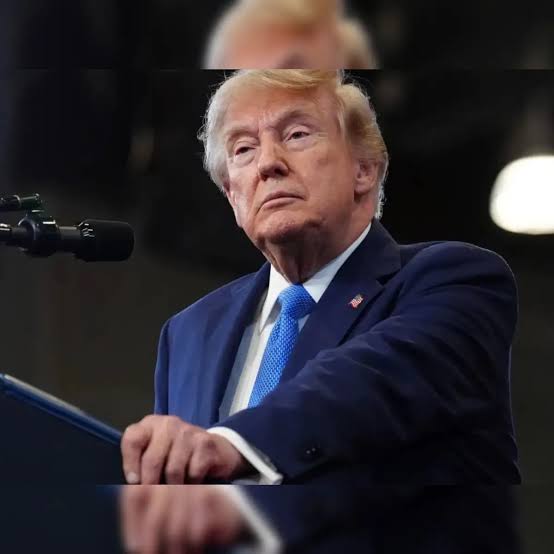
WASHINGTON — United States President Donald Trump renewed his push for stricter domestic election integrity measures on Monday, August 18, 2026, explicitly citing India's massive electoral management system to advocate for the passage of the Safeguard American Voter Eligibility (SAVE) America Act.
In statements shared on digital media platforms, Trump highlighted India's high voter turnout and rigorous identification procedures during national polls, emphasizing that every participant was required to present a valid photo identity document while mail-in voting remained minimal. The U.S. administration is utilizing these international comparisons to press for mandatory documentary proof of citizenship and strict voter identification requirements across American federal elections.
Evolving Electoral Integrity Debates and Global Benchmarks
The debate surrounding the SAVE America Act has remained a central legislative battleground in Washington. The proposed legislation seeks to mandate strict documentary proof of U.S. citizenship during voter registration and enforce photo identification at polling stations, drawing intense debate between lawmakers over ballot access and election security.
According to official statements and legislative disclosures from the White House and congressional records:
International Reference: President Trump noted that India successfully managed hundreds of millions of voters with strict photo identification mandates and minimal mail-in balloting.
Legislative Objectives: The SAVE America Act aims to overhaul federal voter registration procedures by requiring verifiable proof of citizenship to prevent non-citizen voting.
Congressional Action: The proposed framework has seen continuous legislative maneuvering, with proponents arguing for enhanced security measures while critics raise concerns regarding potential voter registration barriers.
Official Sources Section
Quote Section
According to statements released by U.S. President Donald Trump regarding international voting standards and domestic electoral reform:
"India's last election had hundreds of millions of voters, minimal mail-in voting, and required every single voter to have a valid photo identity document. We need to pass the SAVE America Act, now."
Why It Matters
For policymakers, election administrators, and American voters, the ongoing legislative push over the SAVE America Act carries profound implications for how federal elections are conducted. Examining global models like India's structured biometric and photo ID verification offers lawmakers alternative perspectives on balancing electoral security, administrative efficiency, and broad voter participation.
Key Facts at a Glance
Proposed Legislation: Safeguard American Voter Eligibility (SAVE) America Act.
Core Requirement: Mandatory documentary proof of citizenship for voter registration and photo ID at polls.
Reference Model: India's national election management and photo identification system.
Advocating Official: U.S. President Donald Trump.
FAQ Section
What is the primary objective of the SAVE America Act?
The proposed legislation seeks to amend voter registration laws to require documentary proof of U.S. citizenship and stricter photo identification for federal elections.
Why did President Trump cite India in his remarks?
Trump pointed to India's high-turnout elections, extensive use of photo identification cards, and minimal reliance on mail-in ballots as an effective model for electoral security.
What specific requirements does the legislation introduce?
The bill mandates that individuals provide verifiable proof of citizenship—such as a passport or REAL ID indicating citizenship status—when registering to vote.
Where can citizens review official details regarding the proposed act?
Official summaries, legislative texts, and presidential statements are maintained on federal government portals, including the White House legislative briefing pages.
Source: The White House, Election Commission of India, The Hindu