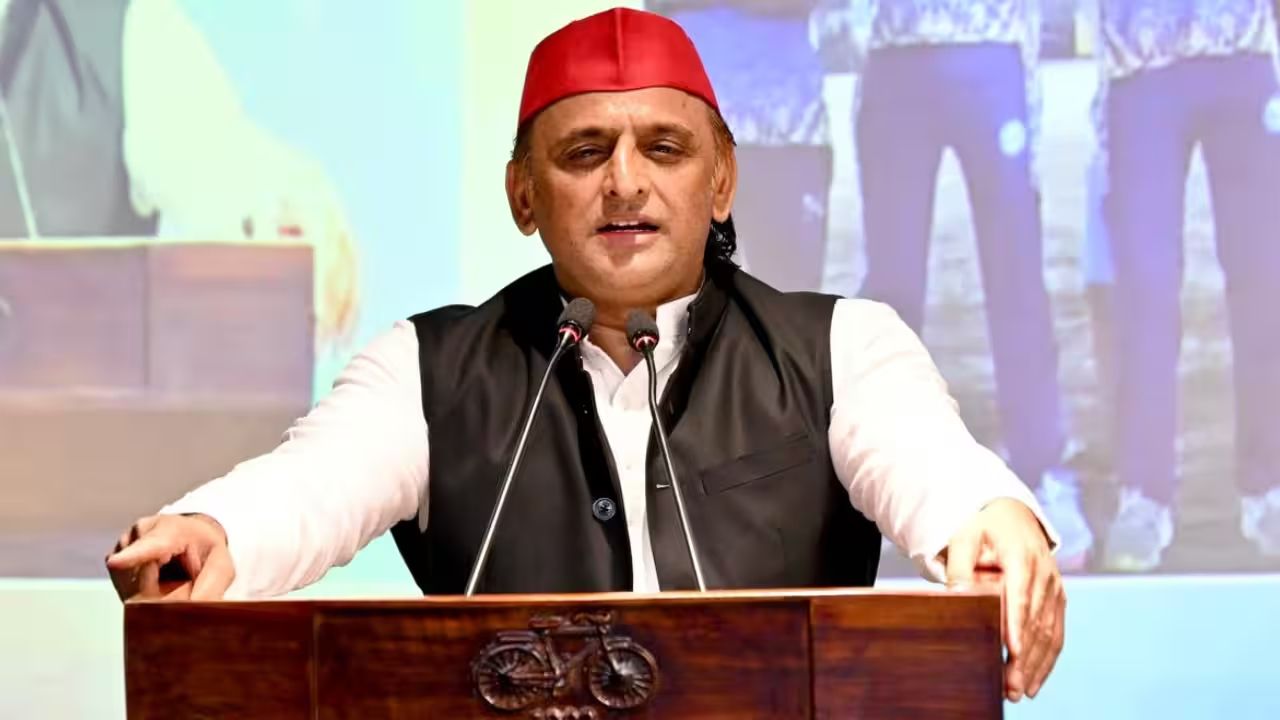
Samajwadi Party chief Akhilesh Yadav asserts that public backlash against administrative renaming trends will drive a regime change in 2027.In a sharp critique directed at the ruling administration, Samajwadi Party national president Akhilesh Yadav declared on Tuesday, July 28, 2026, in Lucknow, tha...
Samajwadi Party chief Akhilesh Yadav asserts that public backlash against administrative renaming trends will drive a regime change in 2027.
In a sharp critique directed at the ruling administration, Samajwadi Party national president Akhilesh Yadav declared on Tuesday, July 28, 2026, in Lucknow, that voters will decisively end the politics of renaming cities and districts by changing the government in the upcoming 2027 Uttar Pradesh Assembly elections. Addressing party workers and media delegations, Yadav focused heavily on the frequent modification of historical identifiers, explicitly referencing debates surrounding regions like Bhadohi. The political heavyweight framed the discourse around governance priorities, arguing that identity alterations bypass critical economic realities faced by citizens.
The Political Backstory of Regional Renaming in Uttar Pradesh
The practice of altering administrative nomenclature has long remained a contentious focal point in Uttar Pradesh's political arena. Over successive political administrations, numerous towns, railway junctions, and districts—such as the historical shifts involving Bhadohi, formerly designated as Sant Ravidas Nagar—have undergone official identity revisions.
According to policy statements released by opposition leaders, these institutional modifications are frequently criticized as symbolic maneuvers designed to deflect public attention from fundamental socio-economic challenges, including rural unemployment, inflation, and infrastructural gaps. Conversely, proponents within the ruling dispensation maintain that restoring historical titles honors cultural heritage and corrects historical omissions. Political analysts observing the state's trajectory note that identity politics will likely form a polarized foundation for voter mobilization as the 2027 electoral cycle approaches.
Electoral Implications and Voter Sentiments
As political parties begin laying the groundwork for the 2027 assembly polls, debates surrounding cultural identity versus developmental governance carry substantial weight for the electorate. For citizens, businesses, and local investors across Uttar Pradesh, constant regulatory and administrative alterations create bureaucratic friction in land registries, commercial licenses, and civic documentation.
The Samajwadi Party leadership aims to leverage these administrative grievances by championing grassroots livelihood issues, aiming to consolidate backward classes, Dalits, and minority communities under its core social justice platform. Political strategists suggest that how parties balance cultural symbolism with tangible economic deliverables will heavily influence urban and rural voting patterns.
Why It Matters
For voters across Uttar Pradesh, the ongoing debate over renaming districts touches upon questions of cultural identity, regional heritage, and administrative continuity. For political observers, Akhilesh Yadav's remarks signal an aggressive opposition strategy to shift the electoral narrative away from identity symbolism and toward governance, employment, and local development ahead of the 2027 ballot.
Key Facts at a Glance
Political Stand: Akhilesh Yadav announced that the public will reject renaming politics via the 2027 state elections.
Core Focal Point: Addressed public administrative shifts concerning historic regions, including Bhadohi.
Opposition Strategy: The Samajwadi Party plans to center its campaign on core economic issues, employment, and social justice.
Electoral Timeline: Uttar Pradesh legislative assembly elections are scheduled for 2027.
FAQ Section
What did Akhilesh Yadav state regarding the renaming of regions like Bhadohi?
Akhilesh Yadav asserted that the ongoing political trend of altering district and city names is a superficial distraction, claiming that voters will end this practice by voting for a change of government in 2027.
Why is district renaming a major political issue in Uttar Pradesh?
Renaming regions touches on deeply held cultural identities and historical symbolism, drawing sharp ideological contrasts between the ruling dispensation's focus on heritage and the opposition's emphasis on developmental governance.
How do administrative renaming decisions affect local citizens?
Frequent changes to district names can cause administrative friction, requiring updates across legal documents, land titles, commercial registrations, and civic infrastructure databases.
When are the next major assembly elections scheduled in Uttar Pradesh?
The legislative assembly elections for Uttar Pradesh are slated to take place in 2027.
Summary
Samajwadi Party chief Akhilesh Yadav stated that voters in Uttar Pradesh will put an end to the politics of renaming cities and districts by changing the government in the 2027 elections. Highlighting regions like Bhadohi, Yadav criticized symbolic identity shifts, urging a political focus on employment and governance.
Source: Samajwadi Party Official Portal, Government of Uttar Pradesh Portal