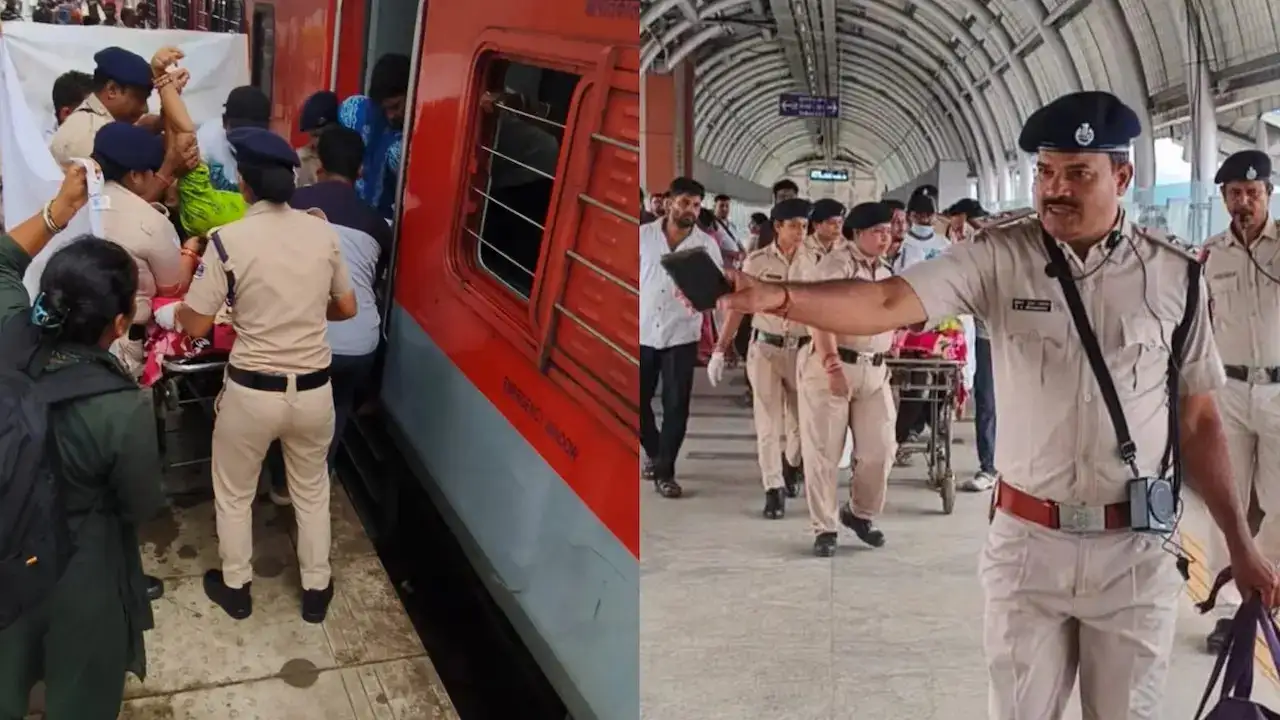
A pregnant train passenger traveling through Odisha experienced an extraordinary journey as she gave birth to twins in two different vehicles on Sunday, June 21, 2026. Thanks to quick alerts via the Rail Madad app, RPF personnel safely managed the birth of the first baby on the train and the second inside a city ambulance.
CUTTACK — A pregnant train passenger traveling through eastern India went into unexpected labor on Sunday, June 21, 2026, delivering twin babies in two entirely separate transit locations. The extraordinary medical event commenced aboard the Rourkela-Gunupur Rajya Rani Express as it approached the Cuttack Railway Station in Odisha. According to official reports filed by the East Coast Railway, the mother successfully delivered her first child inside the train's general coach, while her second child was safely born minutes later inside a moving emergency ambulance during an urgent transfer to a local state hospital.
The rapid coordination between the family, co-passengers, and national rail authorities prevented potential clinical complications. With millions of citizens utilizing long-distance rail networks daily across India, the rare operational success serves as a critical test case for the efficacy of decentralized emergency response protocols managed under the Ministry of Railways' digital distress framework.
Crisis Management Mobilized via Rail Madad Network
The emergency unfolded in the early morning hours as the Rajya Rani Express was transiting its regional route. The passenger, identified as a resident traveling in a densely populated general compartment, began experiencing severe abdominal contractions. Realizing the lack of onboard clinical equipment, relatives and co-passengers immediately logged a formal medical distress report through Indian Railways via the digital Rail Madad grievance system under reference log number 2026062101802.
Upon receiving the automated transmission, the security command desk at the Cuttack station platform mobilized an emergency unit. When the train officially arrived at platform gates at 6:53 AM, a specialized team comprised of three female officers from the Railway Protection Force (RPF) boarded the coach.
However, because the labor had advanced rapidly while the train was in active motion, the woman had already successfully given birth to her first newborn son directly onto the passenger seating berth with the informal help of fellow travelers.
Security Forces Coordinate Dual-Stage Platform Transfer
Faced with a dual-stage labor scenario where the mother was carrying twins and the second child remained undelivered, responding RPF personnel executed immediate crowd-control protocols. Officers systematically cordoned off a designated portion of the open platform to guarantee absolute privacy for the family.
Simultaneously, station masters utilized the public address systems and hand-held loud hailers to issue an urgent request for any licensed medical professionals traveling among the waiting passengers. A private pharmacist stepped forward voluntarily, providing preliminary umbilical care and thermal protection to the first newborn infant.
As soon as a state-managed 108 emergency ambulance arrived at the station terminal, the RPF unit, supported by local coolies and station staff, transferred the mother and her first child into the vehicle. Two female RPF officers boarded the vehicle to provide continuous security and manual assistance to the paramedic driver. During the high-speed transit to the medical campus, the patient went into her secondary active labor cycle, meaning the woman successfully gives birth to twins with the final baby arriving safely inside the moving ambulance.
Impact on Passengers and Rail Operations
The successful handling of the unusual medical event demonstrated the balance required between running a massive logistics network and addressing individual human crises.
For Rail Passengers: The fast-acting medical response directly prevented panic in the crowded general compartment, showing travelers that integrated digital safety apps work effectively in real-time.
For On-Time Reliability: To safely complete the extraction, the Rajya Rani Express was held at the station platform for an extra 15 minutes. Passengers across the train supported the decision, applauding the emergency crews as the train resumed its trip.
For State Health Agencies: The seamless handoff from train carriage to city ambulance highlights how crucial unified communication channels are for saving lives during unexpected mid-journey medical crises.
Official Sources Section
The logistical timeline, operational logs, and patient conditions compiled in this news report are drawn from:
The Official Incident Docket released by the Cuttack Bureau of the Railway Protection Force (RPF India).
The Rail Madad Digital Grievance Portal verified automated distress tracking timelines.
Clinical Admission Records issued by the pediatric and maternity emergency desks at the SCB Medical College and Hospital.
Quote Section
"The prompt response, compassion, and professional conduct displayed by our security team ensured that the passenger received critical intervention. This successful dual delivery reflects our absolute commitment toward passenger safety and welfare under our ongoing nationwide initiative, Operation Matri Shakti."
— According to officials detailing the event in an RPF regional release
Why It Matters
For the Ministry of Railways, instances where a passenger gives birth to twins while traveling underscore the value of training security personnel in basic emergency field medical skills.
For the general public, this case validates the utility of state emergency mobile channels, proving that integrated transit networks can handle high-stakes medical emergencies without access to a formal hospital room.
Key Facts at a Glance
Separate Delivery Venues: A passenger gives birth to twins in two distinct mobile settings: the first son arrived in a general train coach, and the second was born inside a 108 ambulance.
Digital Alert System: The entire emergency rescue was initiated by an automated alert submitted through the Indian Railways' Rail Madad app.
Operation Matri Shakti: The successful deployment falls under the RPF’s specialized maternal safety protocol, which ensures female officers are available at major stations.
Medical Status: Doctors at the SCB Medical College and Hospital confirmed that both newborn infants and the mother are stable and recovering under observation.
FAQ Section
1. What is Indian Railways' Operation Matri Shakti?
Operation Matri Shakti is a specialized nationwide security and welfare initiative run by the Railway Protection Force. It focuses on providing immediate medical care, privacy protection, and transit support to pregnant women traveling across the railway network.
2. How can a passenger request urgent medical help while traveling on an Indian train?
Passengers can request immediate help by dialing the integrated national helpline at 139, using the official Rail Madad mobile app, or tweeting their coach details directly to the official Ministry of Railways handles.
3. Did this emergency birth cause long delays for the train route?
The Rourkela-Gunupur Rajya Rani Express was held at Cuttack Railway Station from 7:00 AM to 7:15 AM to ensure the mother and babies were safely moved. This 15-minute hold did not cause any major disruptions to the regional rail schedule.
Source: Ministry of Railways Official Portal, RPF India Security Registry, and Odisha State Health Department Newsroom.