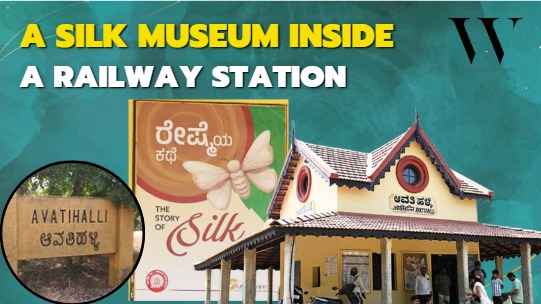
Avatihalli Railway Station near Bengaluru has been transformed into a heritage hub with the inauguration of a new silk museum. Opened on April 19, 2026, the museum showcases Karnataka’s rich sericulture legacy, offering visitors a chance to explore silk’s journey from cocoon to saree while preserving local history and culture.
Bengaluru, known as India’s “Silk City,” has added a new cultural landmark with the opening of a silk museum at Avatihalli Railway Station. Restored by INTACH, the heritage station now doubles as a museum, highlighting Karnataka’s role as the country’s largest silk producer.
Story Of Silk Museum
The museum traces the entire lifecycle of silk production, from breeding silkworms to weaving sarees. Exhibits include specimens of silk moths, mulberry leaves, reeling machines, and handlooms. Visitors can also view traditional sarees and archival materials, connecting modern audiences with centuries-old practices.
Heritage Restoration And Significance
Avatihalli station, built in the 1920s, was restored by INTACH Bengaluru as part of a project to revive four heritage stations along the Bengaluru–Chikkaballapur–Kolar line. The museum was inaugurated on World Heritage Day, April 19, 2026, with actor Vinay Rajkumar and Visvesvaraya National Trust president Sathish Mokshagundam as guests of honour. The initiative links local silk farming traditions to the station’s historic role in transporting goods and people.
Visitor Experience
The museum offers guided tours led by former silk farmers, providing authentic insights into sericulture. A nature walk around the station complements the experience, introducing visitors to local flora. Located en route to Nandi Hills, the museum is easily accessible by trains from Bengaluru to Chikkaballapur and Kolar, making it an ideal stop for weekend travellers.
Cultural And Economic Context
Karnataka produces nearly 50% of India’s silk, with regions like Shidlaghatta and Vijayapura serving as major hubs. By situating the museum at Avatihalli, the project not only preserves heritage but also educates visitors about the economic and cultural importance of silk in the state.
Key Highlights
- Silk museum inaugurated at Avatihalli Railway Station near Bengaluru
- Showcases lifecycle of silk from cocoon to saree
- Restored by INTACH as part of heritage station revival project
- Inaugurated on World Heritage Day, April 19, 2026
- Guided tours by former silk farmers and nature walks offered
- Karnataka produces nearly half of India’s silk, making museum highly relevant
Sources: Deccan Herald, Curly Tales, The Hindu