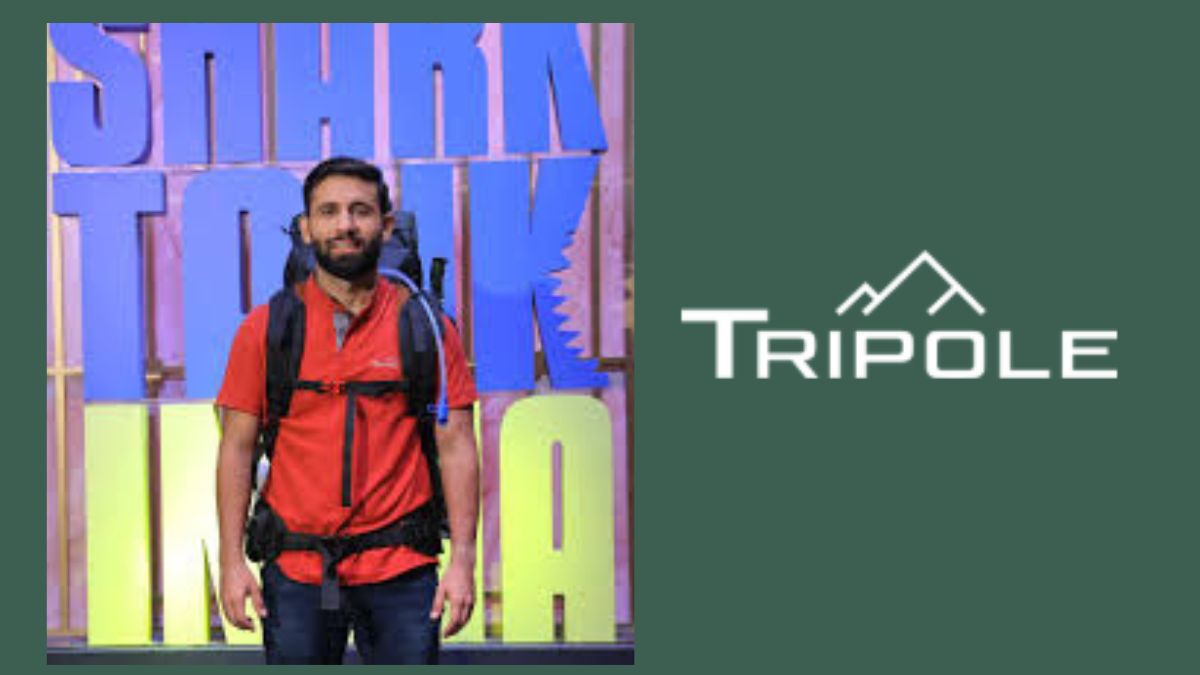
Rohan Khanduja, a BITS Pilani alumnus, Chartered Financial Analyst, and former JP Morgan investment banker, founded Tripole Gears in 2017 after a life-changing trek to Everest Base Camp exposed a massive gap in India's outdoor gear market. Starting from a single room, he built two manufacturing facilities in Delhi NCR, generated ₹14.2 crore in last financial year revenue, projected ₹20 crore for FY25, secured a ₹75 lakh deal from Ritesh Agarwal on Shark Tank India Season 4, and is now building Tripole into a full omnichannel outdoor gear brand
Everest Base Camp, a Gap in the Market, and a Single Room Where Everything Began
Rohan Khanduja grew up with a love for travel and the mountains, even as his professional trajectory took him toward India's most prestigious academic and financial institutions. He completed his engineering from BITS Pilani's KK Birla Goa Campus. He qualified as a Chartered Financial Analyst and built a career first at i3 Consulting as an Associate and then in investment banking at JP Morgan, one of the world's most prestigious financial institutions.
But the boardroom never fully held him. The mountains kept calling.
A life-changing trek to the Everest Base Camp became the defining moment. On those rugged Himalayan trails, Rohan noticed a gap that no spreadsheet had ever shown him: high-quality trekking gear in India was either overpriced, dominated by expensive international brands like Decathlon, or cheap and unreliable, falling apart on the very trails it was designed for.
He returned from the trek with a mission. After months of prototyping, testing, and refining, Tripole Gears was born in 2017, starting from a single room and built entirely on personal savings, with a founding conviction that would drive every decision that followed: Make in India, make it durable, and make it affordable.
Two Delhi NCR Factories, 200-Person Workforce, Rain Covers, and a Brand That Competes With Decathlon
The boldest operational decision Rohan made was to build manufacturing in-house rather than outsourcing production. He set up two full-fledged manufacturing facilities in Delhi NCR, giving Tripole direct control over quality, cost, and delivery timelines. The brand employs a workforce of approximately 200 people across manufacturing and operations, with 35 core corporate employees as of May 2025 following the incorporation of Tripole Gears Private Limited on January 28 2025.
The product range is precisely engineered for Indian adventurers. Rucksacks from 65 to 95 litres with integrated rain covers and detachable day packs. Tactical backpacks. Versatile day packs. Climate-adaptive sleeping bags. Waist packs. Rain covers. Organiser packs. Travel accessories and apparel. Every product is manufactured in-house in India and priced significantly below international competitors, directly addressing the gap Rohan identified on Everest Base Camp.
The brand operates in India's ₹8,500 crore outdoor gear market, with the online segment growing rapidly as post-COVID adventure tourism and trekking culture accelerate among India's urban youth.
The Shark Tank Moment — Revenue Numbers That Impressed the Sharks, Competing Offers, and Rohan Chooses Ritesh
At the time of pitching, Tripole had closed its last financial year with ₹14.2 crore in revenue, had generated ₹11 crore the month before the pitch, and was averaging ₹1.6 crore per month in the preceding three months. The founder projected closing FY24-25 with ₹20 crore in revenue, a trajectory that confirmed the business was genuinely scaling.
Rohan Khanduja appeared on Shark Tank India Season 4 Episode 6 seeking ₹1 crore for 1% equity at a ₹100 crore valuation. Aman Gupta and Anupam Mittal stepped back citing valuation concerns. Kunal Bahl offered ₹3 crore for 7.5% equity at a ₹40 crore valuation and held firm. Ritesh Agarwal offered ₹60 lakh for 1% equity plus debt. Namita Thapar matched Ritesh's revised offer.
Rohan chose Ritesh, specifically citing Ritesh's deep connections in India's travel and hospitality industry through OYO as the most strategically valuable partnership for Tripole's growth. The final deal closed at ₹75 lakh for 1.15% equity plus ₹25 lakh as debt at 9% interest for five years at a ₹65.22 crore valuation.
Post-Shark Tank, Tripole incorporated as a private limited company on January 28 2025. Rohan outlined the deployment plan clearly:
"We plan to build a strong team by hiring relevant people to fill critical roles that we couldn't invest in earlier. Additionally, the funds will be used as working capital to expand our product line, allowing us to cater to a wider audience and enhance our offerings."
The brand is now planning to launch its own retail outlet and exploring partnerships with established retail chains. "Having a physical presence is essential for building trust in the outdoor gear segment," Khanduja says. International sales expansion is also confirmed as part of the post-funding growth roadmap.
1.Corporate Finance Era & Himalayan Inspiration:Completed BITS Pilani engineering and CFA qualifications; worked at i3 Consulting and JP Morgan before a trek to Everest Base Camp exposed the outdoor gear market gap.
2.Bootstrapped Launch & Factory Expansion (2017):Founded Tripole Gears in a single room with personal savings, scaling into two in-house manufacturing units in Delhi NCR to compete directly with international brands [cite: The Origin — Everest Base Camp, a Gap in the Market, and a Single Room Where Everything Began, The Strategic Genius — Two Delhi NCR Factories, 200-Person Workforce, Rain Covers, and a Brand That Competes With Decathlon].
3.Shark Tank India S4 Deal & Corporate Structure (Jan 2025):Featured on Season 4 Episode 6 and secured a ₹75 lakh equity + ₹25 lakh debt deal with Ritesh Agarwal; officially incorporated as Tripole Gears Private Limited [cite: The Strategic Genius — Two Delhi NCR Factories, 200-Person Workforce, Rain Covers, and a Brand That Competes With Decathlon, The Shark Tank Moment — Revenue Numbers That Impressed the Sharks, Competing Offers, and Rohan Chooses Ritesh].
4.Omnichannel & Global Footprint Strategy:Initiated expansion into physical retail outlets, retail chain distribution, working capital scale-up, and international market entry.
Scale and Real-World Impact
| Enterprise Parameter | Key Metrics & Operational Details |
| Founder & Background | Rohan Khanduja (BITS Pilani, CFA, Ex-JP Morgan & i3 Consulting) |
| Headquarters & Corporate Status | Ghaziabad, UP | Incorporated as Tripole Gears Pvt Ltd on Jan 28, 2025 (CIN: U14201DL2025PTC441816) |
| Directors | Rashi Khanduja, Rohan Khanduja |
| Manufacturing Infrastructure | 2 In-House Factories in Delhi NCR | ~200 total workforce (35 corporate staff as of May 2025) |
| Financial Trajectory | ₹14.2 Crore prior FY revenue | ₹11 Crore in month prior to pitch | ₹1.6 Crore monthly average | Projected FY25 Revenue: ₹20 Crore |
| Shark Tank Deal Structure | S4 Ep 6: ₹75 Lakh for 1.15% equity + ₹25 Lakh debt (9% interest over 5 years) at a ₹65.22 Crore valuation with Ritesh Agarwal |
| Total Funding & Capital | $86,600 across two funding rounds |
| Product Portfolio | Ergonomic rucksacks (65L–95L) with integrated rain covers, tactical backpacks, day packs, sleeping bags, waist packs, travel accessories |
| Retail & Growth Roadmap | Launching exclusive physical retail stores, retail chain partnerships, product line expansion, international sales |
| Target Market & Peers | Operating in India's ₹8,500 Crore outdoor market | Peers: Decathlon, Mokobara, Uppercase, Assembly |
The Most Powerful Founder-Market Fit Is the One Where the Founder Was the Frustrated Customer First
The sharpest lesson from Tripole Gears' journey is this: the most defensible manufacturing brands in India are the ones built by founders who personally experienced the quality-versus-affordability trade-off in a physical product category and built the manufacturing infrastructure to eliminate it.
Rohan Khanduja had the financial intelligence of a JP Morgan banker and the product insight of someone who had carried a rucksack on Everest Base Camp trails. He could model the market opportunity and feel the product gap simultaneously. And he chose to walk away from one of the world's most prestigious financial careers to build a factory in Delhi instead.
That combination produced a brand that competes with Decathlon, impressed five Sharks simultaneously, and secured the partnership of Ritesh Agarwal.
From Everest Base Camp to a single room to two factories. From JP Morgan to India's ₹8,500 crore outdoor market.
Tripole Gears is just getting started.
Sources
Shark Tank India Club
Indian Retailer
Pune News
Tracxn
Tofler
Crunchbase
Local Samosa
Startup Chai