Top Searches
- • Anant Ambani’s Birthday Blends Tradition, Bollywood Glamour, And Social Buzz 3 hours ago
- • Shriram Finance Credit Rating Upgraded To AAA After MUFG Investment 3 hours ago
- • PM Modi Addresses West Bengal Rallies Amid Election Buzz 3 hours ago
- • Ayush Shetty Stuns World No. 1 To Reach Badminton Asia Final 3 hours ago
- • Apple Rolls Out macOS Tahoe 26.4.1 To Fix Wi-Fi Issues 3 hours ago
- • Luxury Travel And Experiential Concerts Redefine India’s Entertainment Scene 3 hours ago
- • Books On The Metro Movement Keeps Delhi Reading 3 hours ago
- • AI-Powered Mental Health Tools Gain Global Traction With India’s Innovations 3 hours ago
WOW STORY OF THE DAY: He Struggled to Find Home Help in Mumbai. His Mother Flew In From Kolkata. So He Built a $450 Million Startup.
A Powai Apartment, 200 Unemployed Workers, and One Irrational Gap
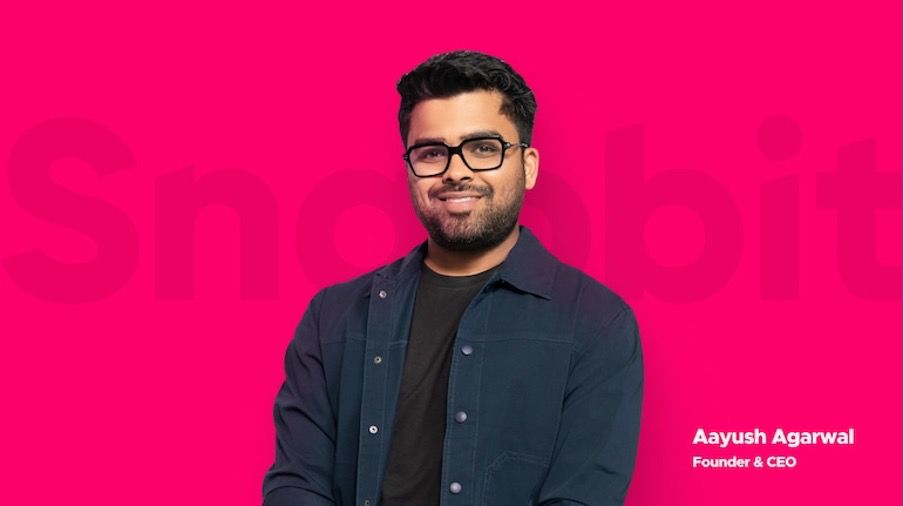
• Aayush Agarwal was a working professional living in Powai, Mumbai, when the problem hit him personally. He needed domestic help. The usual routes went nowhere. He tried online platforms, spoke to agencies, asked friends. Nothing worked reliably.
• In desperation, he asked his building watchmen for leads. What he found stopped him cold. In a single residential society of approximately 500 flats, he spoke to around 200 domestic workers who were unemployed and actively looking for jobs. The supply was enormous. The demand was enormous. And yet the two sides had no efficient way to find each other.
• "What stayed with me was that in a world of convenience where you can press a button and you'll get a cab, or food or groceries, finding someone for a simple service at home was an irrational amount of effort," Agarwal told TechCrunch. His mother eventually flew in from Kolkata to help him find a worker the old-fashioned way: lingering near apartment gates, speaking to domestic workers going elsewhere, negotiating informally during morning walks.
• Snabbit launched in 2024, starting with a single micro market in Mumbai and staying there for the first 12 months deliberately, learning every variable before expanding.
Win Micro Markets, Build Depth, Then Scale
• The most distinctive decision Snabbit made was to reject the playbook of geographic breadth and instead build extreme density in small clusters.
• Snabbit geo-fences areas into clusters typically less than one kilometre wide. It predicts demand in real time and positions its experts close to hotspots, much like how ride-hailing apps position drivers, but with greater precision for the hyperlocal nature of home services. The result is a median booking-to-arrival time of 10 minutes and 36 seconds, a number that continues to improve as density increases.
• The entire workforce is 100% women. Every worker is sourced, screened, trained, onboarded, and managed by Snabbit directly, a full-stack approach that ensures consistency rather than the fragmented quality of a marketplace model. Workers are provided Aadhaar-linked bank accounts, health insurance, life insurance, and accidental insurance. Those with longer tenure receive family insurance. The platform includes an SOS button that connects workers to a field operations team reaching their location within five to seven minutes for any safety concern.
• Services are priced at approximately ₹150 per hour, with an average ticket size of ₹240. Workers earn between ₹25,000 and ₹30,000 per month. The customer acquisition cost runs at well below ₹500, and the platform maintains a 30 to 35 percent retention rate. These unit economics, in a category notoriously hard to standardise, are what have attracted India's most serious investors.
Scale, Numbers and Real-World Impact
• Snabbit was founded in 2024 and has raised $56.2 million across four rounds in 18 months. Investors include Lightspeed, Elevation Capital, Nexus Venture Partners, and Bertelsmann India Investments. The Series C of $30 million was closed in October 2025, valuing the company at $180 million. Snabbit is currently in talks for a Series D at a valuation of approximately $450 million as of March 2026, according to Bloomberg.
• Daily orders grew from approximately 1,000 in May 2025 to over 10,000 by October 2025. October 2025 saw total monthly orders surpass 300,000. The platform has served over one lakh customers and operates a fleet of 5,000 women experts across Mumbai and Bengaluru. The company projects annual recurring revenue of $11 million. It has expanded from one micro market to seven markets in Mumbai and one in Bengaluru, with plans for over 200 micro markets across India's metro cities.
• India's home services market stands at $60 billion today and is estimated by Redseer Strategy Consultants to approach $100 billion by the end of the decade, growing at 10 percent annually. Less than 1 percent of paid household help is currently ordered through online platforms, leaving an almost entirely open field for Snabbit to build in.
The Biggest Markets Are the Ones Everyone Has Stopped Trying to Fix
• The sharpest lesson from Snabbit's journey is this: the most powerful startup opportunities sit in plain sight, in services so old and so informal that the technology industry has collectively assumed they are too hard to solve.
• Food delivery was informal. Cab-hailing was informal. Grocery delivery was informal. Each became a multi-billion-dollar category the moment someone built the infrastructure to make it reliable, fast, and trustworthy.
• Home services in India, a $60 billion market growing at 10 percent a year, is at the same inflection point. And Aayush Agarwal, who started because his mother had to fly from Kolkata to help him hire a cleaner, is building the infrastructure that will power that shift.
• “In a hyper-local business, you win micro markets," he says. He started with one. He now leads in more than he can count. The walls of his office are pink: the colour worn by every Snabbit expert who arrives at a door in under 10 minutes.
Sources: TechCrunch, Business Standard, YourStory, Tracxn
Stay Ahead – Explore Now! CARI Bengaluru Achieves Landmark ISO Accreditation In Biochemistry And Haematology